
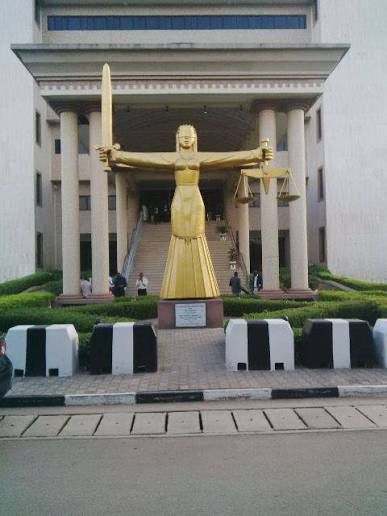
Giwa Plaza Ltd alleges continued demolition, fencing and development on property already subject of pending litigation; FCT authorities absent as court considers interim intervention
By A1NEWS International
ABUJA, August 31, 2026
Introduction
Justice Ngozi Nwabulu of the Federal Capital Territory (FCT) High Court, sitting in Maitama, Abuja, has reserved ruling on an application seeking to halt further activities on a disputed property at Asokoro Sculpture Park, pending the determination of an earlier substantive suit involving the same property.
The application was filed by Giwa Plaza Ltd against the FCT Minister, the Federal Capital Development Authority (FCDA), the Abuja Metropolitan Management Council (AMMC) and the Department of Development Control.
The case raises questions over whether administrative or physical activities can continue on land that is already the subject of active judicial proceedings, particularly where one party alleges that demolition, fencing and further development are taking place while the substantive dispute remains unresolved.
Disputed Asokoro Property At Centre Of Legal Battle
The property in dispute is identified as Plot No. 281 A04, Asokoro Sculpture Park, Asokoro, Abuja.
Through its counsel, Dr Agada Elachi, SAN, Giwa Plaza Ltd approached the court in Motion No. M/13083/26, seeking an order staying further action on the property.
The applicant’s case is that the disputed parcel is already the subject of proceedings before another judge of the FCT High Court, Justice N. Wike.
According to Elachi, the substantive suit seeks judicial determination of the legality or propriety of actions allegedly taken by the respondents in relation to the property.
He told the court that pleadings had already been filed by the parties and that the substantive matter had been fixed for hearing in October.
Applicant Alleges Continued Trespass
The applicant’s counsel alleged that despite the pending litigation, the respondents had proceeded with activities on the property.
Elachi argued that the alleged conduct amounted to a disregard of the principle of lis pendens—the legal principle that property which is the subject of pending litigation should not ordinarily be dealt with in a manner that could undermine or prejudice the eventual determination of the dispute.
According to him, the respondents had allegedly moved beyond administrative action to physical intervention on the land.
He told the court that there had been attempts to demolish structures on the property and that parts of the property had allegedly been demolished.
The applicant further alleged that fencing and development activities were continuing on the disputed site.
Counsel: Court Should Prevent Situation From Becoming Irreversible
Elachi urged the court to intervene before the alleged activities transformed the character of the disputed property and potentially complicated the substantive case.
He argued that the purpose of the application was not to determine ownership of the property at this stage, but to preserve the subject matter of the litigation until the substantive suit is heard and determined.
The applicant’s position, as presented to the court, is that allowing construction, fencing, demolition or other physical changes to continue could create a situation in which the eventual judgment would be difficult to enforce or render practically ineffective.
Elachi therefore asked the court to order the respondents to suspend all further action on the property pending determination of the substantive suit.
“What we are asking this court to do is stay action, tell them to stay all action, pending the hearing of the substantive suit.”
He added that if the court hearing the substantive case eventually reached a different conclusion, the parties would be bound by that determination.
Respondents Absent As Motion Was Heard
None of the named respondents was represented or present in court when the motion was heard, according to the information presented.
The absence of the respondents meant that the court heard the applicant’s arguments without oral opposition from the parties against whom the interim relief was sought.
However, the allegations made by Giwa Plaza Ltd remain claims by the applicant and have not, in the proceedings described, been established as facts by a final judicial determination.
The substantive dispute over the property remains pending.
Why The Ruling Matters
The case goes beyond a disagreement over a particular parcel of land.
At stake is the question of how disputed properties should be preserved when competing claims are already before the courts and one side alleges that physical activities are continuing on the contested site.
If the court grants the requested stay, it could temporarily restrain further activities on the property until the substantive case is determined or until the court makes another order.
If the application is refused, the applicant may have to pursue other legal remedies while the substantive proceedings continue.
The eventual ruling could therefore have immediate practical consequences for the disputed property while also providing guidance on the circumstances in which a court may intervene to preserve property that is already the subject of litigation.
Court Reserves Ruling
After hearing the applicant’s submissions, Justice Nwabulu reserved ruling on the motion.
The judge said the date for the ruling would be communicated to the parties.
For now, the legal battle over Plot No. 281 A04 remains unresolved, with the substantive suit before Justice N. Wike reportedly scheduled for hearing in October.
The central issue—whether the actions allegedly being undertaken on the property are lawful and whether any party has the right to continue with them—remains for judicial determination.
The dispute highlights the potential consequences of physical development on property whose legal status is already before the courts. Giwa Plaza Ltd is asking the FCT High Court to preserve the disputed property by stopping further activities until the substantive litigation is determined.
The respondents, who were not represented in court during the hearing as reported, will have the opportunity to respond through the judicial process.
Until the court delivers its ruling, no final conclusion can be drawn on the competing claims to the property or on the allegations of trespass, demolition and development.
A1NEWS International will continue to monitor the case and report developments as the court communicates the date of its ruling and the substantive proceedings progress.










Leave a Reply