
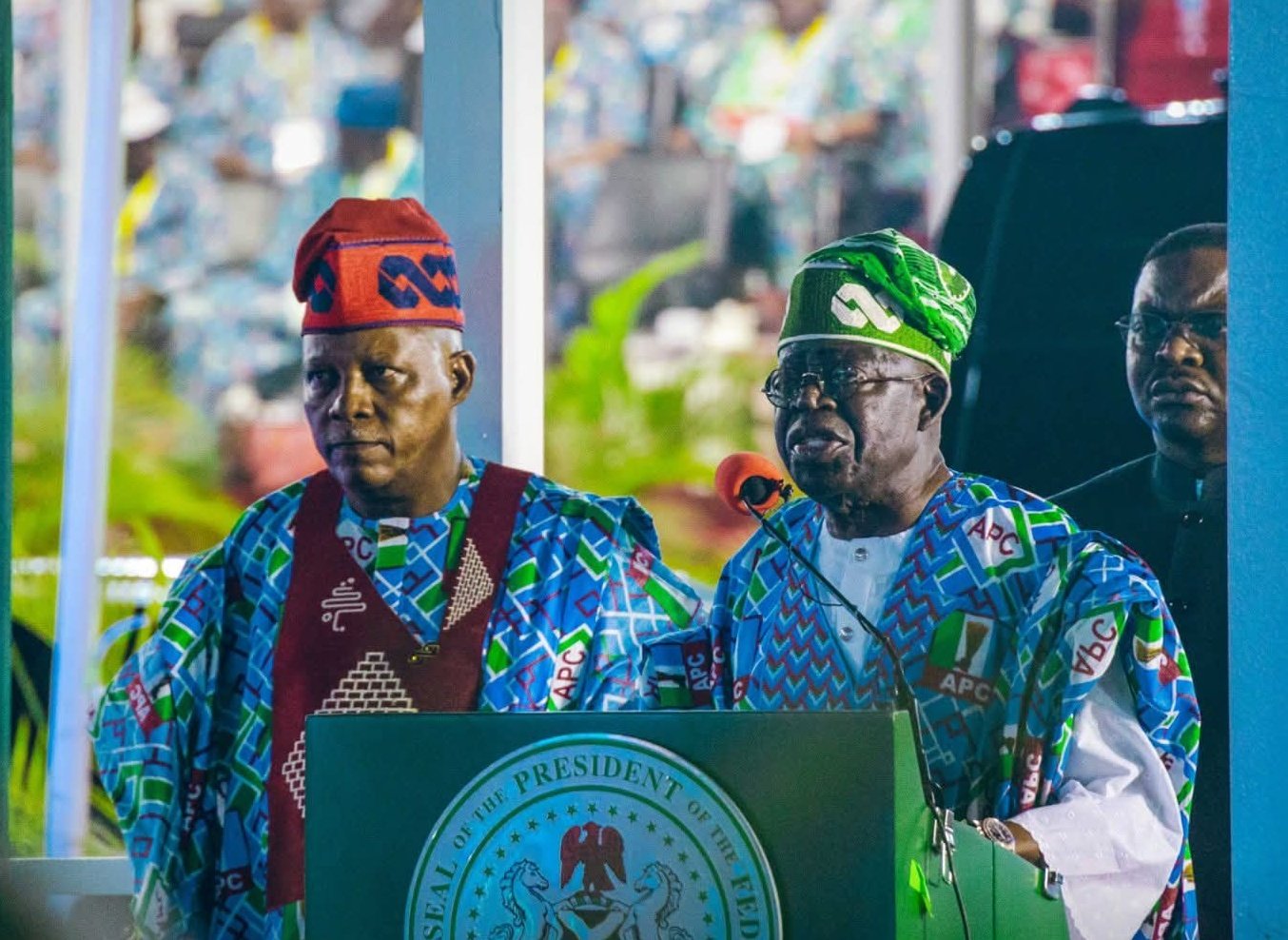
President Bola Tinubu’s decision to stay away from the 81st United Nations General Assembly and send Vice President Kashim Shettima has triggered political speculation over the timing. But available records establish the delegation change — not a link between the President’s absence and the separate US court dispute over FBI and DEA records.
By A1NEWS International
ABUJA, Sept. 21, 2026 — President Bola Ahmed Tinubu will not personally attend the high-level segment of the 81st United Nations General Assembly in New York, with Vice President Kashim Shettima mandated to represent him and lead Nigeria’s delegation.
The decision has generated competing interpretations, particularly because it comes amid renewed attention to a long-running Freedom of Information Act (FOIA) litigation in the United States concerning records held by the FBI and Drug Enforcement Administration relating to historical investigations involving Tinubu.
However, a review of available official records and court-related documents shows that two separate issues should not be conflated.
The Presidency has confirmed Shettima’s UNGA assignment, while the US litigation remains a civil FOIA dispute over access to government records. There is currently no publicly confirmed evidence establishing that Tinubu’s decision not to attend UNGA was caused by the FBI records controversy or by any threatened US action against him.
What Shettima’s UNGA Role Legally Means
Sending the Vice President to represent the President at a major international gathering is not, in itself, a constitutional or diplomatic anomaly.
The United Nations’ own protocol recognises a Vice-President as capable of serving as head of a national delegation. Its Manual of Protocol specifically provides that where a delegation is headed by a Head of State or Government, Vice-President or Foreign Minister, that official is regarded as the ex-officio head of delegation while in New York.
The UN General Assembly also provides for representatives of member states to address the General Assembly. The current 81st-session arrangements state that heads of state, heads of government and other high-level representatives address the General Debate.
Therefore, Shettima’s appearance does not mean that Nigeria will be represented by a lower-ranking or unofficial delegation.
He will be representing the Nigerian government under a formal mandate from the President.
However, it is more precise to say that Shettima is representing the President and Nigeria at the UN, rather than saying that the Vice President automatically “is the Presidency” in every constitutional sense. The Vice President is a distinct constitutional office; his authority to represent the President internationally derives from the presidential mandate and the constitutional structure of the executive branch.
Shettima’s Mission at the 81st UNGA
According to the Presidency, Tinubu has mandated Shettima to lead a high-level Nigerian delegation comprising Rivers State Governor Siminalayi Fubara, Zamfara State Governor Dauda Lawal, ministers and other senior government officials.
The 81st UNGA General Debate runs from Sept. 22 to Sept. 26 and resumes on Sept. 28. Its theme is “Restoring Trust, Managing Transformation: A United Nations That Delivers for All.”
Shettima is expected to deliver Nigeria’s national statement and participate in high-level engagements and bilateral meetings.
The UN programme includes discussions on development, climate action, sea-level rise, pandemic preparedness and other major international issues.
This means Nigeria’s diplomatic presence at the gathering is not being cancelled because the President is absent.
But Does Presidential Absence Carry Political and Diplomatic Costs?
The legal position and the political optics are two different questions.
UN protocol permits a Vice President to head a delegation. But presidential attendance can carry symbolic and practical significance because UNGA High-Level Week brings together heads of state and government, senior diplomats, international institutions, investors and other global actors.
The UN itself describes the General Assembly as the principal deliberative, policymaking and representative organ of the organisation, with all 193 member states represented.
Consequently, the absence of a president can become a subject of political debate even where the substitute delegation is fully legitimate.
There are also practical questions surrounding who holds bilateral meetings, which officials attend them and what authority they possess to negotiate or make commitments. Those are matters of delegation and substance, rather than an automatic loss of diplomatic standing.
Report has it that UNGA High-Level Week is characterised by a large number of bilateral meetings involving national leaders.
Tinubu’s Working Vacation and the Presidency’s Latest Explanation
The State House announced on Sept. 21 that Tinubu would return to Nigeria at the weekend after extending his working vacation by a few days.
According to the Presidency, Tinubu had departed Nigeria on Aug. 30 for London to begin the working vacation.
The official announcement does not establish that the extension was connected to the US records dispute.
That distinction is important because a number of political claims have emerged around the President’s absence.
The FBI/DEA Records Dispute: What Is Actually Confirmed?
Separate from the UNGA issue is Aaron Greenspan v. Executive Office for U.S. Attorneys et al., Civil Action No. 1:23-cv-01816 (BAH) before the US District Court for the District of Columbia.
The FOIA case seeks access to records held by US government agencies concerning historical investigations involving Tinubu and other individuals.
In April 2025, US District Judge Beryl A. Howell ruled on aspects of the agencies’ refusal to confirm or deny the existence of responsive records and ordered further processing of records by the FBI and DEA.
The litigation has since continued over what records should be released, what should remain redacted and what privacy and law-enforcement protections apply.
The Nigerian Presidency said in September that the FBI and DEA had produced 399 pages, with portions redacted under various statutory exemptions.
The dispute is therefore accurately described as a FOIA records-access case.
It is not, on the present public record, a criminal prosecution of Tinubu arising from the FOIA litigation.
What the 1993 Forfeiture Record Shows
There is also a separate historical US civil forfeiture proceeding dating to 1993.
Court records from the Northern District of Illinois show that $460,000 in an account held in the name of Bola Tinubu was forfeited to the United States. The order stated that the funds represented proceeds of narcotics trafficking or were involved in financial transactions violating specified US laws.
That is a documented court record.
But the legal character of that proceeding matters.
The forfeiture was a civil asset-forfeiture proceeding, not a criminal conviction of Tinubu for drug trafficking. The available record does not establish that Tinubu was criminally convicted of narcotics trafficking in the United States.
That distinction should be maintained in reporting.
FBI Investigation: What the Current Litigation Establishes
The current FOIA proceedings have nevertheless established that US federal law-enforcement records concerning Tinubu exist within the scope of the litigation.
Reporting on the August 2026 proceedings indicates that the FBI submitted disputed material to Judge Howell under seal for ex parte, in-camera review, meaning the judge could examine the material privately rather than release it publicly at that stage.
The FBI has invoked several FOIA exemptions relating to privacy, confidential sources, investigative techniques and other law-enforcement interests.
Tinubu’s lawyers have also argued that portions of the material should remain protected under privacy provisions, including Exemption 7(C).
The unresolved issue is therefore not simply whether records exist, but which portions of those records are legally disclosable under FOIA.
Lobbying Firm Enters the Dispute
Another development has further complicated the political narrative.
US lobbying and political advisory firm Von Batten-Montague-York, L.C. has sought permission to participate in the FOIA litigation as an amicus curiae — essentially a non-party seeking to provide arguments or information to the court.
The firm’s Sept. 4 filing sought leave to submit an amicus brief concerning issues surrounding Tinubu’s privacy claims and the public discussion of the records by the Nigerian Presidency.
Importantly, the docketing of such a filing does not mean the judge has accepted the arguments.
Whether the court permits the filing, and what weight — if any — the judge ultimately gives its arguments, remains a judicial decision.
Did the FBI Files Cause Tinubu to Skip UNGA?
This is where the evidence ends and political interpretation begins.
There have been public allegations by political opponents and activists suggesting that the President’s decision not to attend UNGA may be connected to the US records controversy.
Such claims have received publicity, but they have not been established by an official US government statement, a UN statement, or a judicial finding.
The available official Nigerian position confirms only that Tinubu will not attend personally and that Shettima will lead Nigeria’s delegation.
The State House’s Sept. 21 announcement also says Tinubu will return to Nigeria at the weekend following an extension of his working vacation.
There is therefore insufficient evidence to report the FBI/DEA controversy as the reason for Tinubu’s UNGA absence.
What About a Possible US Arrest?
Another recurring claim concerns whether Tinubu could be arrested if he travelled to New York.
The public record examined for this report does not establish an arrest plan by the US government.
Indeed, the lobbying firm itself has publicly disputed claims that Tinubu would be arrested at UNGA, while simultaneously making political claims about the possible embarrassment surrounding his visit. Those statements are the firm’s own claims and should not be presented as US government positions.
The existence of a FOIA case also does not, by itself, establish an arrest warrant or criminal prosecution.
The Bigger Issue: Optics Versus Evidence
The controversy surrounding Tinubu’s UNGA absence illustrates the difference between diplomatic protocol, political optics and evidentiary fact.
Protocol
Nigeria remains represented at UNGA by a Vice President heading an official delegation. UN protocol expressly recognises vice presidents as heads of delegations.
Diplomacy
Shettima can deliver Nigeria’s official position and participate in high-level diplomatic engagements under his mandate.
Politics
Opposition politicians are free to interpret the President’s absence as politically significant, while government supporters may present the decision as an administrative or strategic choice.
Neither interpretation, however, establishes the underlying reason for the President’s absence.
The US litigation
The FOIA case is real. The 1993 forfeiture proceeding is real. The release of 399 pages with redactions is reported by the Presidency. The remaining dispute over withheld material is before a US federal judge.
The alleged UNGA connection
No publicly verified evidence currently establishes that the FOIA case caused Tinubu to stay away from New York.
President Tinubu’s decision not to personally attend the 81st UN General Assembly is politically consequential because UNGA remains one of the world’s most visible diplomatic gatherings.
But the available evidence does not support collapsing three separate issues into one narrative: Tinubu’s working vacation, Shettima’s UNGA delegation and the ongoing US FOIA litigation over historical FBI and DEA records.
Shettima’s leadership of the Nigerian delegation is consistent with UN protocol and does not deprive Nigeria of representation at the General Debate.
At the same time, the absence of the President can legitimately attract political scrutiny because presidential participation at UNGA provides opportunities for direct engagement with other heads of government, international institutions and global business actors.
The more serious evidentiary question remains the US court case.
That litigation is active. Records have been produced, portions have been withheld or redacted, Tinubu has asserted privacy protections, and additional filings have been made. The court — not politicians, lobbyists or social-media commentators — will ultimately determine what further material can lawfully be disclosed.
For now, the documented facts establish Tinubu’s absence and Shettima’s representation. They do not establish that the FBI records controversy caused the President’s decision.
A1NEWS International Fact Check Position
CONFIRMED: Tinubu will not attend the 81st UNGA in person; Shettima is leading Nigeria’s delegation.
CONFIRMED: The 81st UNGA General Debate begins Sept. 22, 2026.
CONFIRMED: A US FOIA case involving records concerning Tinubu remains before Judge Beryl Howell.
CONFIRMED: The FBI and DEA have produced 399 pages with redactions, according to the Presidency.
CONFIRMED: A 1993 US civil forfeiture order provided for the forfeiture of $460,000 from an account in Tinubu’s name.
NOT ESTABLISHED: That the FBI records dispute caused Tinubu to skip UNGA.
NOT ESTABLISHED: That the US government planned to arrest Tinubu at UNGA.


Leave a Reply