

NHRC Urges Africa to Move Beyond Military Responses, Embrace Justice-Led Approach to Insecurity, Commission says sustainable security and economic stability require enforceable rights, accessible justice, reparations and stronger legal institutions
By A1NEWS International
CAPE VERDE, Sept. 23, 2026:
The National Human Rights Commission (NHRC) has called for a fundamental rethink of Africa’s response to insecurity, urging governments to move beyond predominantly military and security-centred interventions towards a holistic, justice-driven framework that addresses the underlying social, economic and governance conditions that fuel conflict.
The Commission made the call in a paper presented at the 2026 African Bar Association Conference in Cape Verde, themed “Resilient Africa’s Roadmap for Sustainable Development.”
The paper, titled “Legal Mechanisms to Ensure Access to Justice in Regions Affected by Security Threats,” examines the relationship between insecurity, human-rights violations and weak access to justice, using Nigeria’s North-East insurgency and the farmer-herder crisis in Benue State as principal case studies.
The NHRC argued that Africa’s pursuit of sustainable development cannot be separated from the capacity of legal institutions to protect citizens, provide remedies for victims and address the structural conditions that allow violence and deprivation to persist.
Beyond the Military Option
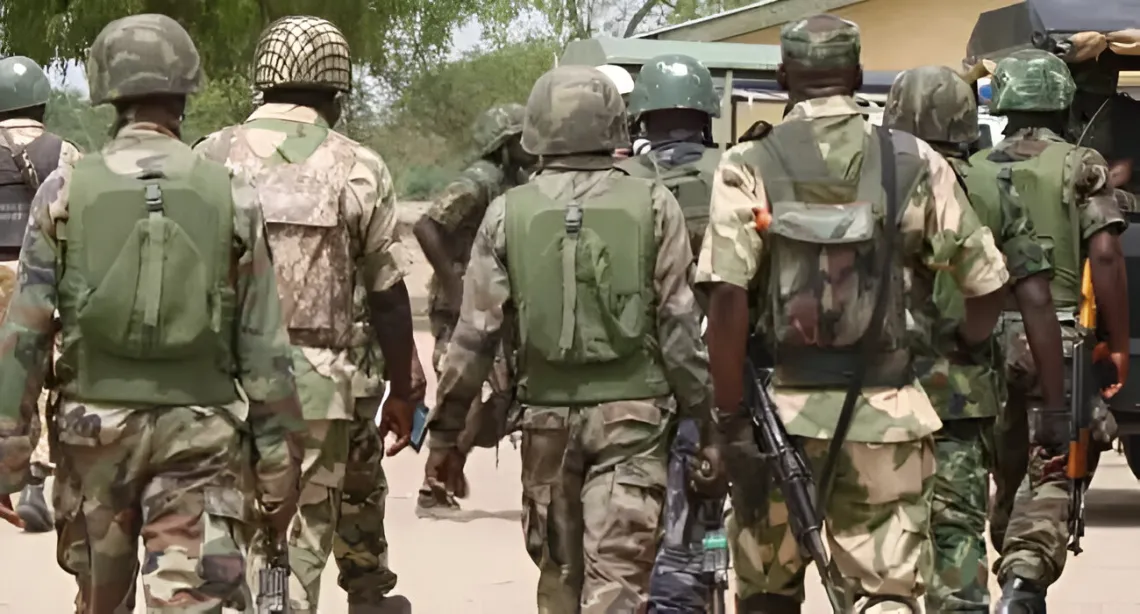
At the heart of the Commission’s argument is a warning that military force, while sometimes necessary for immediate security operations, cannot by itself resolve the deeper causes of insecurity.
According to the paper, terrorism, communal violence and other security threats frequently interact with poverty, youth unemployment, marginalisation, weak governance and inadequate access to basic services.
The Commission therefore advocated a broader approach in which security responses are complemented by justice, social protection, economic opportunity, institutional accountability and effective mechanisms for resolving disputes.
The approach is particularly significant in conflict-affected communities where prolonged insecurity can destroy livelihoods, displace populations and weaken citizens’ ability to obtain justice.
The NHRC cited a 28.8 per cent youth unemployment rate among factors contributing to socio-economic vulnerability, while linking persistent instability to exclusion and governance deficits.
Legal Barriers Deepen the Justice Gap
The Commission identified several weaknesses within Nigeria’s legal and institutional framework that, in its assessment, limit access to justice for communities affected by conflict and insecurity.
One major concern is the constitutional treatment of socio-economic rights.
The paper points to Section 6(6)(c) of the 1999 Constitution, arguing that the existing framework creates limitations around the justiciability and enforcement of socio-economic rights.
Rights relating to food, shelter, education and other basic necessities can become particularly important during armed conflict and mass displacement. Yet where affected citizens face difficulties in enforcing such rights, humanitarian and developmental challenges can become prolonged.
The Commission also identified limitations within the African human-rights system, including the non-binding nature of some decisions of the African Commission on Human and Peoples’ Rights and restrictions surrounding direct access to the African Court on Human and Peoples’ Rights under Article 34(6) of the African Charter.
According to the paper, these institutional limitations can leave victims facing lengthy and complicated pathways before obtaining effective remedies.
Terrorism Laws and the Need for a Rights-Based Balance
The NHRC further examined the Terrorism (Prevention and Prohibition) Act, 2022, noting what it described as the predominantly punitive orientation of counter-terrorism legislation.
The Commission’s position is that counter-terrorism measures must be accompanied by safeguards for due process, accountability and victims’ rights.
The challenge, it suggested, is to construct a system in which the state can effectively confront terrorism while ensuring that security operations themselves remain subject to the rule of law.
This balance becomes critical in conflict environments where military operations, arrests, prosecutions and intelligence activities can have significant consequences for civilian populations.
Human Cost of Insecurity
The scale of the justice challenge is reflected in data presented by the Commission.
NHRC records cited in the paper include 530 cases involving denial of food and shelter, 195 cases of gender-based violence and 324 cases involving barriers to education.
The Commission also cited 1,850 internally displaced persons (IDPs) in Benue State alone, illustrating the extent to which insecurity can transform from a security problem into a humanitarian, economic and human-rights crisis.
For displaced populations, access to justice is often complicated by the loss of homes, livelihoods, documentation and community support networks.
The NHRC’s argument is therefore that restoring security must go beyond stopping violence to rebuilding the conditions necessary for people to recover their dignity and livelihoods.
Lessons From North-East Counter-Insurgency
The North-East insurgency provides one of the principal case studies through which the Commission examined the relationship between security operations and justice.
The paper referenced NHRC monitoring of terrorism trials conducted in Kainji in 2024, during which the Commission observed gaps relating to due process.
The intervention reflects the Commission’s broader emphasis on ensuring that counter-terrorism prosecutions remain consistent with fair-trial standards and other applicable legal safeguards.
The Commission also highlighted its Transitional Justice Programme in Borno, Adamawa and Yobe states, implemented with support from the European Union and the United Nations Development Programme.
According to the paper, the programme has resolved 372 cases, referred 1,157 cases and conducted 331 outreach activities in IDP camps.
The figures point to an approach that combines legal intervention with community engagement and mechanisms designed to address grievances arising from prolonged conflict.
Abisari Investigation: Separating Evidence From Allegation
The NHRC also used its investigation into the alleged Systematic Investigations and Intervention Programme (SIIP) North-East claims to demonstrate the importance of evidence-based accountability.
The paper clarified that the investigation found no evidence supporting a claim that 10,000 pregnancies had been systematically aborted.
However, it stated that the investigation confirmed a military attack on Abisari community on June 18, 2016, in which 18 people were killed.
The Commission recommended compensation for victims and prosecution where appropriate.
The distinction is significant because it demonstrates the need for human-rights investigations to separate substantiated violations from allegations that cannot be established by available evidence.
For the NHRC, accountability must be based on credible investigations, documented facts and lawful remedies rather than unverified claims.
Benue Farmer-Herder Crisis and Regional Justice
The Benue farmer-herder crisis provides another dimension to the Commission’s analysis.
The paper referenced judgments of the ECOWAS Court of Justice in suits ECW/CCJ/APP/11/16 and ECW/CCJ/APP/16/18, which ordered Nigeria to investigate killings in Benue and provide redress to victims.
The cases demonstrate how domestic conflicts can generate questions of regional human-rights responsibility when national remedies are perceived as inadequate or ineffective.
The Commission’s reference to the judgments also reinforces its call for stronger implementation of decisions issued by regional judicial institutions.
A legal order, the paper argues in effect, cannot protect victims merely by issuing judgments; its legitimacy also depends on whether those judgments produce practical remedies.
The Four-Pillar Model for Closing the Justice Gap
To address the shortcomings identified in its analysis, the NHRC proposed a four-pillar model for improving access to justice in conflict-affected regions.
1. Enforceable Socio-Economic Rights
The first pillar involves strengthening the legal enforceability of socio-economic rights.
The Commission argues that citizens affected by conflict should have meaningful avenues for enforcing rights connected to basic necessities, including food, shelter and education.
2. Specialised Mobile Conflict Resolution Courts
The second pillar proposes the creation of specialised mobile Conflict Resolution Courts capable of bringing justice mechanisms closer to communities affected by insecurity.
Such courts could potentially reduce geographical and institutional barriers that prevent displaced and vulnerable populations from pursuing legal remedies.
3. Recognition of ADR and Traditional Mechanisms
The third pillar calls for greater recognition of alternative dispute resolution (ADR) and appropriate traditional conflict-resolution mechanisms.
The proposal reflects the reality that formal courts are not always the only avenue through which communities resolve disputes, particularly in rural and traditional settings.
The challenge would be to ensure that such mechanisms operate consistently with fundamental rights and applicable law.
4. National Dignity Fund
The fourth pillar is the establishment of a National Dignity Fund dedicated to reparations.
The proposed mechanism would provide a structured framework for compensating victims of serious human-rights violations and helping affected communities rebuild after conflict.
Constitutional and Institutional Reform
The NHRC’s proposals extend beyond individual cases to structural legal reform.
The Commission recommended constitutional amendments aimed at strengthening the enforceability of socio-economic rights, alongside the establishment of specialised courts capable of dealing with conflicts and rights violations in affected communities.
It also called for Nigeria to ratify the relevant declaration enabling individual and non-governmental organisation access to the African Court on Human and Peoples’ Rights, subject to the constitutional and treaty framework applicable to Nigeria.
The Commission further urged the implementation of decisions and recommendations arising from the ECOWAS Court and the SIIP-related investigations.
Justice as a Foundation for Resilient Development
The NHRC’s intervention places justice at the centre of the broader debate about Africa’s development.
Conflict destroys infrastructure, disrupts education, weakens local economies, displaces families and erodes confidence in public institutions. Where victims cannot obtain remedies, grievances can remain unresolved and contribute to cycles of distrust and violence.
The Commission’s argument is therefore that resilience cannot be measured solely by a state’s ability to deploy security forces or respond to immediate threats.
It must also be measured by the ability of institutions to protect citizens, investigate violations, punish wrongdoing through lawful processes, compensate victims and restore confidence in the rule of law.
The NHRC’s presentation at the 2026 African Bar Association Conference presents insecurity not simply as a military or policing challenge, but as a multidimensional crisis requiring legal, economic, social and institutional responses.
Its proposed four-pillar model—enforceable socio-economic rights, specialised mobile conflict-resolution courts, recognised ADR and traditional mechanisms, and a National Dignity Fund for reparations—seeks to place access to justice at the centre of conflict recovery.
For the Commission, the lesson from Nigeria’s North-East insurgency and the Benue farmer-herder crisis is clear: security without justice can leave the underlying grievances of affected communities unresolved.
Sustainable development, the NHRC stressed, ultimately depends on resilient legal institutions capable of protecting rights, delivering remedies and restoring human dignity in communities affected by insecurity.








Leave a Reply