

By A1NEWS International
ABUJA, Nigeria — As digital platforms expand rapidly across Nigeria, concerns over alleged violations of digital rights, data protection and online freedoms are increasingly being reported beyond the country’s major urban centres, according to Friday Odeh, Country Director of Accountability Lab Nigeria.
Odeh said civil society organisations are now taking the conversation to communities across the country to document how Nigerians experience digital rights and data protection challenges at the grassroots level.
“We know the Nigerian space or the global space has gone digital and is moving at a rapid stage,” Odeh said, stressing that the expansion of digital services has also brought new concerns over how individuals interact with platforms, institutions and government agencies.
Digital Rights Concerns Move Beyond Major Cities
According to Odeh, complaints about digital rights violations were previously more commonly associated with Nigerians in major cities such as Lagos and Abuja. He said reports are now emerging from other parts of the country, prompting civil society groups to broaden their investigations.
Accountability Lab is working to engage communities in Benue, Kaduna, Nasarawa and Plateau states, among other locations, to hear directly from residents about their experiences and concerns surrounding digital rights.
The grassroots approach is intended to provide a broader picture of the challenges Nigerians face as government services, communication and other aspects of daily life increasingly move online.
Civil Society Groups Build Reporting Channels
Odeh also pointed to collaboration with Paradigm Initiative, which operates reporting mechanisms through its Ripoti platform for documenting digital rights and data protection violations.
He said the organisations’ experience in the field has highlighted the need for clearer channels through which complaints can be escalated to the appropriate authorities.
The objective, he explained, is not simply to document complaints but to establish a system in which affected Nigerians know where to take their cases and which institutions are responsible for addressing them.
Government Agencies Urged to Coordinate Responses
A central part of the initiative is bringing relevant government institutions into the same conversation, Odeh said.
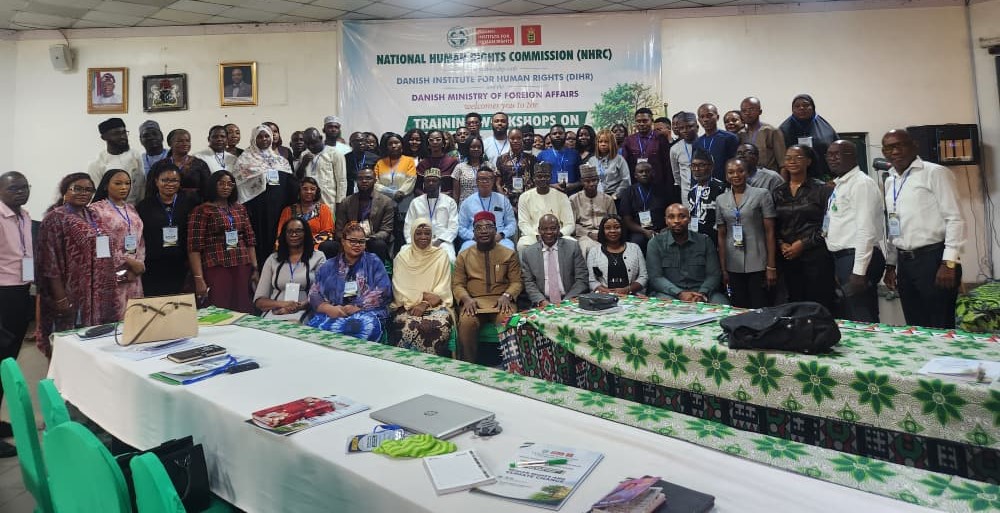
With support from the National Human Rights Commission, civil society organisations are seeking the participation of agencies whose mandates intersect with digital rights, cybersecurity, identity management, communications and data protection.
Among the institutions mentioned were the Nigeria Police Force, the Nigeria Police National Cybercrime Centre, the Nigeria Data Protection Commission (NDPC), the Nigerian Communications Commission (NCC) and the National Identity Management Commission (NIMC).
Odeh argued that having these institutions engage collectively could make it easier to determine which agency should handle particular complaints.
“If Accountability Lab or any other civil society organisation like Paradigm Initiative or Tech4 can find these concerns in the field, we will all understand this is the place to go to solve our problem,” he said.
Trust in Government at the Centre of Initiative
Odeh said the wider issue is also about public confidence in government institutions.
He argued that Nigerians are more likely to trust government when complaints are acknowledged and addressed through identifiable and functional institutional channels.
For communities participating in the grassroots engagements, the proposed system would provide a pathway for cases documented by civil society organisations to reach the relevant authorities.
The initiative therefore seeks to establish what Odeh described as a “collective, coordinated response system”, linking grassroots reporting with institutions responsible for resolving digital rights and data protection concerns.
From Documentation to Accountability
The effectiveness of such a framework will ultimately depend on whether complaints documented in communities receive timely and transparent responses from the institutions responsible for them.
For civil society organisations, the immediate task is to identify concerns from communities, document alleged violations and establish clear points of contact within government agencies.
For Nigerians affected by digital rights or data protection problems, the intended outcome is a system in which they can identify where to report a complaint and understand how it will be handled.
As Nigeria’s digital ecosystem continues to expand, the initiative places accountability, institutional coordination and access to remedies at the centre of the debate over citizens’ rights in the digital environment.
The push by Accountability Lab and its civil society partners reflects a growing effort to connect Nigeria’s digital rights debate with experiences outside major metropolitan centres. By bringing government agencies, rights organisations and affected communities into a coordinated reporting and response framework, the initiative aims to strengthen pathways for addressing alleged violations and, according to Odeh, contribute to greater public trust in institutions.












Leave a Reply