
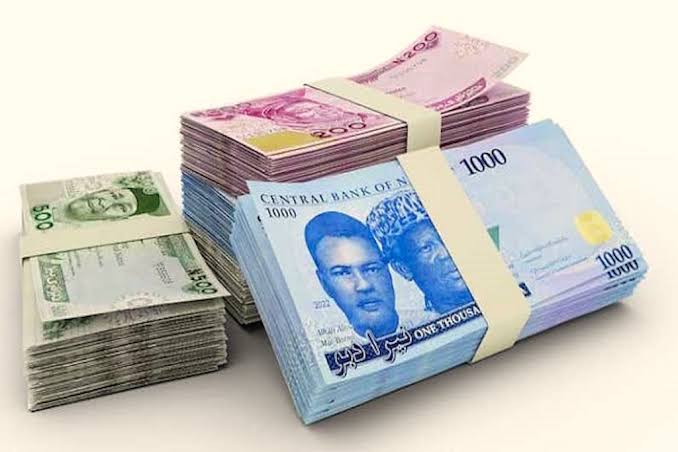
From the Paris Club debt relief of 2005 to a staggering ₦166.79 trillion public debt stock in June 2026, Nigeria’s borrowing history exposes a persistent cycle of fiscal dependence, expensive debt obligations and questions about the value citizens receive from public expenditure.
By Baron Stanley Eloagu
ABUJA, November 13, 2026 – Nigeria’s rising public debt has become one of the most consequential economic and governance challenges confronting the country, raising fundamental questions about successive administrations’ fiscal decisions, the management of public resources and the long-term sustainability of government borrowing.
As Nigerians debate the country’s debt burden, one figure has generated considerable confusion: the Federal Government’s reported public debt stock of ₦166.79 trillion as of June 30, 2026.
The figure represents a dramatic increase from the ₦87.38 trillion recorded in June 2023, when President Bola Ahmed Tinubu assumed office.
However, interpreting the increase as entirely new borrowing by the current administration would be misleading.
Nigeria’s debt profile has been influenced by several factors, including fresh borrowing, exchange-rate depreciation, the formal recognition of previously accumulated Central Bank obligations and changes in the composition and valuation of government liabilities.
Understanding these distinctions is essential to separating political rhetoric from economic reality.
More importantly, Nigeria’s borrowing history reveals a troubling pattern: despite periods of substantial oil revenues, international debt relief and successive economic reform programmes, the country has repeatedly returned to heavy borrowing to finance government expenditure.
THE EARLY YEARS: FROM MODEST BORROWING TO OIL-DRIVEN EXPENDITURE (1960–1981)
At independence in 1960, Nigeria inherited a relatively modest external debt burden.
Historical figures indicate that the country’s external debt stood at approximately £82.4 million around independence.
Earlier, in 1958, Nigeria had secured a World Bank loan of approximately $28 million for railway development, marking an important stage in the country’s engagement with international development financing.
During the 1960s and 1970s, borrowing remained relatively manageable compared with the levels subsequently recorded.
However, the discovery and commercial exploitation of petroleum fundamentally transformed Nigeria’s public finances.
The oil boom of the 1970s generated substantial foreign exchange earnings and encouraged ambitious government expenditure on infrastructure, public institutions and development programmes.
Unfortunately, the apparent abundance of oil revenue also weakened incentives to build a diversified revenue base.
Rather than using the oil windfall to establish a sustainable economic structure, successive governments became increasingly dependent on petroleum exports to finance national development.
When oil prices eventually declined, the weaknesses of this model became increasingly apparent.
THE DEBT TRAP: OIL PRICE COLLAPSE AND MILITARY GOVERNMENT BORROWING (1980s–1990s)
The international oil market downturn of the early 1980s exposed Nigeria’s vulnerability to external economic shocks.
With declining petroleum earnings, government revenue weakened, foreign exchange became increasingly scarce and the country’s capacity to meet external debt obligations deteriorated.
Interest accumulation, penalties and repayment difficulties compounded the problem.
During the military era, Nigeria struggled with mounting external obligations and repeated negotiations with international creditors.
Debt rescheduling arrangements in the 1980s and early 1990s provided temporary relief but did not fundamentally resolve the country’s debt sustainability challenges.
By December 2004, Nigeria’s external debt had reached approximately $35.99 billion, according to the Debt Management Office.
The Paris Club, which accounted for the overwhelming majority of the country’s external obligations, was the largest creditor group.
At that point, debt servicing had become a major constraint on government expenditure and economic development.
2005–2006: THE PARIS CLUB DEBT RELIEF AND NIGERIA’S FISCAL RESET
One of the most significant developments in Nigeria’s economic history occurred under President Olusegun Obasanjo.
In October 2005, Nigeria reached a landmark debt-relief agreement with the Paris Club.
The arrangement involved the cancellation of approximately $18 billion in debt and the payment of approximately $12.4 billion by Nigeria to settle outstanding obligations and complete the debt exit arrangement.
By April 2006, Nigeria had effectively cleared its Paris Club debt obligations, while its external debt stock fell dramatically.
The World Bank’s historical assessment records that Nigeria’s external debt declined from approximately $35.9 billion in 2004 to about $5.5 billion in 2005 following the debt-relief arrangement.
The achievement was widely regarded as a major fiscal milestone.
It restored some international confidence in Nigeria’s economy and created an opportunity for the country to redirect resources previously committed to external debt servicing.
However, the relief also presented a long-term governance question: would Nigeria use the opportunity to establish a disciplined borrowing framework, strengthen domestic revenue generation and invest strategically in productive infrastructure?
Subsequent developments suggest that the opportunity was not fully sustained.
2007–2023: THE RETURN OF HEAVY BORROWING
Following the debt-relief exercise, Nigeria gradually returned to domestic and international borrowing.
Successive administrations faced different economic circumstances, but the underlying challenge remained largely unchanged: government expenditure consistently exceeded available revenue.
Yar’Adua administration (2007–2010)
President Umaru Musa Yar’Adua inherited an economy benefiting from the previous administration’s debt-relief programme.
However, the 2008 global financial crisis and declining oil prices created additional pressure on government finances.
Domestic borrowing increased as the government sought to sustain expenditure and meet its financial obligations.
Infrastructure development remained an important policy priority, but the administration also inherited the structural problem of dependence on petroleum revenue.
Jonathan administration (2010–2015)
Under President Goodluck Jonathan, Nigeria experienced periods of substantial oil earnings.
Nevertheless, public debt increased as the government continued to finance budget deficits through domestic and external borrowing.
The administration also introduced Nigeria’s sovereign Eurobond programme, with international issuances in 2011 and 2013.
Some borrowing supported infrastructure and development programmes, including railway rehabilitation and other public investments.
However, expenditure pressures, petroleum subsidy obligations and weaknesses in revenue management continued to affect the country’s fiscal position.
The central question was no longer simply how much Nigeria earned from oil, but how effectively those earnings translated into sustainable economic development.
Buhari administration (2015–2023): The expansion of public debt
The administration of President Muhammadu Buhari witnessed a particularly significant expansion in Nigeria’s public debt.
The period was characterised by the 2016 economic recession, declining oil revenues, the COVID-19 pandemic and persistent fiscal pressures.
The government increasingly relied on domestic bonds, Treasury Bills, external loans and Central Bank financing arrangements to support expenditure.
One particularly controversial component was the Central Bank’s Ways and Means advances.
These advances allowed the Federal Government to obtain temporary financing from the Central Bank to address revenue shortfalls and expenditure obligations.
By December 2022, outstanding Ways and Means advances had accumulated to approximately ₦22.72 trillion.
In 2023, the National Assembly approved their securitisation into formal government debt instruments.
This distinction is important.
The securitisation did not mean that the entire ₦22.72 trillion was newly borrowed in 2023. The underlying advances had already been accumulated and spent before being formally converted into government securities.
Nevertheless, their inclusion in the recognised public debt stock increased the reported debt burden.
The Buhari administration also expanded infrastructure financing through sovereign bonds, Sukuk instruments and bilateral loans, including Chinese financing for railway and other infrastructure projects.
However, the scale of borrowing relative to the country’s revenue-generating capacity raised questions about fiscal sustainability.
TINUBU ADMINISTRATION: WHY THE NAIRA DEBT FIGURES LOOK SO LARGE
When President Bola Ahmed Tinubu assumed office in May 2023, Nigeria’s public debt stock stood at approximately ₦87.38 trillion as at June 30, 2023.
By June 30, 2026, the Debt Management Office reported a total public debt stock of ₦166.79 trillion.
This represents an increase of approximately ₦79.41 trillion in naira terms.
However, interpreting the entire increase as fresh borrowing would overlook the effect of exchange-rate movements and the structure of Nigeria’s debt portfolio.
The June 2026 DMO report provides the following breakdown:
Total public debt: ₦166.79 trillion.
Domestic debt: ₦91.59 trillion.
External debt: ₦75.20 trillion.
Total debt in dollar terms: approximately $120.93 billion.
Federal Government obligations: ₦152.77 trillion.
States and FCT obligations: approximately ₦14.01 trillion.
Domestic debt accounts for approximately 54.9 per cent of the total, while external debt represents approximately 45.1 per cent.
The figures demonstrate the extent to which Nigeria’s public finances are exposed to both domestic interest rates and foreign exchange movements.
Exchange-rate depreciation and the illusion of additional naira borrowing
One of the most important factors behind the apparent explosion in Nigeria’s naira-denominated external debt is the depreciation of the national currency.
When external loans are contracted in dollars, their naira equivalent changes whenever the exchange rate changes.
For example, a dollar obligation of $1 billion would be worth ₦448 billion at an exchange rate of ₦448 to the dollar.
At ₦1,379 to the dollar, the same obligation would be worth approximately ₦1.379 trillion.
The government would not necessarily have borrowed an additional dollar, but the naira value of its existing obligation would have increased substantially.
This explains why Nigeria’s public debt figures cannot be interpreted without examining the exchange rate used in converting foreign-currency obligations.
It is equally important to recognise that the dollar value of the total debt stock is not a perfect measure of new borrowing. Changes in domestic debt, repayments, fresh disbursements and currency valuations must also be considered.
WHERE DOES NIGERIA’S ₦166.79 TRILLION DEBT COME FROM?
Nigeria’s debt portfolio consists of several categories of financial obligations.
Understanding them helps explain why the country can accumulate substantial debt without every borrowing transaction being directly connected to a visible infrastructure project.
1. Ways and Means: Approximately ₦22.72 trillion
Ways and Means advances represent one of the most controversial components of Nigeria’s domestic debt.
They arose from Central Bank financing provided to the Federal Government to address revenue shortfalls and expenditure requirements.
The outstanding balance of approximately ₦22.72 trillion was securitised in 2023.
The important governance question is whether the expenditure financed through these advances generated sufficient economic and social returns to justify the resulting long-term obligations.
Unlike project-specific loans, Ways and Means financing was not tied to one identifiable road, railway or power project.
2. Domestic bonds and Treasury Bills
Domestic borrowing accounts for the largest share of Nigeria’s public debt.
Federal Government bonds are used to finance budget deficits and other government financing requirements.
Treasury Bills provide short-term financing and cash-flow management.
Other instruments include Sukuk, promissory notes, savings bonds and green bonds.
These instruments serve different purposes.
For example, Sukuk financing has been associated with road construction and rehabilitation, while promissory notes represent government obligations to creditors and contractors.
However, the existence of a bond does not automatically establish that its proceeds were spent on productive infrastructure.
Transparency requires a clear connection between borrowing approvals, actual disbursements, project execution and independently verified results.
3. External loans and Eurobonds
Nigeria’s external debt includes loans from multilateral development institutions, bilateral creditors and commercial lenders.
Multilateral creditors include the World Bank Group and the African Development Bank.
Bilateral obligations include financing arrangements with countries and their development institutions, particularly China.
Commercial borrowing includes sovereign Eurobonds issued in international capital markets.
Eurobonds are particularly important because they are generally denominated in foreign currencies and carry contractual interest and repayment obligations.
Unlike some concessional development loans, commercial bonds can carry relatively high interest rates.
Their repayment therefore places additional pressure on Nigeria’s foreign exchange resources.
THE EUROBOND QUESTION: BORROWING TODAY, REPAYING TOMORROW
Nigeria’s Eurobond obligations deserve particular attention because of their implications for future public finances.
According to the supplied DMO debt portfolio figures, outstanding Eurobond obligations stood at approximately $18.55 billion.
These instruments have different maturity dates and interest rates, creating repayment obligations extending into the 2030s, 2040s and beyond.
One significant concern is the $1.5 billion Eurobond scheduled to mature in November 2027.
The government will have to manage the repayment through available foreign exchange resources, refinancing or other financing arrangements.
Refinancing may provide temporary relief by replacing maturing debt with new obligations, but it does not eliminate the underlying liability.
Nigeria must therefore improve its capacity to generate foreign exchange through exports, strengthen revenue collection and manage its external obligations prudently.
The country’s dependence on petroleum exports makes this challenge particularly important.
HOW MUCH OF THE BORROWED MONEY ACTUALLY BUILT INFRASTRUCTURE?
This is arguably the most important question in the entire borrowing debate.
Borrowing is not inherently bad.
Countries borrow to finance infrastructure, expand productive capacity, improve public services and accelerate economic development.
However, borrowing becomes economically dangerous when the resulting expenditure fails to generate sufficient returns to support repayment.
Nigeria’s borrowing portfolio contains both project-linked financing and general budget-support financing.
Examples of project-linked borrowing include:
Railway development and rehabilitation.
Road construction and rehabilitation financed through Sukuk.
Airport and power infrastructure supported by bilateral financing.
Development programmes supported by multilateral institutions.
Social protection and economic reform programmes.
Other borrowing instruments, including general government bonds, Treasury Bills and Eurobonds, are used to finance budget deficits and broader government expenditure.
It would therefore be inaccurate to suggest that all Nigeria’s borrowing was spent on infrastructure.
It would equally be inaccurate to claim that all borrowing produced no infrastructure.
The real problem is the absence of a sufficiently transparent and consistently communicated relationship between public borrowing, expenditure outcomes and measurable economic returns.
Nigerians have a legitimate right to know which projects were financed, how much was spent, whether the projects were completed and whether they are delivering the promised benefits.
THE DEBT-SERVICING CRISIS: WHEN REPAYMENT COMPETES WITH DEVELOPMENT
The most disturbing aspect of Nigeria’s debt situation is not merely the size of the outstanding debt, but the growing cost of servicing it.
President Tinubu’s 2026 budget proposal projected total revenue of ₦34.33 trillion and allocated approximately ₦15.52 trillion to debt servicing.
This means that debt servicing represents approximately 45 per cent of projected annual revenue.
The implication is significant.
A substantial portion of the government’s anticipated revenue must be committed to meeting existing debt obligations before other competing expenditure requirements are addressed.
The government must still finance education, healthcare, security, infrastructure, public administration and social protection.
Where revenue underperforms budget projections, the pressure becomes even greater.
Nigeria consequently faces a difficult fiscal balancing act: borrowing to finance expenditure while simultaneously committing substantial resources to servicing previous borrowing.
This raises concerns about the country’s ability to sustain development spending without increasing its dependence on additional loans.
THE REAL PROBLEM: NIGERIA’S FAILURE TO CONVERT BORROWING INTO WEALTH
Nigeria’s borrowing history reveals a deeper structural problem that successive governments have failed to adequately address.
The country has repeatedly borrowed against future revenue without sufficiently expanding the productive economic base required to sustain those obligations.
For decades, petroleum has remained central to government revenue and foreign exchange earnings.
Meanwhile, manufacturing, agriculture, industrial production and non-oil exports have struggled to achieve their full economic potential.
The result is an economy where government borrowing frequently becomes a substitute for sustainable revenue generation.
This is not simply a financial problem. It is a governance problem.
A country can borrow hundreds of billions of dollars and still experience inadequate electricity, poor roads, unemployment, weak public healthcare and deteriorating educational infrastructure if its borrowing decisions are not supported by effective planning, implementation and accountability.
The issue is therefore not whether Nigeria should borrow.
The issue is whether borrowing is producing sufficient economic value to justify the obligations being transferred to future generations.
WHAT NIGERIA MUST DO TO BREAK THE DEBT CYCLE
Nigeria needs a fundamental restructuring of its approach to public borrowing.
First, borrowing should be tied to clearly identified development priorities, particularly infrastructure and productive sectors capable of generating economic returns.
Second, government must strengthen transparency around loan agreements, disbursements, project costs and implementation outcomes.
Third, the National Assembly must exercise more rigorous oversight over borrowing proposals and the utilisation of borrowed funds.
Fourth, Nigeria must reduce its dependence on crude oil by expanding manufacturing, agriculture, technology, solid minerals and non-oil exports.
Fifth, government must improve tax administration, eliminate wasteful expenditure and address revenue leakages.
Finally, debt management must move beyond the question of whether Nigeria can obtain additional loans to the more fundamental question of whether the country can afford them and what measurable value they will deliver.
CONCLUSION: A NATION CANNOT BORROW ITS WAY OUT OF BAD GOVERNANCE
Nigeria’s journey from a relatively modest external debt burden at independence to a public debt stock of ₦166.79 trillion in June 2026 is a sobering account of the country’s fiscal history.
The Paris Club debt relief of 2005 demonstrated that decisive economic reforms and responsible financial management could substantially reduce Nigeria’s external obligations.
However, the subsequent return to heavy borrowing suggests that debt cancellation alone cannot solve a country’s structural economic problems.
The argument that President Tinubu personally borrowed the entire ₦79.41 trillion naira increase since June 2023 is incomplete because it ignores exchange-rate revaluation and the complexities of debt accounting.
Equally, using exchange-rate depreciation and inherited obligations to explain away every increase in public debt would be an equally misleading exercise.
Every administration must be held accountable for its own borrowing decisions, financial commitments and expenditure outcomes.
The Buhari administration must answer questions about the accumulation of Ways and Means advances and the expansion of public debt during its tenure.
The Tinubu administration must explain its borrowing priorities, the management of inherited liabilities, the utilisation of new loans and the economic returns expected from its expenditure programmes.
Ultimately, Nigerians should not judge government borrowing merely by the amount announced in budget speeches or the number of projects displayed in official presentations.
They should judge it by the quality of infrastructure delivered, the jobs created, the productive capacity expanded, the improvement in living standards and the economic opportunities secured for future generations.
A nation cannot borrow its way out of bad governance. And a government that borrows without delivering measurable value is effectively transferring today’s fiscal failures to tomorrow’s citizens.
The central question Nigeria must confront is no longer simply how much the country owes.
It is what the country has to show for everything it has borrowed.
Sources e:
Debt Management Office Nigeria – Public Debt Reports�
Federal Government of Nigeria – 2026 Budget Speech�
Federal Ministry of Finance�



Leave a Reply