
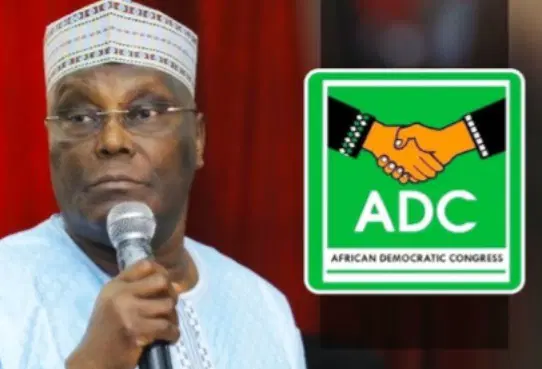
Social activist and political commentator Hajia Hadiza Mohammed has criticised the Federal High Court ruling affecting the David Mark-led African Democratic Congress leadership, alleging that the development raises serious questions about opposition politics, judicial independence and the survival of Nigeria’s democracy.
November 5–11, 2026
ABUJA, Nigeria – November 11, 2026.
By: A1 News
The controversy surrounding the leadership crisis in the African Democratic Congress (ADC) has intensified following a Federal High Court judgment affecting the party’s leadership structure, with social activist and political commentator Hajia Hadiza Mohammed warning that the development could have far-reaching consequences for Nigeria’s democratic institutions.
In an opinion article titled The Court Order Sacking the ADC Leadership, the Survival of Nigeria’s Democracy and the Symptoms of a State Capture, Mohammed questioned the circumstances surrounding the judgment delivered on November 5, 2026, by Justice Peter Lifu.
The ruling reportedly declared the David Mark-led caretaker committee and National Working Committee illegal over alleged violations of the ADC constitution, the Electoral Act and the 1999 Constitution.
Mohammed argued that the judgment could significantly disrupt the party’s political activities and create uncertainty around its preparations for the 2027 general elections.
COURT RULING TRIGGERS POLITICAL CONTROVERSY
The legal dispute reportedly originated from a case instituted by Nafiu Bala Gombe, a former Deputy National Chairman of the ADC, over the party’s leadership arrangements.
According to Mohammed, the judgment has implications for activities undertaken by the David Mark-led leadership since assuming control of the party, including preparations for its presidential primaries.
She expressed concern that the development could weaken the opposition’s organisational capacity at a critical period in Nigeria’s political calendar.
The activist also questioned the timing and wider political implications of the ruling, suggesting that the outcome could deepen divisions within the opposition.
MOHAMMED QUESTIONS APC’S POSITION
Mohammed linked the controversy to the political interests of the ruling All Progressives Congress (APC), alleging that the legal dispute and subsequent judgment could benefit the governing party.
She particularly questioned the reaction of the Minister of Aviation and Aerospace Development, Festus Keyamo, who reportedly welcomed the judgment and accused the David Mark-led ADC leadership of hijacking the party.
The activist interpreted Keyamo’s reaction as evidence of the ruling party’s satisfaction with the development.
However, the APC, through its National Publicity Secretary, Felix Morka, reportedly denied any involvement in the dispute.
Morka maintained that the matter arose from an internal disagreement within the ADC involving an aggrieved party member.
He also criticised the party’s handling of its internal affairs and questioned its preparedness to govern the country, while advising the opposition to pursue available legal channels rather than engage in political accusations.
Mohammed dismissed the APC’s explanation as unconvincing, arguing that the ruling party’s public reaction suggested political satisfaction with the ADC’s difficulties.
TINUBU GOVERNMENT ACCUSED OF UNDERMINING DEMOCRATIC INSTITUTIONS
Beyond the ADC leadership crisis, Mohammed used the controversy to raise broader concerns about the state of Nigeria’s democratic institutions under President Bola Ahmed Tinubu.
She alleged that the administration’s political ambitions had increasingly overshadowed institutional independence and democratic accountability.
According to her, several institutions of government, including subnational administrations, had become excessively focused on political activities surrounding the 2027 presidential election.
She further alleged that the executive, legislature, security agencies and anti-corruption institutions were not operating with sufficient independence.
These claims, which represent the author’s political assessment, form the central argument of her warning about what she describes as symptoms of state capture in Nigeria.
JUDICIAL INDEPENDENCE UNDER SCRUTINY
One of the most significant aspects of Mohammed’s criticism concerns the judiciary.
She questioned the credibility of the judicial process surrounding the ADC leadership dispute and expressed concern about public confidence in the independence of Nigerian courts.
The activist argued that the judiciary must remain insulated from political influence, particularly in cases involving opposition parties and electoral competition.
She maintained that judicial decisions must be guided by constitutional provisions, established legal principles and the pursuit of justice rather than partisan considerations.
Her criticism reflects wider concerns about the role of judicial institutions in resolving political disputes and protecting democratic rights.
However, allegations of judicial compromise or political interference require credible evidence and cannot be established solely through political commentary.
WARNINGS OVER THE 2027 PRESIDENTIAL ELECTION
Mohammed also expressed concern that developments within the ADC could affect the political prospects of opposition figures, particularly former Vice President Atiku Abubakar.
She argued that weakening the ADC’s organisational structure could complicate opposition efforts ahead of the 2027 presidential election.
She also raised concerns about the potential implications for Peter Obi and other opposition political actors, warning against developments that could undermine competitive multiparty elections.
According to her, Nigeria’s democracy depends on ensuring that qualified political parties and candidates can participate freely in the electoral process.
She insisted that opposition figures must be allowed to pursue their political ambitions within the framework of the law.
CALL FOR CITIZEN PARTICIPATION AND DEMOCRATIC ACCOUNTABILITY
Concluding her intervention, Mohammed called on Nigerians to become more actively involved in protecting democratic institutions and demanding accountability from elected officials.
She urged citizens not to remain indifferent to developments that could weaken political pluralism, institutional independence and constitutional governance.
The activist also advocated sustained opposition to what she described as authoritarian tendencies within the political system, insisting that democratic accountability must remain a collective national responsibility.
The controversy surrounding the ADC leadership dispute has once again highlighted the complex relationship between internal party democracy, judicial intervention and political competition in Nigeria.
While the legal issues surrounding the party’s leadership remain subject to the judicial process, the concerns raised by Mohammed underscore the importance of transparency, institutional independence and respect for constitutional democracy.
As preparations for the 2027 general elections approach, the ability of political institutions to operate independently and guarantee a level playing field will remain central to public confidence in Nigeria’s democratic system.
A democracy is strengthened not merely by the conduct of elections, but by the independence of its institutions, the protection of political freedoms and the equal application of the law.
SOURCE / CONTRIBUTOR
Hajia Hadiza Mohammed
Actress, Social Activist and Politician
London, United Kingdom.
Editorial Note: This report is based on an opinion article submitted by Hajia Hadiza Mohammed. Allegations of political interference, state capture and judicial compromise reflect the author’s position not A1 News International.





Leave a Reply