
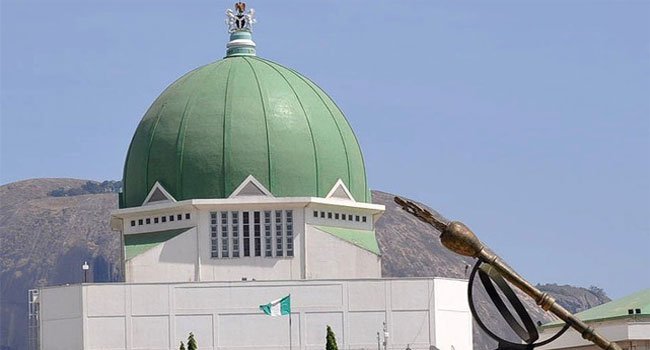
Nigeria’s democratic future faces a critical test as concerns over institutional independence, political intimidation, judicial credibility and the concentration of political power raise fundamental questions about the survival of constitutional democracy.
By Hajia Hadiza Mohammed
NOVEMBER 11, 2026
INTRODUCTION
A democracy does not collapse only when soldiers take over government or when elected leaders are forcibly removed from office. Sometimes, democratic institutions remain physically intact while their independence, credibility and constitutional responsibilities are gradually undermined.
This is the danger commonly described as state capture — a situation in which powerful individuals or political interests gain disproportionate control over public institutions and redirect them towards private, partisan or personal objectives at the expense of the wider population.
Nigeria’s democratic experience is increasingly confronting questions surrounding institutional independence, accountability, political patronage and the ability of public institutions to operate without undue political interference.
Under President Bola Ahmed Tinubu’s administration, these concerns have become central to an increasingly heated national debate. The question is no longer simply whether Nigeria has functioning democratic institutions, but whether those institutions are sufficiently independent to protect citizens, uphold the Constitution and hold political power accountable.
The survival of Nigeria’s democracy depends significantly on how the country confronts these challenges.
UNDERSTANDING THE DANGERS OF STATE CAPTURE
One of the defining characteristics of a failing state is the weakening or collapse of its institutions. However, an even more dangerous development occurs when institutions that should protect citizens are allegedly transformed into instruments for serving the interests of a privileged few.
State capture represents a fundamental distortion of democratic governance.
When public institutions become susceptible to political manipulation, the distinction between public interest and private ambition begins to disappear. Government appointments may become instruments of political compensation rather than merit-based public service. Security agencies may face pressure to serve partisan interests, while regulatory and anti-corruption institutions risk losing the independence necessary to perform their constitutional responsibilities.
The consequences extend beyond politics.
Institutional capture undermines public confidence, deepens inequality, encourages impunity and weakens the rule of law. It also creates an environment in which ordinary citizens increasingly struggle to obtain justice or hold powerful individuals accountable.
For Nigeria, a country with enormous human and natural resources but persistent governance challenges, the implications are particularly serious.
THE TINUBU ADMINISTRATION AND THE QUESTION OF INSTITUTIONAL INDEPENDENCE
President Bola Ahmed Tinubu’s leadership has generated intense political debate, particularly concerning the direction of governance, economic reforms, political appointments and the independence of public institutions.
In the author’s assessment, the political structure established during Tinubu’s administration reflects an alarming concentration of power and influence.
She draws parallels between the political and administrative machinery associated with Tinubu’s years as governor of Lagos State and what she considers an attempt to consolidate similar influence at the federal level.
These assertions raise an important governance question: can a democratic system function effectively when political power becomes excessively concentrated around individuals and networks of influence?
Public institutions are established to serve the Nigerian people, not the political interests of whoever occupies the presidency.
The National Assembly must exercise its constitutional oversight responsibilities independently. The judiciary must dispense justice without political interference. Security agencies must protect all Nigerians irrespective of political affiliation, while anti-corruption institutions must investigate allegations objectively, without fear or favour.
Where these safeguards become compromised, democracy risks becoming an electoral arrangement without meaningful institutional accountability.
THE NATIONAL ASSEMBLY AND THE JUDICIARY MUST REMAIN INDEPENDENT
The separation of powers is one of the most important safeguards against authoritarian tendencies in a constitutional democracy.
Nigeria’s Constitution establishes three distinct arms of government: the Executive, the Legislature and the Judiciary. Each has clearly defined responsibilities designed to prevent the concentration and abuse of political authority.
The National Assembly is expected to scrutinise executive policies, investigate public expenditure, exercise legislative oversight and hold government accountable.
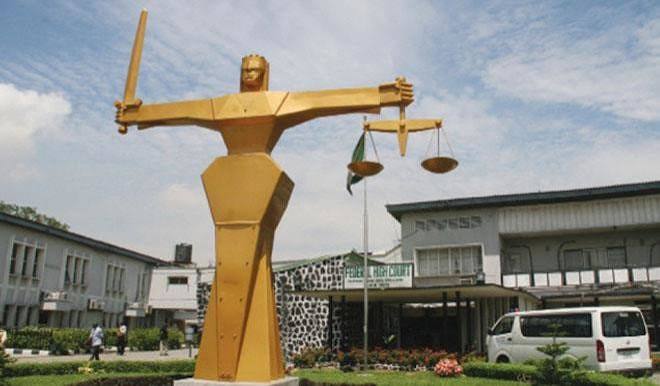
Similarly, the judiciary must remain independent and impartial, particularly when resolving disputes involving political parties, electoral processes and the exercise of executive authority.
Concerns about the independence of these institutions should therefore never be dismissed as ordinary political disagreements.
The legitimacy of democratic government depends on the ability of institutions to operate according to constitutional principles rather than political convenience.
When political actors begin to perceive courts as instruments for securing partisan victories, public confidence in the judicial system inevitably suffers.
The judiciary must not only be independent; it must also be seen to be independent.
INSECURITY, HUMAN RIGHTS AND THE COST OF WEAK GOVERNANCE
Nigeria’s security challenges remain a major test of the government’s capacity to protect lives and property.
Insurgency, banditry, kidnapping, communal violence and other forms of criminality have continued to threaten communities, disrupt economic activities and displace vulnerable populations.
Beyond these conventional security threats, concerns about political violence, intimidation and the treatment of opposition figures have added another dimension to the country’s governance challenges.
The author argues that government policies, insecurity and economic hardship have combined to create an atmosphere of fear and uncertainty among Nigerians.
These concerns demand serious attention because the protection of fundamental human rights is not optional. It is a constitutional obligation.
Freedom of expression, freedom of association, peaceful political participation and the right to seek redress through lawful institutions are essential components of democratic governance.
Opposition parties, civil society organisations, journalists and ordinary citizens must be able to express dissent without intimidation.
A government confident in its democratic legitimacy should welcome scrutiny rather than regard criticism as an existential threat.
POLITICAL VIOLENCE AND THE THREAT TO ELECTORAL DEMOCRACY
Perhaps one of the most troubling dimensions of Nigeria’s political environment is the recurring allegation of violence and intimidation associated with political competition.
Elections are supposed to provide citizens with the opportunity to determine who governs them through a free, fair and credible process.
However, when political competition becomes characterised by intimidation, thuggery, threats and physical attacks, the democratic process is fundamentally compromised.
The author alleges that opposition parties and their supporters have experienced politically motivated attacks and intimidation, which she believes have not received adequate institutional responses.
Such allegations deserve impartial investigation by the relevant security agencies.
Electoral violence must never be treated as an acceptable feature of Nigerian politics, regardless of the political affiliation of those involved.
The police, electoral authorities and other security institutions have a responsibility to protect political actors, voters and election officials without discrimination.
The credibility of any election depends not only on the voting process but also on the political environment in which citizens exercise their franchise.
THE DANGER OF A ONE-PARTY POLITICAL SYSTEM
A healthy democracy requires a viable opposition.
Opposition political parties provide alternative policy directions, scrutinise government decisions and offer citizens the opportunity to choose between competing political visions.
Without meaningful political competition, elected governments face fewer incentives to remain accountable.
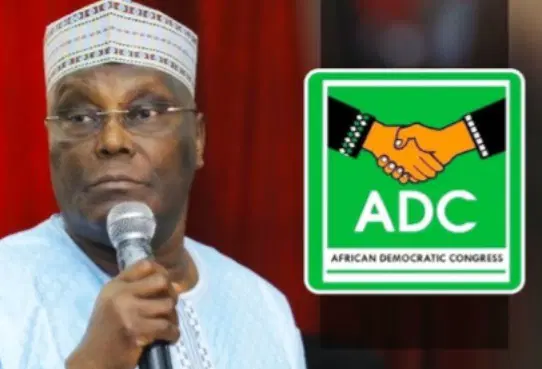
The author’s argument is that political manoeuvres, defections, internal party crises and legal disputes could weaken opposition platforms and gradually undermine Nigeria’s multiparty democratic system.
She also raises concerns about the possibility of using judicial processes and political influence to destabilise opposition alliances.
These concerns must be examined against the constitutional guarantee of freedom of association and the right of political parties to organise, compete and participate in elections.
Political defections and party disputes are not inherently undemocratic. However, the manipulation of institutional processes to deliberately eliminate political competition would represent a serious threat to democratic pluralism.
Nigeria must resist any development that makes political competition dependent on the approval or convenience of the ruling establishment.
A democracy without a credible opposition risks becoming a political monopoly.
ECONOMIC HARDSHIP AND THE POLITICS OF PUBLIC DEPENDENCY
The relationship between economic hardship and democratic stability cannot be ignored.
Poverty, unemployment, inflation and declining purchasing power can weaken citizens’ capacity to participate meaningfully in public affairs.
When people are struggling to meet basic needs, their ability to challenge government policies, demand accountability and participate in political activities may become increasingly constrained.
The author argues that economic hardship has become a significant feature of the Tinubu administration and contends that poverty and dependency can be exploited as instruments of political control.
While economic hardship alone does not establish deliberate political manipulation, its implications for democratic participation deserve serious consideration.
Economic empowerment is therefore not merely an economic policy objective; it is also a democratic necessity.
Citizens who enjoy economic security are generally better positioned to exercise independent political judgement, demand accountability and resist political inducements.
Government must recognise that economic reforms should ultimately improve the welfare of citizens rather than deepen their vulnerability.
THE JUDICIARY MUST NOT BECOME AN INSTRUMENT OF POLITICAL WARFARE
The judiciary occupies a particularly sensitive position in Nigeria’s democratic structure.
Political parties frequently resort to the courts to resolve disputes involving leadership, candidate selection, electoral outcomes and constitutional interpretation.
This is legitimate within a constitutional democracy.
However, the increasing tendency of political actors to interpret judicial outcomes primarily through partisan interests creates a dangerous atmosphere of suspicion.
The author expresses concern that court proceedings and judicial decisions could be exploited to weaken opposition political structures and consolidate the ruling party’s influence.
Such concerns reinforce the need for transparency, judicial independence, due process and strict adherence to constitutional principles.
Courts must decide cases based on evidence, applicable laws and established legal principles, not political expectations.
The credibility of the judiciary is one of the strongest protections against arbitrary government.
Once citizens lose confidence in the courts as impartial arbiters, the entire democratic system becomes vulnerable.
NIGERIANS MUST DEFEND DEMOCRACY THROUGH CONSTITUTIONAL MEANS
The survival of Nigeria’s democracy cannot be left exclusively to politicians, political parties or government institutions.
Citizens have a fundamental responsibility to defend democratic values through lawful and constitutional participation.
Voter registration, informed political choices, peaceful participation in elections, public scrutiny of government policies and the rejection of electoral violence are essential instruments of democratic accountability.
Nigerians must also resist political intimidation and reject the culture of impunity that allows powerful individuals to operate above the law.
The right to vote is more than a constitutional privilege. It is an instrument through which citizens exercise sovereign authority over those who govern them.
However, voting alone is insufficient.
Citizens must demand transparency in electoral administration, accountability from elected representatives and credible investigations into allegations of political violence and institutional abuse.
Civil society organisations, professional associations, traditional institutions, religious organisations and the media also have important roles in protecting democratic accountability.
The media, in particular, must remain committed to independent journalism, factual reporting and the public interest, especially when political tensions threaten freedom of expression.
CONCLUSION: NIGERIA’S DEMOCRATIC FUTURE MUST NOT BE SACRIFICED
Nigeria stands at an important point in its democratic journey.
The country’s survival as a united nation and the sustainability of its democratic institutions depend on the ability of its leaders and citizens to defend constitutional governance against political manipulation, institutional compromise and the excessive concentration of power.
State institutions belong to the Nigerian people. They must not become instruments for advancing personal ambitions, rewarding political loyalists or suppressing legitimate opposition.
The presidency is not an inheritance, the judiciary is not a political department, the legislature is not an executive appendage, and security agencies are not private instruments of political power.
Every public office derives its legitimacy from the Constitution and the consent of the people.
President Tinubu and every other political leader must therefore be judged by the same democratic standards: respect for the Constitution, protection of fundamental rights, institutional accountability and measurable improvements in citizens’ welfare.
Nigerians must reject political violence, intimidation, electoral manipulation and every attempt to undermine democratic competition.
The responsibility to defend democracy belongs to everyone.
The ballot must remain more powerful than intimidation, the Constitution must remain superior to political ambition, and public institutions must remain accountable to the people.
Nigeria must not become a country where the survival of political power takes precedence over the survival and welfare of its citizens.
The task before Nigerians is clear: defend democracy, protect public institutions, demand accountability and rebuild a nation in which power genuinely belongs to the people.
Long live Nigeria.

ABOUT THE AUTHOR
Hajia Hadiza Mohammed is an actress, social activist and politician based in London, United Kingdom.
Editorial Note: This is an opinion article reflecting the author’s political assessment and allegations. The allegations concerning political interference, institutional manipulation and electoral violence should not be interpreted as A1NEWS political stand.




Leave a Reply