
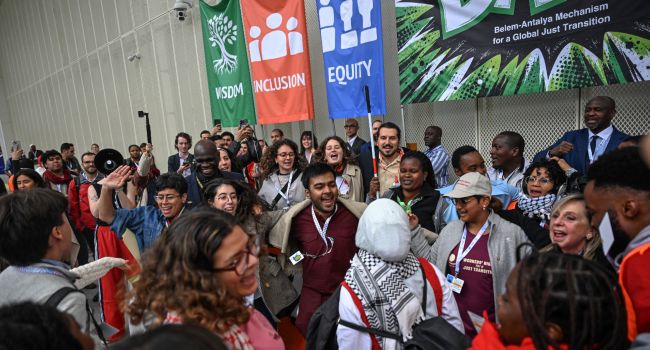
UN chief António Guterres has urged governments to end dependence on fossil fuels, but the absence of several G7 and major European leaders is raising questions about political commitment at a summit tasked with accelerating climate action.
By: A1NEWS International
ANTALYA, Turkey — November 11, 2026
World leaders are gathering at COP31 in Antalya as climate disasters intensify, but the absence of several prominent heads of government is drawing attention to a central question facing the summit: whether countries can advance global climate action when some of the most influential leaders are not in the room.
The two-week United Nations climate conference began earlier this week in the Mediterranean resort city. Governments are under pressure to respond to a year marked by European heatwaves, deadly flooding in Nepal and major wildfires in Indonesia.
The leaders’ high-level segment begins Wednesday and continues Thursday. Those scheduled to speak include Turkish President Recep Tayyip Erdoğan, Brazilian President Luiz Inácio Lula da Silva and Iranian President Masoud Pezeshkian.
But the list of absences is also notable. British Prime Minister Andy Burnham is the only leader from a G7 country scheduled to address the summit, according to the reported programme. French President Emmanuel Macron, German Chancellor Friedrich Merz, Italian Prime Minister Giorgia Meloni, Canadian Prime Minister Mark Carney and Japanese Prime Minister Sanae Takaichi are not on the latest list.
Guterres targets fossil-fuel influence
UN Secretary-General António Guterres used his address on Wednesday to accuse oil and gas interests of obstructing climate action, urging governments to “end the fossil fuel addiction.”
“Fossil fuels must go the way of the dinosaurs, but that won’t happen on its own,” Guterres said. “The dinosaurs did not have a lobby, but fossil fuels do.”
The remarks came at what is described as Guterres’ final UN climate summit as secretary-general. They sharpened the focus on the political and economic interests that have complicated efforts to reduce reliance on coal, oil and gas.
In 2023, countries agreed for the first time to transition away from fossil fuels. But progress toward that goal has remained difficult at successive annual climate conferences.
European absence prompts concern over summit influence
Climate diplomacy observers say the absence of several major European leaders could weaken the region’s visibility in negotiations.
“It is a shame that some of the bigger European leaders aren’t coming. We need Europe to be showing up strongly at this COP,” said Cosima Cassel, a climate diplomacy expert at the think tank E3G, in comments reported by AFP.
Chiara Martinelli, director of Climate Action Network Europe, said attending the summit was an important way for leaders to influence the direction of the global energy transition.
“I am afraid that Ursula von der Leyen will be lonely on the stage while the leaders of the biggest EU economies are a no-show,” Martinelli said. European Commission President Ursula von der Leyen is expected to attend.
EU climate chief Wopke Hoekstra said leader absences were “not completely atypical,” noting that practical considerations can prevent heads of government from attending. He also cautioned that expectations for the conference were not necessarily high.
The French government said Macron would miss the summit because November 11 is Armistice Day and he is due to attend an EU summit in Ireland on Thursday.
US and Chinese leaders also absent
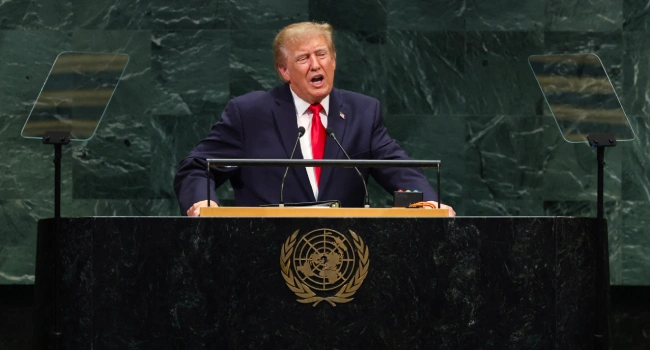
US President Donald Trump is not attending COP31. The United States has withdrawn from the Paris Agreement under his administration, and, according to the information provided, has not sent officials to climate talks since his re-election in 2024.
Chinese President Xi Jinping, who rarely attends COP summits, is due to be represented by Vice President Han Zheng.
The absences carry particular weight because the United States and China are the world’s two largest economies and biggest emitters of planet-warming greenhouse gases. Their participation is widely regarded as important to the negotiations, even when they are represented by senior officials rather than their presidents.
Brazilian President Lula’s presence offers a counterweight for climate campaigners, particularly given his record of advocating to reduce deforestation. “But we have Lula,” Cassel said.
Iran’s Pezeshkian is also expected to use his appearance to raise the environmental consequences of conflict. Before departing for Turkey, he said he would speak about what he described as environmental destruction caused by the United States and Israel, according to Iranian state television.
Turkey promotes electrification initiative
As host, Turkey is promoting a voluntary initiative to accelerate the electrification of transport, buildings and industry. The proposal sets a goal of increasing electricity’s share of global energy consumption to 35 percent by 2035.
The initiative could become a point of debate over what qualifies as clean electrification and how quickly fossil fuels can be displaced. The European Union has stressed that electrification must be “clean,” highlighting the potential tension between expanding electricity use and continuing reliance on coal, oil and gas.
Meanwhile, researchers said global fossil-fuel emissions are projected to fall slightly in 2026, citing renewable-energy growth and an oil-price shock linked to the Iran war. A projected decline would offer a positive signal, but it does not resolve the broader challenge facing negotiators: turning emissions reductions into sustained, coordinated policy.
political attendance is part of the climate test
COP31 brings together governments facing mounting pressure to respond to climate change, but the absence of several major leaders has exposed a gap between the scale of the crisis and the level of political representation at the summit. With the United States and China represented below presidential level and several European leaders staying away, negotiators will be judged not only on the commitments made in Antalya, but on whether governments can translate them into action after the conference ends.





Leave a Reply