
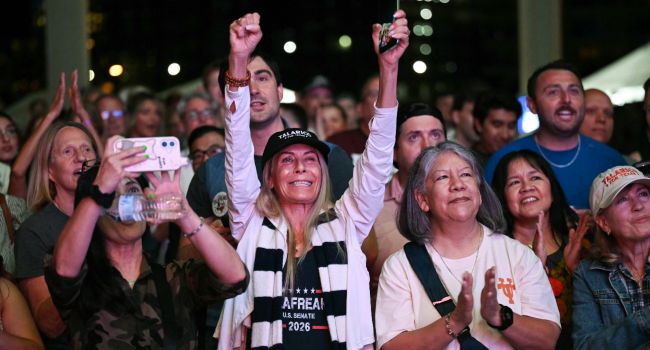
Sweeping Democratic victories in traditionally Republican strongholds hand the opposition control of both chambers of Congress, threaten Trump’s legislative agenda and open the door to congressional investigations into alleged corruption, the Iran war and controversial immigration policies.
By A1 News International
WASHINGTON, D.C., United States | November 4, 2026.
The political landscape of the United States has undergone a dramatic transformation following the November 3, 2026, midterm elections, in which the Democratic Party secured control of both the House of Representatives and the Senate, delivering a significant electoral defeat to President Donald Trump and his Republican Party.
The outcome represents one of the most consequential midterm reversals in recent American political history, particularly because Democratic candidates recorded remarkable victories in traditionally Republican territories where Trump’s political movement had previously enjoyed considerable electoral strength.
Beyond the immediate redistribution of political power, the results raise fundamental questions about the effectiveness of Trump’s economic policies, his administration’s handling of the war with Iran, allegations of corruption and the broader direction of American domestic and foreign policy.
With Democrats preparing to assume control of Congress in January 2027, the remaining two years of Trump’s presidency could become a period of intense political confrontation, legislative obstruction and unprecedented congressional scrutiny of the administration.
The election has therefore become more than a contest for congressional seats. It represents a public verdict on the direction of the Trump presidency and a warning about the political consequences of governing without sufficient attention to public dissatisfaction.
THE DEMOCRATIC BLUE WAVE: REPUBLICAN STRONGHOLDS FALL
The Democratic victory was particularly significant because it extended beyond the traditional Democratic electoral base.
According to election projections reported by major American news organisations, Democrats captured the Senate and regained control of the House, making substantial gains in states and congressional districts previously considered reliable Republican territory.
In the Senate, Democratic candidates secured victories in several Republican-held seats, including major breakthroughs in Kansas, Texas, Ohio, South Carolina and other competitive states.
Kansas produced one of the election’s most significant political surprises, with Democrat Adam Hamilton defeating Republican incumbent Roger Marshall. The victory ended a long period without a Democratic Senate victory in the state.
Texas delivered another historic setback for Republicans.
Democrat James Talarico defeated Republican candidate Ken Paxton in the Senate contest, while Democratic gubernatorial candidate Gina Hinojosa defeated incumbent Governor Greg Abbott.
The Texas results were particularly consequential because the state has remained a central pillar of Republican electoral strength for decades.
Democrats also made substantial gains in the House of Representatives, defeating Republican incumbents in districts that had previously delivered comfortable victories for Trump.
The scale of the reversals suggests that Republican electoral strength could no longer be taken for granted, even in states where conservative political identity has traditionally dominated.
THE ECONOMY: COST OF LIVING BECOMES A POLITICAL LIABILITY
Although American elections are influenced by several competing considerations, economic dissatisfaction emerged as a major factor behind the Republican defeat.
Millions of households have continued to grapple with the rising cost of essential goods and services, including food, housing, electricity, transportation and healthcare.
For ordinary Americans, the political debate over economic performance is ultimately measured by purchasing power and the ability to maintain a reasonable standard of living.
Trump’s economic policies, particularly his tariff strategy, became increasingly controversial as businesses and consumers confronted uncertainty over import costs, supply chains and the prices of essential commodities.
The administration’s supporters have defended its economic direction as an attempt to protect American industries and strengthen domestic production.
However, critics have questioned whether the economic benefits justify the financial pressure experienced by households and businesses.
The election results indicate that a substantial section of the electorate was unwilling to separate the administration’s economic promises from its practical consequences.
A particularly important message from the results is that political loyalty does not necessarily translate into permanent electoral support when voters believe their economic circumstances are deteriorating.
THE IRAN WAR: FOREIGN POLICY BECOMES AN ELECTORAL BURDEN
Another major factor identified in reporting on the election was growing dissatisfaction with Trump’s handling of the conflict involving Iran.
The war and its economic consequences have intensified concerns about America’s international commitments, military expenditure and the potential implications for global energy markets.
Rising fuel prices have added to the financial pressures facing American households, making foreign policy an increasingly important domestic political issue.
For an administration that had presented itself as committed to protecting American interests, the conflict created difficult questions about the strategic objectives, financial costs and long-term consequences of military involvement.
Democrats capitalised on these concerns, arguing that the administration needed greater accountability over its foreign-policy decisions.
With control of Congress, the Democratic leadership will have greater opportunities to scrutinise military expenditure, demand explanations from administration officials and examine the policy decisions surrounding the conflict.
However, congressional investigations will need to establish specific facts and responsibilities rather than simply translate political opposition into allegations of wrongdoing.
CONGRESSIONAL OVERSIGHT: TRUMP FACES TWO YEARS OF INTENSE SCRUTINY
Perhaps the most consequential implication of the Democratic victory is the opposition party’s ability to exercise congressional oversight over the Trump administration.
The House of Representatives possesses extensive investigative powers through its committees, including the authority to conduct hearings, request government records, issue subpoenas where legally authorised and summon officials to provide testimony.
The House Oversight Committee is expected to become one of the principal arenas of political confrontation.
Democratic Congressman Robert Garcia, expected to lead the committee, signalled an aggressive approach to oversight following the election.
His warning to Republicans, expressed in the words “LAWYER UP”, reflected the determination of Democratic lawmakers to investigate issues they believe require accountability.
Potential areas of investigation include:
Allegations of corruption and possible conflicts of interest involving government officials.
Federal government spending and the administration of public contracts.
The financial and strategic implications of the Iran war.
Immigration enforcement practices and alleged violations of civil liberties.
The administration’s handling of federal institutions and executive authority.
The use of government resources and the transparency of presidential decision-making.
It is important to distinguish between allegations, congressional investigations and established criminal wrongdoing. The existence of an investigation does not automatically establish that a crime has occurred.
Nevertheless, the return of Democratic control substantially changes the oversight environment facing the White House.
TRUMP’S RESPONSE: CONCILIATION OR POLITICAL CONFRONTATION?
President Trump initially adopted a conciliatory tone following the Democratic victories.
In remarks reported by The New York Times, he indicated his willingness to accept the election results and expressed readiness to work with Democrats.
However, his subsequent social media post featuring a red baseball cap bearing the word “VETO” offered a different indication of how he might respond to Democratic legislative initiatives.
The message underscored the possibility of a difficult relationship between the White House and the incoming congressional leadership.
Although Democrats will control both chambers, they will not automatically possess the power to implement every component of their legislative programme.
Presidential veto powers remain an important constitutional instrument, and overriding a presidential veto generally requires a two-thirds majority in both chambers.
Consequently, the coming legislative session could be characterised by negotiations, political brinkmanship and repeated confrontations over government funding, appointments and major policy initiatives.
The effectiveness of the Democratic majority will depend not only on its numerical strength but also on its ability to maintain party unity and develop workable legislative strategies.
HAKEEM JEFFRIES AND THE NEW DEMOCRATIC POWER STRUCTURE
The election has also strengthened the political position of House Democratic leader Hakeem Jeffries.
Following the Democratic takeover, Jeffries is positioned to become the next Speaker of the House, subject to election by members of the incoming House.
If elected, he would become the first Black politician to occupy the position.
The speakership carries enormous institutional influence, including authority over House proceedings, legislative priorities and committee leadership.
A Jeffries-led House would therefore place Democratic lawmakers in a stronger position to coordinate investigations, challenge administration policies and determine which legislative proposals receive priority.
The political significance extends beyond individual personalities.
The incoming Democratic leadership will be expected to demonstrate that its victory can produce meaningful improvements in governance rather than simply provide an opportunity for political retaliation against Republicans.
THE SENATE: A NEW OBSTACLE TO TRUMP’S NOMINATIONS
The Democratic takeover of the Senate represents another significant institutional setback for the Republican administration.
The Senate has constitutional responsibility for considering presidential nominations to important federal positions, including cabinet appointments, ambassadors and federal judges.
With Democrats controlling the chamber, Trump’s ability to secure confirmation of nominees could become considerably more complicated.
Democratic senators will have greater influence over confirmation proceedings and can reject nominees who fail to secure sufficient support.
This development is particularly important for the federal judiciary, where presidential appointments can influence American constitutional interpretation and public policy for decades.
The change in Senate control therefore has implications extending well beyond the remaining two years of Trump’s presidency.
It could shape the composition of important federal institutions and influence the country’s political and legal direction long after the current administration leaves office.
REPUBLICAN SETBACKS AND THE WARNING FOR THE MAGA MOVEMENT
The results also raise questions about the future of the Make America Great Again (MAGA) political movement.
Trump’s political influence was central to the Republican campaign, with the president actively supporting candidates and mobilising his political base.
However, the election demonstrated that presidential endorsements and campaign mobilisation do not guarantee electoral success.
Republicans suffered significant setbacks in states and districts where Trump’s political influence had previously been decisive.
The results could intensify internal disagreements within the Republican Party over campaign strategy, candidate selection, economic priorities and the political direction of the conservative movement.
There will also be questions about the party’s prospects in the 2028 presidential election and the political ambitions of emerging Republican leaders.
Nevertheless, the Republican Party retains a substantial national political base, and the midterm results should not be interpreted as the disappearance of conservative political influence in the United States.
Rather, they demonstrate that electoral coalitions can shift when economic and political expectations are not met.
WHAT THE ELECTION MEANS FOR AMERICAN DEMOCRACY
Beyond party politics, the 2026 midterm elections highlight the importance of institutional checks and balances in the American constitutional system.
The United States operates a system in which executive power is constitutionally separated from legislative and judicial authority.
Congress is not merely an instrument for approving presidential policies. It is also responsible for scrutinising executive conduct, authorising public expenditure and ensuring that government operates within constitutional boundaries.
The Democratic victory restores divided political control in a manner that could strengthen congressional scrutiny of the executive branch.
However, effective oversight must remain evidence-based, constitutionally grounded and independent of partisan interests.
If congressional investigations uncover credible evidence of misconduct, the appropriate institutions must be allowed to examine the evidence and determine the relevant legal consequences.
Equally, investigations must not become instruments for political persecution or the suppression of legitimate opposition.
The credibility of the incoming Democratic majority will ultimately depend on whether it applies the same standards of transparency and accountability to its own members that it intends to demand from the Trump administration.
A PRESIDENT UNDER PRESSURE, A CONGRESS TRANSFORMED
The November 3, 2026, midterm elections have fundamentally altered the political balance of power in Washington.
By capturing both chambers of Congress, Democrats have secured the institutional leverage to challenge Trump’s legislative programme, scrutinise his administration and influence the direction of federal governance during the final two years of his presidency.
The Republican defeat also demonstrates the political risks associated with rising living costs, controversial foreign-policy decisions and declining public confidence in government.
For Trump, the challenge is no longer simply how to advance his political agenda but how to govern effectively in the face of a Congress controlled by his opponents.
For Democrats, the victory presents an equally significant test: whether they can transform electoral success into credible oversight, responsible legislation and measurable improvements in public accountability.
Ultimately, the 2026 midterm elections have delivered a powerful reminder that presidential authority in a democracy is neither unlimited nor immune to public scrutiny.
The ballot box has changed the balance of power. What Congress does with that power will determine whether this historic political reversal becomes a turning point for American democratic accountability or another chapter in the country’s increasingly polarised political struggle.








Leave a Reply