
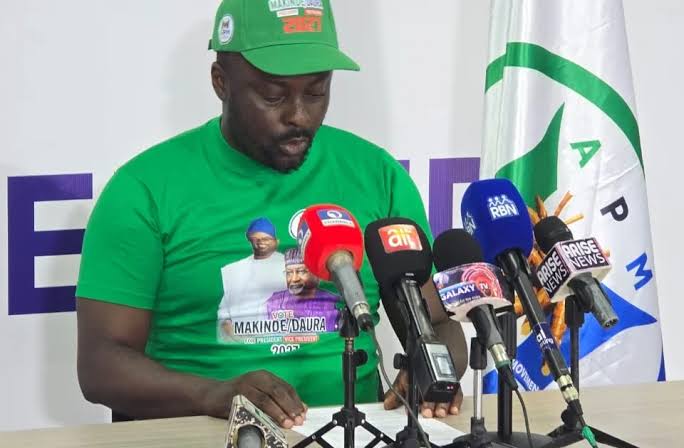
From 74,000 volunteers to a 774-LGA mobilisation target, the Reset Nigeria Movement says it is building a youth-driven grassroots network around the APM presidential ticket ahead of the 2027 election.
By Baron Eloagu
ABUJA, September 23, 2026 — The Reset Nigeria Movement says it is accelerating its nationwide grassroots mobilisation campaign in support of the Allied Peoples Movement (APM) presidential ticket of Oyo State Governor, Engr. Seyi Makinde, and former Department of State Services (DSS) Director-General, Lawal Daura, ahead of Nigeria’s 2027 presidential election.
According to the movement, its mobilisation network has grown to more than 74,000 reset agents, volunteers and canvassers, drawn largely from youth organisations, young professionals and other supporters across Nigeria’s 36 states and the Federal Capital Territory.
The development marks another stage in the APM’s efforts to establish a nationwide campaign structure after the party formally commenced its 2027 presidential campaign and opened its campaign office in Abuja earlier this month.
The Reset Nigeria Movement’s latest mobilisation activities indicate that the campaign is placing significant emphasis on youth participation, community-level organisation and digital engagement as it seeks to translate national visibility into a structured grassroots network.
From Campaign Messaging to Grassroots Organisation
The movement says its immediate objective is not simply to increase online visibility but to create a network capable of operating at the local-government and community levels.
It has set its sights on expanding its presence across the country’s 774 local government areas, using a combination of conventional political mobilisation techniques and technology-driven approaches aimed particularly at younger voters.
The strategy reflects an increasingly important feature of contemporary Nigerian political campaigns: the attempt to combine traditional rallies and physical organising with social-media engagement, volunteer networks and direct community outreach.
The Reset Nigeria Movement describes itself as one of the fastest-growing presidential campaign support organisations in the country. That characterisation, however, is a claim by the organisation and has not been independently verified by A1NEWS International.
74,000-Strong Network Claimed
Central to the movement’s latest campaign narrative is its claim that more than 74,000 people have already registered as reset agents, volunteers and canvassers.
The organisation says the network includes young Nigerians, professionals and members of various youth groups spread across the federation.
Such a network, if sustained and effectively organised, would provide the campaign with a potential grassroots communication structure capable of taking its message beyond major urban centres.
The critical test, however, will be whether registration translates into sustained volunteer activity, community-level organisation and measurable voter engagement as the election approaches.
Lagos Workshop Focuses on Volunteer Capacity
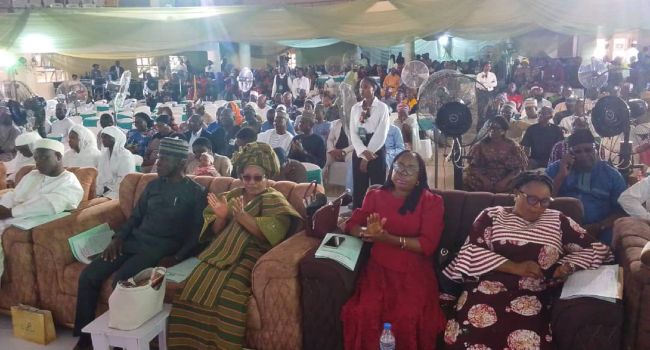
The movement recently organised a workshop at Osborne Foreshore, Ikoyi, Lagos, where participants were trained on ways to communicate its political message, engage their communities and mobilise support for the Makinde/Daura ticket.
The training component suggests an effort to standardise the way campaign volunteers communicate the movement’s objectives while strengthening connections among its supporters.
Rather than relying solely on large rallies, grassroots movements typically depend on networks of local organisers who can maintain contact with communities between major campaign events.
For Reset Nigeria, developing that structure appears to be a central part of its strategy ahead of 2027.
Bwari and Uyo Rallies Draw Youth Participation
The movement also points to rallies in Bwari, Abuja, and Uyo, Akwa Ibom State, as evidence of growing interest among young Nigerians.
According to the organisation, thousands of young people participated physically and virtually in the events, with many registering as Reset Agents.
The movement says the participants were mobilised around its stated objective of changing governance priorities through what it describes as the Makinde/Daura Reset Nigeria Agenda.
The figures provided by the organisation have not been independently audited, making the scale of participation difficult to establish beyond the movement’s own account.
Why Makinde’s Oyo Record Features Prominently
A major component of the movement’s argument for Makinde’s presidential candidacy is his record as governor of Oyo State.
Supporters point to economic management, infrastructure, public-sector policies and other developments under his administration as evidence that his approach to governance could be applied at the federal level.
The Reset Nigeria platform similarly places Makinde’s record in Oyo at the centre of its campaign messaging, presenting the governor’s experience as a basis for its proposed national programme.
However, translating state-level performance into national governance would involve substantially different institutional, fiscal, security and constitutional responsibilities. Whether voters accept that record as evidence of suitability for the presidency will ultimately be a matter for the electorate.
The Southwest Factor
The movement also frames Makinde’s candidacy within the broader politics of the Southwest and the 2027 presidential contest.
Its argument is that the Makinde/Daura ticket offers an alternative political platform for voters looking beyond the incumbent administration.
The APM itself has described its 2027 campaign as an effort to present an alternative centred on governance, security and economic issues, while positioning Makinde’s record in Oyo as part of the case for its presidential ticket.
The political significance of such claims will depend on how the campaign develops, how other parties organise nationally and, ultimately, how voters across Nigeria’s diverse political constituencies respond.
Youth Mobilisation Becomes Central to 2027 Contest
The emphasis on young people is particularly notable.
Nigeria has a large youthful population, making youth participation an important consideration for political organisations seeking to build national campaign structures.
Reset Nigeria’s model combines physical mobilisation with digital engagement, allowing supporters to participate through rallies, community organising and online activities.
For campaign organisations, the challenge is moving from social-media visibility to sustained political organisation: identifying local leaders, maintaining volunteer networks, communicating policy positions and converting interest into participation during the electoral process.
From Movement to Electoral Machinery
The next phase could therefore be more demanding than simply recruiting volunteers.
A national campaign network spanning 774 local government areas would require coordination, reliable communication channels, trained organisers, transparent structures and the capacity to sustain activity over an extended election cycle.
The Reset Nigeria Movement says its objective is to rapidly expand its network while deepening awareness of its agenda.
Its success will ultimately be measured not only by the number of people registered as agents or volunteers, but also by the movement’s ability to maintain those networks and establish a meaningful presence within communities.
What the Reset Nigeria Agenda Represents
The movement’s stated vision centres on a Nigeria where government is more accountable and accessible, citizens’ voices receive greater attention, and individual skills and contributions are valued.
Those themes form the core of its public invitation to Nigerians to join the Reset Nigeria Movement.
The campaign’s official platform describes itself as the digital campaign platform for Makinde and promotes the “Nigeria First, The People Always” message.
Whether that message gains broader electoral traction will depend on the campaign’s ability to convert its growing organisational footprint into sustained voter engagement and, ultimately, electoral support.
Conclusion: The Grassroots Test Ahead
The emergence of the Reset Nigeria Movement as a major support structure around the APM presidential ticket adds another dimension to the developing 2027 political landscape.
Its claimed 74,000-member volunteer and canvasser network, youth-focused mobilisation strategy and stated ambition to establish structures across all 774 local government areas represent an attempt to build a campaign organisation from the grassroots upward.
But numbers alone will not determine the strength of a political movement.
The more consequential questions will be whether the network remains active, whether its message resonates beyond organised supporters, how effectively it addresses competing political narratives and whether its organisational structure can survive the intense demands of a national election campaign.
For the Reset Nigeria Movement, the road from mobilisation to the ballot box has only begun.




Leave a Reply