
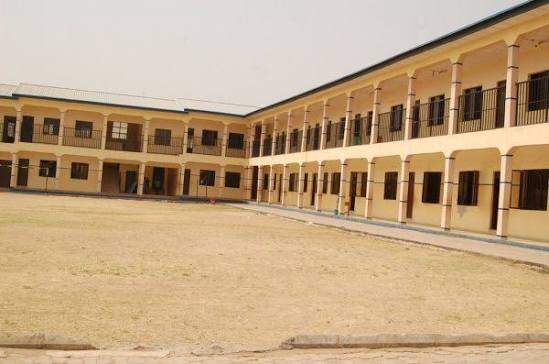
Workers and parents halt 2026/2027 resumption nationwide as opposition to King’s College concession spreads; Federal Government insists school remains publicly owned and says six-month transition will fund rehabilitation.
By Maureen Ade
ABUJA, Nigeria: The Federal Government’s decision to hand the management of King’s College, Lagos, to the King’s College Old Boys’ Association (KCOBA) has triggered a nationwide education-sector confrontation, with workers and parents shutting the gates of 120 Federal Government Colleges and disrupting the scheduled resumption of students for the 2026/2027 academic session.
The protests, which spread from Unity Colleges to the headquarters of the Federal Ministry of Education in Abuja, have placed the government’s concession policy under intense scrutiny, exposing deep concerns over public ownership, funding, staff security, affordability and the future direction of Nigeria’s Unity Schools.
Students who arrived at some institutions to resume academic activities were reportedly turned back as workers and parents barricaded school entrances in compliance with a union directive against resumption.
At the centre of the dispute is King’s College, Lagos, where the Federal Government has concluded arrangements to transfer management of the historic institution to KCOBA under a Public-Private Partnership (PPP) concession.
The government says the arrangement is not a sale or privatisation and that ownership will remain with the Federal Government.
Opponents, however, fear the concession could establish a precedent for similar arrangements involving other Federal Government Colleges.
Workers Barricade Education Ministry
The confrontation moved beyond individual schools as members of the Association of Senior Civil Servants of Nigeria (ASCSN) protested at the Federal Ministry of Education headquarters in Abuja.
The workers, led by ASCSN Chairman Samson Chigozie Nnegdi, barricaded the ministry’s entrance and displayed placards demanding an immediate reversal of the concession arrangement.
The action coincided with protests at Unity Colleges across the country, where workers and Parent Teacher Association (PTA) members opposed the commencement of the new academic session.
The unions had directed their members not to resume duties, while parents were urged not to send their children to the affected schools.
The coordinated action transformed what began as a dispute over the management of one institution into a broader confrontation over the Federal Government’s approach to the administration and financing of Unity Colleges.
“King’s College Is Not for Sale”
At King’s College, Lagos, protesters displayed placards carrying messages including:
- “King’s College is not for sale”
- “All Unity Colleges are not for sale”
- “KCOBA stay clear”
- “No resumption for all Unity Colleges”
Ebenezer Oguntade, General Secretary of ASCSN at King’s College, said workers were opposed to the concession because, in their view, key stakeholders had not been adequately involved in the negotiations.
He said the union and PTA had shut the gates of the 120 Federal Government Colleges to prevent resumption and disclosed that KCOBA’s office at King’s College had also been locked.
Oguntade expressed concern that King’s College could become a model for transferring the management of other Federal Government Colleges to private or alumni organisations.
The concern, he argued, was particularly serious because the Unity Colleges were established not merely as conventional schools but as instruments for expanding access to quality education and promoting national integration.
Critics of the concession fear that a gradual shift away from direct government management could alter that mandate.
Parents Raise Affordability Concerns
Parents have also emerged as major opponents of the arrangement.
Emmanuel Abya, Treasurer of the King’s College PTA, said parents were dissatisfied with what he described as inadequate consultation with stakeholders before the concession decision.
He argued that the Federal Government should continue to operate King’s College and other Unity Colleges while providing sufficient funding for infrastructure and educational services.
Abya also warned that the concession could become a precedent for transferring other Unity Colleges to external managers.
Other parents expressed concern that changes to the management and financing structure could eventually increase the financial burden on families and make the institution less accessible to children from lower-income households.
The concerns remain at the centre of the dispute, particularly because the Federal Government’s concession framework does not impose a permanent freeze on school fees.
Protest Spreads to FGGC Bwari
The resistance was not limited to Lagos.
At Federal Government Girls’ College, Bwari, Abuja, parents and teachers also barricaded the school entrance in protest against the concession policy.
The action highlighted the wider anxiety among stakeholders that the King’s College arrangement could signal the beginning of a broader restructuring of the Federal Government’s 120 Unity Colleges.
For parents, the issue is not simply who manages King’s College but whether the government intends to progressively transfer responsibility for federally funded secondary schools to private or alumni-backed entities.
Government Sets Six-Month Transition
The controversy intensified following a September 4, 2026 letter from the Federal Ministry of Education directing King’s College management to begin preparations for the transition.
The ministry stated that the processes required for the signing of a concession agreement between the Federal Government and KCOBA had been concluded.
The letter, signed by Dr. Folake Olatunji-David, Director overseeing the Office of the Permanent Secretary, said a transition committee had been established to supervise the handover process.
According to the ministry’s plan, the transition is expected to take six months, after which funding for King’s College from the Federation Account will cease.
The ministry also directed the school’s principal to provide the transition committee with a list of staff who wished to remain within the Federal Civil Service Commission (FCSC).
The six-month deadline has become one of the most contentious aspects of the policy because it effectively marks the point at which direct federal funding of the institution is expected to end under the concession framework.
Government: “This Is Not Privatisation”
The Federal Government has rejected claims that King’s College has been sold or privatised.
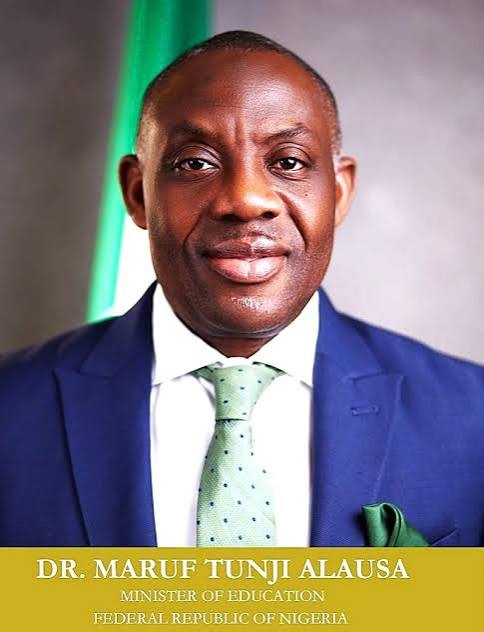
Minister of Education Dr. Tunji Alausa said the PPP arrangement would transfer neither ownership nor proprietary interest in the institution to KCOBA.
According to the minister, the Federal Government will retain legal title to King’s College and continue exercising oversight over the institution.
Alausa said the purpose of the concession was to mobilise the financial and managerial resources required to rehabilitate, modernise and maintain the school while preserving its public character and national identity.
The government’s position therefore differs fundamentally from that of the protesters: while critics view the concession as a potentially dangerous departure from traditional public management, the government presents it as a mechanism for protecting and upgrading an important national institution.
What KCOBA Is Expected to Finance
Under the proposed arrangement, KCOBA is expected to finance, rehabilitate, operate and maintain major components of the institution.
These include academic and administrative buildings, hostels, staff quarters, laboratories, libraries, dining facilities, health facilities, utilities and sporting infrastructure.
The concession framework also provides for the construction or improvement of classrooms, laboratories and hostels, alongside upgraded sports facilities, learning materials and digital resources.
The government argues that the investment requirement makes the PPP approach necessary to address infrastructure and management challenges that conventional public funding has struggled to resolve.
The critical question raised by opponents is whether improved infrastructure can be achieved without compromising affordability, public access or the original objectives of the Unity Colleges.
School Fees: Government Offers Assurance, But No Permanent Freeze
One of the most sensitive issues surrounding the concession is the potential effect on school fees.
Alausa said the PPP agreement does not provide for an automatic increase in fees.
However, the framework also does not impose a permanent freeze on fees.
That distinction is likely to remain a major point of concern for parents, particularly those who fear that a privately managed institution could eventually become more expensive despite retaining its public ownership.
The minister maintained that admission would continue under applicable Unity College policies, with merit, transparency and national representation preserved.
He also said the National Common Entrance Examination would remain central to admission into JSS1.
What Happens to Teachers and Other Workers?
Staff welfare represents another major fault line in the dispute.
The Federal Government says the agreement contains a Staff Transition and Protection Framework.
Under that framework, employment obligations, arrears, pensions, gratuities and other liabilities arising before the transition will remain the responsibility of the Federal Government unless they are expressly assumed by KCOBA.
After the transition, KCOBA is expected to assume responsibility for relevant operating expenses, including salaries, benefits and allowances of personnel engaged under the project.
The arrangement has nevertheless generated anxiety among workers, who want greater clarity over their long-term employment status and the consequences of moving from a government-funded system to a concession-based management structure.
KCOBA Faces Internal Challenge
The controversy has also exposed divisions within KCOBA itself.
Although the association has been designated as the concessionaire, a section of its old boys has challenged the proposed arrangement in court.
The internal disagreement adds another layer to an already complex dispute involving the Federal Government, education workers, parents, alumni and other stakeholders.
The legal challenge by members of the alumni community could potentially affect the implementation of the concession, depending on the outcome of the proceedings.
Government Retains Oversight Powers
The Federal Government says concession does not mean surrendering regulatory authority.
According to Alausa, government will retain powers relating to regulation, monitoring, inspection and enforcement.
The government would also have the ability to intervene in cases of persistent underperformance or serious contractual default.
This provision is central to the government’s argument that King’s College will remain a public institution despite the change in management.
Critics, however, are likely to focus on how those oversight powers will operate in practice once direct federal funding ends and KCOBA assumes operational responsibility.
The Bigger Question: A New Model for Unity Colleges?
The immediate dispute concerns King’s College, but its implications extend considerably further.
With 120 Federal Government Colleges affected by the protest action, workers and parents have effectively framed the controversy as a test case for the future of Nigeria’s federal secondary-school system.
If the King’s College concession succeeds, it could provide a model for government-private or alumni partnerships involving other institutions facing funding and infrastructure challenges.
Conversely, if opposition forces succeed in stopping or significantly altering the arrangement, the government could face renewed pressure to identify alternative mechanisms for financing and modernising the Unity Colleges.
The central policy dilemma is therefore how to secure desperately needed investment in public education without undermining affordability, access, worker protections and the national-integration mandate for which the Unity Colleges were established.
The shutdown of the 120 Federal Government Colleges has transformed the King’s College concession from a single-institution management decision into a national debate over the future of publicly funded secondary education.
Workers and parents are demanding reversal, warning against what they perceive as a precedent for wider concessions. The Federal Government, meanwhile, insists that King’s College remains publicly owned and argues that the PPP arrangement is intended to inject investment, modern infrastructure and professional management into the institution.
The unresolved questions are now larger than the ownership argument alone: who ultimately pays, who controls the institution, what protections workers receive, how affordable education remains, and whether the King’s College model will be replicated elsewhere.
As the six-month transition timeline approaches, the response of the Federal Government to the protests—and the outcome of legal and stakeholder challenges—could determine whether the concession becomes a blueprint for reforming Nigeria’s Unity Colleges or a catalyst for a much wider confrontation over the future of public education.





Leave a Reply