
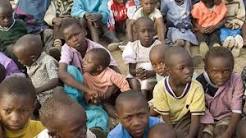
Targeted programme aims to reach “zero-dose” children in underserved and hard-to-reach communities.
By Adindu Chinwe | Abuja, Nigeria
The United Nations Children’s Fund (UNICEF) has raised alarm over Nigeria’s growing immunisation gap, revealing that about 2.2 million children have never received a single routine vaccine.
In response, UNICEF, in partnership with the Republic of Korea and Nigerian authorities, has launched a targeted intervention to reach vulnerable populations.
The initiative, flagged off in Badagry, Lagos State, focuses on identifying and vaccinating “zero-dose” children—those who have not received any routine immunisation—particularly in underserved urban settlements, border communities, and remote areas.
UNICEF Nigeria Country Representative, Wafaa Saeed, described the situation as a major public health and development concern, noting that Nigeria accounts for one of the highest numbers of unvaccinated children globally.
She emphasised that the challenge is not vaccine effectiveness but access and equity, citing systemic gaps in healthcare delivery.
According to Saeed, the intervention will strengthen primary healthcare systems, improve routine immunisation services, and rebuild trust within communities where uptake remains low.
The programme also aims to ensure sustained delivery of vaccines by improving tracking systems and expanding outreach to previously missed populations.
The Republic of Korea has committed approximately $5.6 million to support the initiative under the Access to COVID-19 Tools Accelerator framework. The intervention will cover 40 local government areas across Lagos, Ogun, Niger, Bauchi, Adamawa, and the Federal Capital Territory.
Korea’s Consul General, Lee Sang Ho, said Nigeria’s high number of unvaccinated children poses a risk to global health security, justifying the country’s investment.
At the state level, Lagos Commissioner for Health, Akin Abayomi, represented at the event, said the programme aligns with efforts to address gaps in immunisation amid rapid population growth and urban expansion.
Local authorities in Badagry also highlighted the importance of the initiative, especially in border communities where access to healthcare services remains limited.
The programme will leverage existing health infrastructure, deploy data-driven strategies, and strengthen frontline health workers to improve vaccine coverage nationwide.
Zero-Dose Crisis Linked to Access, Inequality
UNICEF stressed that the immunisation gap is driven by inequities in healthcare access, poor service reach, and socio-economic barriers, rather than vaccine inefficacy.
Multi-State Intervention Targets Vulnerable Communities
The programme will operate across six states, focusing on hard-to-reach populations while strengthening systems to ensure long-term sustainability.
Nigeria’s large population of unvaccinated children poses risks not only to national health outcomes but also to global disease control efforts. Closing the immunisation gap is critical for reducing child mortality, strengthening public health systems, and improving long-term socio-economic development.








Leave a Reply