
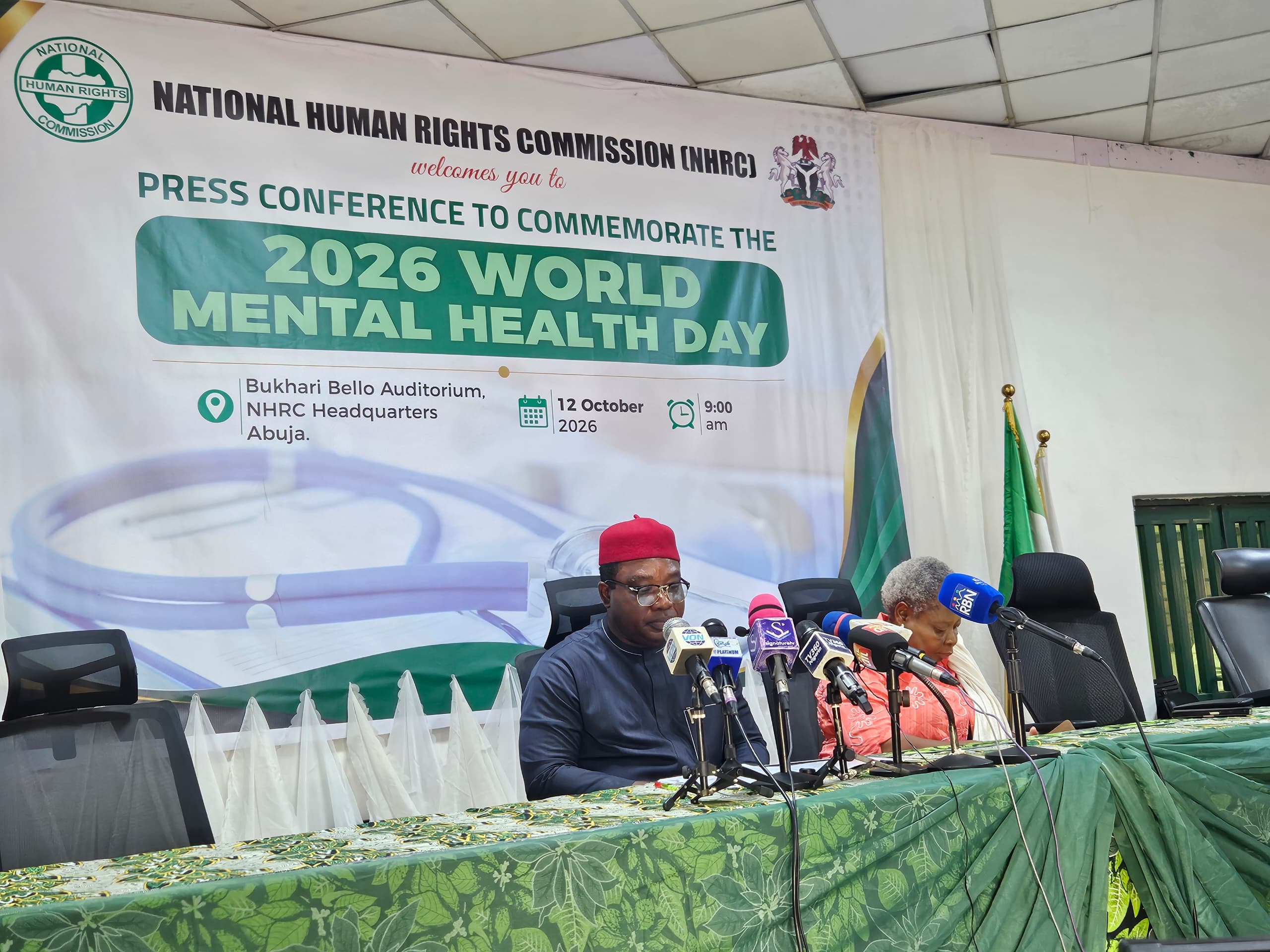
Commission calls for increased funding, affordable treatment and full implementation of Nigeria’s Mental Health Act as stakeholders raise concerns over stigma, abuse in custody and gaps in mental healthcare.
By A1NEWS International
ABUJA, Nigeria — October 12, 2026
The National Human Rights Commission (NHRC) and stakeholders in the human rights and mental health sectors have called on the Federal Government to prioritise mental health in Nigeria’s national health and development agenda, demanding increased funding, affordable treatment, stronger health insurance coverage and effective protection against discrimination and abuse.
The call was made during an engagement marking the 2026 World Mental Health Day, where participants highlighted persistent barriers to mental healthcare, including stigma, inadequate professional capacity, poverty, limited access to treatment and the vulnerability of people in correctional facilities.
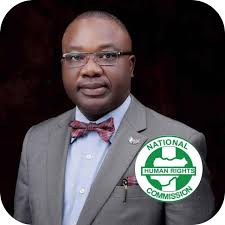
The Executive Secretary of the NHRC, Chief Tony Ojukwu, OFR, SAN, said mental health must be recognised not merely as a medical concern but as a fundamental human rights issue requiring coordinated action by government institutions, healthcare providers, civil society organisations, families, the media and development partners.
He stressed that people living with mental health conditions must be treated with dignity, respect and compassion rather than subjected to discrimination, neglect, violence or social exclusion.
The discussions also highlighted the need for the full implementation of the National Mental Health Act, 2021, stronger institutional accountability and expanded access to professional mental health and psychosocial support services.
Mental Health Is a Fundamental Human Right
Ojukwu maintained that the right to health encompasses both physical and mental well-being, placing a clear responsibility on government to ensure that appropriate healthcare is available and accessible to all Nigerians.
He cited Article 16 of the African Charter on Human and Peoples’ Rights, which recognises every individual’s right to enjoy the best attainable state of physical and mental health and requires states to take necessary measures to protect public health and ensure medical attention for the sick.
According to him, protecting mental health is a human rights obligation rather than a discretionary government commitment.
The NHRC chief also highlighted Nigeria’s existing legislative and policy frameworks, including the National Mental Health Act, 2021, which received presidential assent in December 2022, the National Mental Health Policy and the National Suicide Prevention Strategic Framework.
He, however, emphasised that the existence of legislation and policy documents would not automatically improve the lives of affected persons without adequate funding, effective implementation and mechanisms to hold responsible institutions accountable.
Stakeholders at the engagement similarly argued that the gap between legal provisions and practical implementation remained a significant concern.
A representative of an organisation working with vulnerable populations called for deliberate action to enforce the protections provided by the Act, particularly provisions identified during the discussion as Sections 12 to 23, which the speaker associated with improving access to mental health services.
The participants maintained that the government must move beyond legislative commitments to ensure that people experiencing mental health challenges can obtain appropriate treatment, counselling and other support without discrimination.
Poverty, Conflict and High Treatment Costs Deepen Mental Health Challenges
Ojukwu drew attention to the scale of mental health challenges globally, citing World Health Organization estimates indicating that nearly one in seven people worldwide live with a mental disorder.
He noted that many people who require mental healthcare do not receive effective treatment, with poverty, inequality, violence and disability worsening the situation for already disadvantaged populations.
In Nigeria, he identified armed conflict, displacement, abductions and other humanitarian emergencies as additional factors contributing to psychological distress.
According to him, communities affected by violence and serious human rights violations, particularly in the North-East, require sustained mental health and psychosocial support to address the consequences of trauma.
He also raised concerns about the financial barriers preventing many Nigerians from accessing treatment.
Citing WHO evidence, Ojukwu said fewer than three per cent of people with mental health conditions in Nigeria were covered by health insurance, leaving many individuals and families to pay for treatment themselves.
He consequently called for expanded health insurance coverage, increased government investment and the integration of affordable mental health services into primary healthcare and community-based health systems.
Participants also highlighted the relationship between poverty, hunger, social vulnerability and conflict, arguing that mental health interventions must be accompanied by broader measures addressing the economic and social conditions that expose people to harm.
Stakeholders Warn Against Stigma and Discrimination
Stigma and misinformation were identified as major barriers preventing Nigerians from seeking professional mental healthcare.
Participants urged communities to reject misconceptions that mental health conditions are necessarily spiritual problems or evidence of personal weakness.
They called for sustained public education to improve understanding of mental health conditions and encourage people experiencing psychological distress to seek appropriate professional assistance.
Ojukwu warned that people living with mental health conditions could face discrimination in education, employment, housing and community participation.
He also expressed concern that some affected persons experience restrictions on their autonomy and decision-making or are subjected to treatment that undermines their dignity.
The NHRC executive secretary emphasised that mental health conditions do not diminish an individual’s worth or entitlement to fundamental rights.
He advocated a rights-based approach that recognises affected persons as individuals entitled to privacy, equality, dignity and participation in decisions concerning their lives.
Stakeholders further stressed that awareness campaigns must be matched by adequate healthcare infrastructure and a larger workforce of psychiatrists, psychologists, counsellors, psychiatric nurses and social workers.
Correctional Facilities Under Scrutiny Over Mental Healthcare
The mental health needs of people in correctional facilities featured prominently during the discussions, with participants calling for improved screening, access to treatment and appropriate referral arrangements for people in custody.
One stakeholder observed that some individuals may have mental health conditions before entering detention, while confinement itself may trigger or worsen psychological distress.
The speaker referred to Section 48 of the National Mental Health Act in connection with the treatment and referral of people in custody who require mental healthcare.
Participants maintained that correctional facilities should not serve as substitutes for specialised mental health institutions and that individuals requiring such care should be referred to appropriate facilities.
They also called for stronger collaboration between human rights institutions, healthcare providers, correctional authorities and civil society organisations to ensure that people in custody receive appropriate care and are protected against degrading treatment.
The discussions underscored the need for effective monitoring of detention facilities and stronger accountability where the rights of people with mental health conditions are violated.
NHRC Establishes Counselling Unit for Victims and Personnel
Outlining the Commission’s interventions, Ojukwu disclosed that the NHRC had established a Counselling Unit at its headquarters, staffed by qualified counsellors.
He said the unit provides emotional support to people approaching the Commission while experiencing distress or trauma arising from human rights violations and other difficult personal circumstances.
The facility also provides support for Commission personnel who may experience emotional strain from handling cases involving violence, abuse, bereavement and human suffering.
According to Ojukwu, human rights defenders and investigators are frequently exposed to traumatic experiences and therefore require appropriate support to protect their psychological well-being.
He explained that the Commission’s responsibility extends beyond protecting people whose rights have been violated to ensuring that personnel working to defend human rights also receive necessary support.
The NHRC has also used its Human Rights Institute to organise training and capacity-building programmes on mental health and human rights, particularly for investigation officers.
The training is intended to improve officers’ ability to identify mental health and psychosocial concerns, respond appropriately to vulnerable complainants and recognise when specialised professional intervention is necessary.
Ojukwu added that the establishment of the Commission’s Vulnerable Group Department had strengthened institutional attention to the needs and rights of vulnerable populations, including people experiencing mental health challenges.
NHRC Collaborates on 2027–2032 Mental Health Strategic Plan
The NHRC executive secretary disclosed that the Commission was working with relevant stakeholders, including the Federal Ministry of Health and Social Welfare, to mainstream human rights principles into Nigeria’s proposed National Mental Health Strategic Plan for 2027–2032.
He described the initiative as an opportunity to strengthen the integration of human rights protections into national mental health planning and service delivery.
Ojukwu also highlighted the Commission’s participation in training organised by the United Nations Office on Drugs and Crime on drug prevention, treatment and care, including the relationship between substance use, mental health and human rights.
He said a rights-based approach to substance-use challenges should guarantee access to appropriate treatment, rehabilitation and psychosocial support rather than expose affected individuals to discrimination or degrading treatment.
The Commission called for the effective implementation of the National Mental Health Act and related policies, supported by clear accountability mechanisms and adequate resources.
Commission Highlights Support for Vulnerable Women and Abuse Survivors
Ojukwu further disclosed that the NHRC, in partnership with the Taipei Trade Office and civil society organisations, had provided grants and free mental health sessions to some indigent women who were victims of human rights violations.
He said the intervention was designed to address the psychological and social consequences of rights violations among vulnerable populations.
The NHRC chief also cited interventions in Kano State involving children and adults with psychosocial and psychological disabilities who had been subjected to solitary confinement.
According to him, the affected individuals were subsequently moved to a welfare facility following the Commission’s intervention.
He said the cases illustrated the need for appropriate care, protective interventions and institutional safeguards for people experiencing mental health challenges.
Ojukwu also disclosed that the Commission had encountered child protection cases involving serious human rights violations in circumstances linked to mental health challenges within families.
He cited a recent case in the Federal Capital Territory in which the Commission rescued a child from a woman who was herself living in what he described as extremely distressing and inhuman conditions associated with her mental state.
He said such cases demonstrated the need for interventions that combine child protection, professional mental healthcare, family support and respect for human dignity.
The NHRC executive secretary cautioned against responses based on punishment, abandonment or abuse, stressing that vulnerable individuals should receive appropriate professional assistance while their rights and safety are protected.
Stakeholders Link Childhood Trauma to Gender Inequality
Another speaker drew attention to the relationship between childhood trauma, gender inequality and the protection of women’s and girls’ rights.
The speaker highlighted the lasting consequences of experiences such as child marriage and the loss of childhood, arguing that unresolved trauma could affect individuals, families and communities.
The address also criticised resistance to implementing the Maputo Protocol, an African regional instrument on women’s rights, and called on the executive, legislature and judiciary to fulfil their responsibilities towards gender equality.
The speaker maintained that women’s demands for equal rights and equitable access to national resources should be treated as matters of justice and fundamental rights.
Participants called for approaches that integrate human rights protection, psychosocial support and restorative interventions to address the consequences of trauma and inequality.
Mental Health Practitioner Proposes Behavioural Intervention Model
During a separate presentation, a mental health and psychotherapy practitioner examined behavioural factors associated with human violence, arguing that prevention efforts must go beyond responding to physical acts after they occur.
The speaker called for greater attention to behavioural patterns, emotional distress and other underlying factors that may contribute to harmful conduct.
He proposed a five-stage behavioural modification model built around teaching, testing, treating, training and trusting.
Under the proposed framework, teaching would provide education and awareness; testing would support assessment; treating would focus on intervention; training would help individuals develop healthier behaviours; and trusting would encourage the practical application of the process.
The practitioner also advocated collaboration with the NHRC and its relevant departments to develop psychosocial frameworks and strengthen interventions addressing human rights violations.
The proposed model was presented as a framework for discussion and collaboration rather than an established national policy.
Participants stressed the importance of evidence-informed interventions that combine prevention, professional assessment, treatment and sustained support.
NHRC Calls for Increased Funding and Community-Based Services
Ojukwu urged the Federal Government to make mental health a clear priority in national health planning and provide adequate funding for services at federal, state and community levels.
He called for expanded community-based mental healthcare, stronger health insurance coverage and increased training and deployment of qualified professionals.
He also urged the government to ensure the effective implementation of the National Mental Health Act and National Mental Health Policy, supported by clear monitoring and accountability mechanisms.
The Commission called for stronger safeguards against discrimination, violence, neglect and degrading treatment, alongside improved monitoring and investigation of human rights violations in mental health settings.
It further advocated expanded mental health and psychosocial support for survivors of armed conflict, terrorism, gender-based violence, displacement, torture, trafficking and other serious human rights violations.
Ojukwu encouraged schools, workplaces, families and communities to create supportive environments where people can discuss mental health concerns and seek assistance without fear of rejection or stigmatisation.
He also urged religious and traditional leaders to complement, rather than replace, professional mental healthcare whenever clinical assessment or psychosocial intervention is required.
NHRC Tasks Media on Responsible Mental Health Reporting
The NHRC executive secretary urged journalists and media organisations to promote accurate, respectful and sensitive reporting of mental health issues.
He warned against stereotypes and narratives that reinforce stigma or discrimination, emphasising that responsible journalism could improve public understanding and encourage people experiencing psychological distress to seek appropriate assistance.
According to him, the media can help shift public conversations from fear to understanding, exclusion to inclusion, and silence to responsible action.
He encouraged journalists to challenge harmful misconceptions and promote awareness of the rights and dignity of people living with mental health conditions.
The call places particular emphasis on the responsibility of the media to report mental health-related incidents without unnecessarily exposing vulnerable individuals to ridicule, discrimination or further harm.
Stakeholders Seek Stronger NHRC Partnerships and Institutional Capacity
Participants called for stronger partnerships between the NHRC, civil society organisations, mental health professionals, government agencies and institutions serving vulnerable populations.
A representative of an organisation working with vulnerable persons expressed readiness to collaborate with the Commission on public education, awareness creation and capacity-building initiatives.
The proposed collaboration is expected to strengthen understanding of mental health rights, improve support for vulnerable populations and promote more effective responses to discrimination and abuse.
Stakeholders also emphasised the importance of adequate institutional funding and resources to enable the NHRC to investigate violations, support affected persons and promote compliance with applicable laws.
They maintained that the protection of mental health rights requires sustained cooperation between institutions responsible for healthcare delivery, human rights enforcement, social welfare and public education.
Conclusion: From Legal Commitments to Measurable Action
The NHRC’s 2026 World Mental Health Day engagement reinforced the connection between mental healthcare, human rights protection and national development.
Although Nigeria has established a legislative and policy foundation for addressing mental health challenges, the Commission and participating stakeholders insist that meaningful progress will depend on effective implementation, adequate funding, accessible professional care and stronger safeguards against discrimination and abuse.
The calls for improved services in correctional facilities, protection for vulnerable women and children, support for survivors of violence and responsible media reporting further demonstrate the need for a coordinated national response.
Ojukwu reaffirmed the Commission’s commitment to using its statutory mandate to promote awareness, investigate human rights violations, protect vulnerable persons and advocate policies that uphold human dignity.
He urged all stakeholders to work towards a system in which no individual is abandoned because of a mental health condition, no family is left without support and no person is denied dignity because they require assistance.
The central challenge, therefore, is to translate Nigeria’s existing legal and policy commitments into measurable improvements in access to treatment, protection against abuse and respect for the rights of people living with mental health conditions.








Leave a Reply