
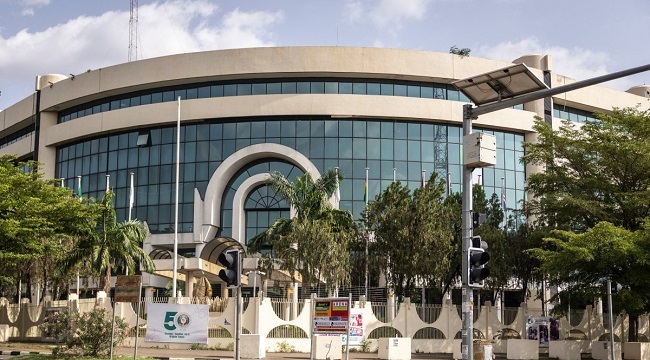
Regional bloc seeks major political and economic reset as governance crises, military coups and Sahel alliance threaten West African integration
By Adanne Mbiwe / ABUJA, Nigeria / May 15, 2026
The Economic Community of West African States (ECOWAS) is considering a sweeping six-pillar strategic framework designed to rescue the regional bloc from what officials describe as its most fragile moment since its establishment in 1975.
The proposed initiative, titled “Compact for the Future of Regional Integration,” was unveiled during the ongoing First Ordinary Session of the ECOWAS Parliament in Abuja amid mounting political instability, democratic backsliding, economic pressures, violent extremism, and the growing influence of breakaway regional alliances.
The proposal signals what analysts describe as a major institutional survival strategy aimed at rebuilding trust in ECOWAS and preventing the further fragmentation of West Africa.
ECOWAS Admits Region Facing Historic Crisis
Presenting the framework before parliamentarians, Abdel-Fatau Musah acknowledged that ECOWAS is confronting unprecedented internal and external pressures threatening its long-term relevance.
According to Musah, the regional organisation has reached a dangerous crossroads following repeated military coups, governance failures, constitutional manipulations, insecurity, and declining public confidence across member states.
He warned that the emergence of the Alliance of Sahel States (AES) — comprising Burkina Faso, Mali and Niger — represents one of the clearest signs of growing dissatisfaction with ECOWAS leadership and integration mechanisms.
“This initiative acknowledges that the regional body is at its most fragile point since its establishment in 1975,” Musah told lawmakers.
From “ECOWAS Of States” To “ECOWAS Of Peoples”
At the heart of the new strategy is a proposed shift from what officials described as an elite-driven institution toward a citizen-focused regional bloc.
Musah said the “Compact” seeks to operationalise the ECOWAS Vision 2050 framework by transforming ECOWAS from an organisation known largely for diplomatic declarations into one capable of delivering measurable public benefits to ordinary West Africans.
The initiative aims to prioritise security, economic mobility, food sovereignty, digital connectivity, youth participation, women inclusion, and institutional accountability.
According to officials, the framework was developed through consultations involving civil society organisations, citizens across West Africa, the African diaspora, ECOWAS institutions, and regional leaders.
Six Strategic Pillars Revealed
The proposed strategy is built around six major pillars:
1. Sustainable Economic Transformation
ECOWAS plans to significantly deepen economic integration by targeting a rise in intra-regional trade to 30 percent by 2035.
The bloc also intends to accelerate industrialisation, food security, and implementation of the long-delayed ECO single currency project by 2040.
However, economists remain sceptical about the feasibility of a common currency amid persistent inflation disparities, currency instability, and uneven fiscal policies among member states.
2. Peace, Security And Democratic Governance
The document reaffirms zero tolerance for military coups and unconstitutional tenure elongation by civilian governments.
ECOWAS is also proposing a stronger regional standby force to confront terrorism, insurgency, transnational crime, and political instability.
Security analysts note that the proposal comes at a time when ECOWAS military credibility has been weakened by internal divisions and resistance from Sahel military juntas.
3. Science, Technology And Digital Integration
The strategy envisions the establishment of a regional Digital Single Market by 2030 to improve cross-border technology integration, innovation, and digital commerce.
Regional policymakers believe digital harmonisation could help improve financial inclusion, youth employment, and economic competitiveness.
4. Social Inclusion And Gender Representation
The framework seeks to increase women’s representation in leadership positions across member states to at least 40 percent while institutionalising youth participation in governance structures.
The proposal reflects growing regional concerns over unemployment, social exclusion, and youth disenchantment with democratic institutions.
5. Institutional Reform And Financial Independence
A major component of the compact focuses on restructuring ECOWAS institutions to become more merit-driven, transparent, accountable, and financially self-sustaining.
Officials say the bloc intends to fully finance its operations through the ECOWAS Community Levy by 2030 in order to reduce overdependence on foreign donors.
6. Geopolitical Positioning And Strategic Autonomy
The final pillar seeks to reposition ECOWAS as a stronger geopolitical actor capable of defending West Africa’s sovereignty and strategic interests in an increasingly multipolar global order.
This includes diplomatic engagement with global powers while maintaining regional independence in decision-making.
Quiet Efforts To Reconcile With Sahel States
One of the most politically sensitive aspects of the proposed compact is its emphasis on structured dialogue with Mali, Burkina Faso, and Niger following their withdrawal from ECOWAS.
The document reportedly proposes confidence-building measures aimed at preventing a permanent geopolitical split within West Africa.
Regional observers say ECOWAS fears that the continued consolidation of the AES alliance could weaken trade, security cooperation, and diplomatic influence across the sub-region.
Implementation Deficit Remains Major Concern
Despite the ambitious framework, analysts warn that ECOWAS has historically struggled with implementation and enforcement.
To address this challenge, the new compact reportedly includes compliance scorecards for member states and stronger monitoring mechanisms designed to track implementation performance.
Policy experts, however, argue that the success of the initiative will depend heavily on political will among regional leaders, many of whom have themselves faced accusations of undermining democratic norms.
Parliamentarians Scrutinise Proposal
Lawmakers at the ECOWAS Parliament reportedly subjected the proposal to intense scrutiny, examining its economic, political, and security implications.
Several parliamentarians are understood to have raised concerns about financing, enforcement capacity, and the bloc’s declining credibility among citizens.
The proposed “Compact for the Future of Regional Integration” represents one of the most ambitious reform efforts in ECOWAS history and a tacit admission that the bloc faces an existential crisis.
As coups, insecurity, economic hardship, and regional fragmentation continue to challenge West Africa’s stability, ECOWAS leaders now face increasing pressure to move beyond declarations and demonstrate tangible results capable of restoring public confidence in regional integration.
Whether the new strategy becomes a genuine turning point or another unimplemented regional blueprint may ultimately determine the future relevance of ECOWAS in Africa’s rapidly changing geopolitical landscape.








Leave a Reply