
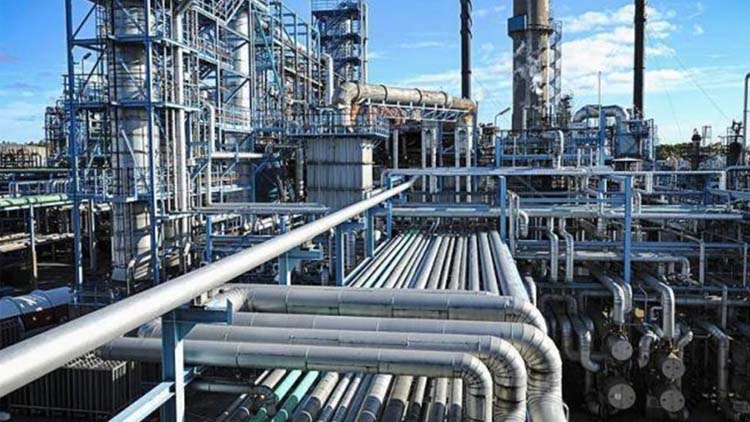
NNPC’s proposed NLNG-style partnership with Chinese firms raises concerns over foreign control, fuel pricing, and Nigeria’s energy sovereignty
By Baron Eloagu / May 22, 2026
ABUJA, Nigeria —Fresh details have emerged surrounding a controversial proposal by the Nigerian National Petroleum Company Limited that could hand Chinese investors a controlling 51 per cent stake in Nigeria’s Port Harcourt and Warri refineries under a long-term technical equity partnership arrangement.
The proposed deal, currently under discussion between NNPC and two Chinese firms — Sanjiang Chemical Company Limited and Xinganchen (Fuzhou) Industrial Park Operation and Management Co., Ltd. — is already generating intense debate among energy experts, industry stakeholders, and economic analysts over fears of foreign dominance in Nigeria’s strategic petroleum infrastructure.
At the centre of the controversy is a proposed “NLNG-style” ownership model that may allow the Chinese partners to acquire majority equity participation, operational influence, and long-term governance rights over two of Nigeria’s most critical refining assets.
Inside the China-NNPC Agreement
The controversy began after NNPC signed a Memorandum of Understanding (MoU) with the Chinese companies in Jiaxing City, China, on April 30, 2026.
The agreement was signed by NNPC Group Chief Executive Officer Bayo Ojulari, Sanjiang Chemical Chairman Guan Jianzhong, and Xinganchen Chairman Bill Bi.
Although officially described as a “potential technical equity partnership,” investigations indicate that the proposed arrangement extends far beyond a routine refinery rehabilitation contract.
Sources familiar with the negotiations disclosed that discussions are being structured around the ownership and governance framework used by Nigeria LNG Limited, where foreign investors collectively control 51 per cent equity while participating directly in management and operations.
Under the proposed structure, the Chinese firms would reportedly help complete ongoing engineering and rehabilitation works at the Port Harcourt and Warri refineries while also assuming long-term operational responsibilities.
Concerns Over Foreign Control of Strategic Assets
The possibility of foreign investors controlling majority stakes in Nigeria’s state-owned refineries has triggered concerns among policy analysts and civil society observers who fear the country could gradually lose strategic control over its downstream petroleum sector.
Critics argue that allowing foreign entities to hold controlling interests in key refining infrastructure may weaken Nigeria’s ability to independently determine domestic fuel supply policies and pricing mechanisms.
Some energy analysts also fear the arrangement could expose Nigeria to future pricing vulnerabilities if profit-driven private operators prioritise commercial returns over domestic energy stability.
“There are legitimate concerns about sovereignty and national interest,” an Abuja-based energy policy analyst told A1NEWS International.
“When a foreign technical partner controls majority equity in strategic national assets, questions naturally arise regarding operational control, pricing influence, and long-term economic leverage.”
The concerns come at a sensitive period when Nigerians are already grappling with rising fuel costs, inflation, and broader economic hardship following subsidy removal policies.
NNPC Defends Partnership Strategy
NNPC officials, however, insist the arrangement is aimed at rescuing Nigeria’s struggling refineries from decades of inefficiency, financial losses, and operational collapse.
Speaking after the signing ceremony, Ojulari described the agreement as a strategic milestone capable of unlocking sustainable profitability for Nigeria’s refining sector.
“All parties recognise mutually beneficial opportunities for the development and long-term sustainable profitability of NNPC’s refining assets in Nigeria and the collective weight required for success,” he said.
Ojulari maintained that the MoU represents a critical step toward identifying technically competent equity partners capable of reviving and expanding the refineries.
“The MoU is a significant step on the journey towards identifying potential technical equity partner(s) to restart and expand NNPC’s refineries and to explore opportunities in co-located petrochemical and gas-based industries,” he stated.
Refineries to Become Industrial Energy Hubs
Documents reviewed by investigators suggest the partnership may also transform the Port Harcourt and Warri facilities into broader industrial energy complexes rather than traditional refining plants alone.
The proposed scope reportedly includes:
- Refinery capacity expansion
- Yield optimisation
- Petrochemical integration
- Clean fuel production upgrades
- Gas-based industrial projects
- Development of co-located industrial hubs
Industry insiders disclosed that the Chinese companies are expected to participate in operations, maintenance, and technical upgrades aimed at achieving “best-in-class sustainable performance.”
Experts Say Equity Model Could Improve Efficiency
Supporters of the proposed arrangement argue that previous refinery rehabilitation efforts failed largely because contractors lacked long-term financial stakes in the projects.
Executive Secretary of the Major Energies Marketers Association of Nigeria, Clement Isong, defended the equity model, saying ownership participation would compel technical partners to ensure the facilities operate efficiently.
“The challenge we knew was that NNPC did not have the internal competence or capacity to run those refineries efficiently,” Isong said.
“Now, they have brought a third party, and the key difference is that the third party is taking equity. He’s a part-owner of the refinery and would want the refinery to work so he can get returns on his investment.”
According to him, the arrangement could finally revive refining operations that have remained largely dormant despite billions of dollars spent on rehabilitation over the years.
Non-Binding Deal Still Under Negotiation
Despite growing public concern, officials stressed that the current agreement remains non-binding and subject to extensive due diligence and regulatory approvals.
Sources disclosed that technical, operational, commercial, legal, and financial assessments would be conducted before any definitive agreement is finalised.
The process may also require approvals from relevant regulatory agencies and the Federal Government.
Energy economists note that the final structure of the deal could significantly determine whether Nigeria benefits from technological transfer and refinery efficiency or risks losing strategic economic leverage over critical national assets.
Existing Rehabilitation Contracts Under Spotlight
The development also raises questions about the future of existing refinery rehabilitation agreements.
The Port Harcourt refinery rehabilitation project was previously awarded to Italian engineering firm Maire Tecnimont, while separate rehabilitation activities had already commenced at the Warri refinery.
Analysts say the proposed Chinese partnership may either complement or fundamentally alter those earlier arrangements depending on how negotiations evolve.
China’s Expanding Footprint in Nigeria’s Energy Sector
The proposed refinery deal is the latest indication of China’s growing economic and strategic presence in Nigeria’s oil, gas, infrastructure, and industrial sectors.
Over the last decade, Chinese firms have expanded investments across rail infrastructure, telecommunications, mining, power projects, and petroleum development in Nigeria.
Observers say the refinery negotiations could deepen Beijing’s influence within Nigeria’s downstream petroleum industry at a time when the country is increasingly seeking foreign capital to stabilise its economy and modernise critical infrastructure.
While NNPC presents the proposed Chinese partnership as a pragmatic solution to Nigeria’s long-standing refinery crisis, the emerging ownership structure is likely to provoke wider national debate over economic sovereignty, foreign control, and the future of Nigeria’s energy independence.
For many Nigerians, the key questions remain unresolved: Will the deal finally revive the nation’s moribund refineries, or could it ultimately transfer strategic control of critical national assets into foreign hands?
The outcome of ongoing negotiations may define not only the future of the Port Harcourt and Warri refineries but also the broader direction of Nigeria’s downstream oil sector for decades to come.









Leave a Reply