
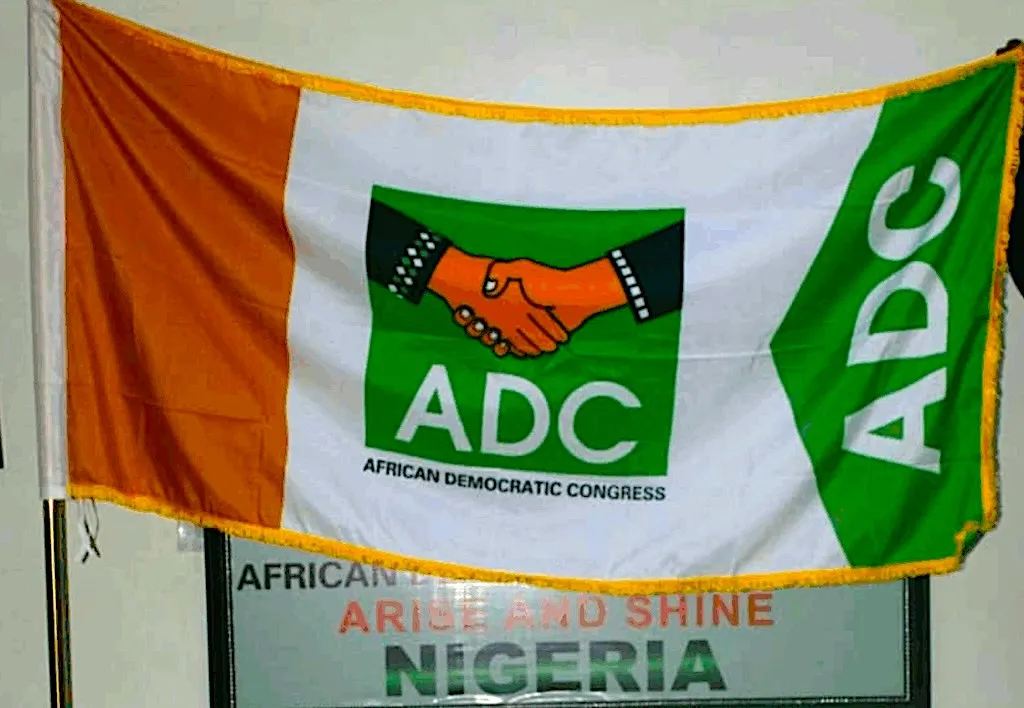
Appellate court to decide legality of Federal High Court ruling ordering INEC to deregister five political parties ahead of the 2027 general elections.
By A1NEWS International
ABUJA, Nigeria — July 14, 2026
The Court of Appeal in Abuja has reserved judgment in a series of appeals challenging a controversial Federal High Court ruling that ordered the Independent National Electoral Commission (INEC) to deregister five political parties, including the African Democratic Congress (ADC), in a case that could significantly reshape Nigeria’s political landscape ahead of the 2027 general elections.
The appellate court’s decision is expected to determine not only the legal status of the affected political parties but also clarify the constitutional limits of INEC’s powers regarding political party deregistration under Section 225A of the 1999 Constitution (as amended).
The ruling is being closely watched by political parties, election observers, constitutional lawyers and civil society groups because of its potential implications for political pluralism, electoral competition and democratic participation.
Appeal Court Reserves Verdict After Hearing Final Arguments
A three-member panel of the Court of Appeal, led by Justice Abba Mohammed, on Tuesday reserved judgment after lawyers representing all parties adopted their respective briefs of argument.
Justice Mohammed announced that the date for delivering the judgment would be communicated to the parties.
The appeal was heard by a panel comprising:
- Justice Abba Mohammed (Presiding)
- Justice Donatus Okorowo
- Justice Oyebisi Oyebola Oyewumi
Five Political Parties Challenge Deregistration Order
The appeals were filed by five political parties seeking to overturn the judgment delivered by Justice Peter Lifu of the Federal High Court, Abuja.
The affected parties are:
- African Democratic Congress (ADC)
- Action Peoples Party (APP)
- Action Alliance (AA)
- Accord Party (AP)
- Zenith Labour Party (ZLP)
The lower court had ordered INEC to deregister the parties after holding that they failed to satisfy constitutional requirements necessary to retain their registration.
Justice Lifu also restrained INEC from recognising the affected parties, accepting candidates nominated by them or allowing them to participate in the 2027 general elections.
Additionally, the court directed the parties to stop presenting themselves as registered political parties.
Senior Advocate Challenges High Court Judgment
During Tuesday’s proceedings, Senior Advocate of Nigeria Musibau Adetunbi, representing the Accord Party, urged the appellate court to nullify the judgment in its entirety.
He argued that Justice Lifu committed serious errors of law by relying on findings allegedly unsupported by constitutional provisions or established legal principles.
According to Adetunbi, the judgment was fundamentally flawed and should be declared a nullity in the interest of justice.
He maintained that the trial court exceeded its constitutional powers in making orders that directly affected the legal existence of registered political parties.
Earlier Appeal Court Rebuked Trial Judge
The appeal follows an earlier intervention by the Court of Appeal on June 16 when it granted a stay of execution of Justice Lifu’s judgment.
In a strongly worded ruling, the appellate court criticised the trial judge for continuing proceedings despite an earlier directive issued on May 22 ordering him to suspend further action pending determination of an interlocutory appeal.
The appellate court observed that Justice Lifu proceeded with the case despite being formally notified of its order.
It described the conduct as “a form of judicial impertinence,” adding that the Supreme Court had previously characterised similar actions as “judicial rascality” inconsistent with accepted standards of judicial conduct.
The unusual criticism underscored concerns about judicial discipline and respect for appellate authority within Nigeria’s court hierarchy.
How the Legal Battle Began
The suit originated from an action filed by the National Forum of Former Legislators (NFFL) before the Federal High Court, Abuja.
The case, marked FHC/ABJ/CS/2637/2026, sought an order compelling INEC to deregister the five political parties.
Represented by lawyer Rabo Mohammed, the plaintiffs argued that Section 225A of the Constitution, together with the Electoral Act 2022 and INEC Regulations, imposes a constitutional obligation on the electoral commission to deregister political parties that fail to meet prescribed electoral performance thresholds.
According to the plaintiffs, the affected parties failed to satisfy constitutional requirements during the 2023 general elections and subsequent by-elections.
Among the benchmarks cited were:
- Securing at least 25 per cent of votes in at least one state during a presidential election; or
- Winning at least one elective office at the federal, state or local government level.
The NFFL contended that continued recognition of the parties by INEC amounted to a breach of constitutional provisions governing political party registration.
Attorney-General Backed Deregistration
The Attorney-General of the Federation and Minister of Justice, Prince Lateef Fagbemi, SAN, who is listed as a defendant in the matter, supported the plaintiffs’ legal arguments.
Court documents showed that the Attorney-General maintained that allowing political parties which allegedly failed to meet constitutional thresholds to remain registered undermines the integrity of Nigeria’s electoral system.
He further argued that unless the courts intervened, INEC would continue to violate its constitutional obligations.
INEC, Political Parties Seek Reversal
Despite being named as a defendant in the original suit, INEC joined the affected political parties in challenging the Federal High Court’s decision.
The electoral commission and the political parties urged the Court of Appeal to set aside Justice Lifu’s judgment, arguing that the ruling raises substantial constitutional and electoral law issues requiring appellate review.
Legal analysts say the eventual judgment may define the extent of judicial intervention in political party regulation and provide guidance on the interpretation of constitutional provisions relating to party deregistration.
Implications for the 2027 Elections
The case has assumed national importance because of its direct implications for preparations for the 2027 general elections.
Should the Court of Appeal uphold the Federal High Court judgment, the five affected parties would remain barred from participating in the electoral process unless further relief is obtained from the Supreme Court.
Conversely, overturning the judgment would restore their legal status and reaffirm INEC’s discretion in administering constitutional provisions governing political parties.
Constitutional experts note that the case could become one of the most significant electoral law precedents ahead of the next election cycle.
With judgment now reserved, political stakeholders across Nigeria are awaiting a decision that could redefine the constitutional framework governing political party registration and participation in elections.
Beyond determining the fate of the ADC and four other parties, the Court of Appeal’s ruling is expected to clarify the relationship between judicial authority, INEC’s constitutional responsibilities and the democratic principle of political inclusion. Whatever the outcome, the judgment is likely to influence Nigeria’s electoral jurisprudence well beyond the 2027 general elections.









Leave a Reply