
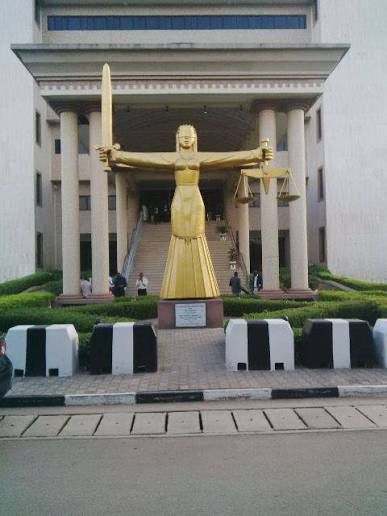
Judge rules respondents failed to rebut statutory grounds for forfeiture in civil proceedings; some interim forfeiture orders vacated.
By A1NEWS International
ABUJA, Nigeria — July 16, 2026
The Federal High Court in Abuja has ordered the final forfeiture of more than 40 properties sought by the Economic and Financial Crimes Commission (EFCC) in civil forfeiture proceedings involving assets the Commission alleged were linked to former Attorney General of the Federation and Minister of Justice, Abubakar Malami, SAN.
Justice Joyce Abdulmalik, delivering judgment on Wednesday, granted the EFCC’s application after holding that the respondents failed to rebut the statutory basis upon which the anti-graft agency sought forfeiture under Nigeria’s civil forfeiture laws.
The decision marks a significant development in one of the country’s largest civil asset recovery proceedings in recent years.
Court Dismisses Preliminary Objections
Before delivering its substantive judgment, the court dismissed several applications and objections filed by Malami, members of his family and companies joined in the proceedings.
According to the court, the applications lacked sufficient merit to defeat the EFCC’s request.
Justice Abdulmalik held that the central issue before the court was not simply ownership of the assets but whether the funds used to acquire them were lawfully obtained.
The judge ruled that the respondents had failed to rebut the statutory threshold relied upon by the EFCC in seeking forfeiture.
Legal Basis for the Decision
In arriving at her decision, Justice Abdulmalik relied principally on Section 17 of the Advance Fee Fraud and Other Fraud Related Offences Act, which governs civil forfeiture proceedings.
The court noted that civil forfeiture proceedings differ from criminal trials and operate under a different legal framework.
During the proceedings, the EFCC argued that the applicable legal standard required it to establish statutory grounds for forfeiture under the Act rather than prove criminal liability beyond reasonable doubt.
However, the court also discharged interim forfeiture orders relating to some properties after considering the evidence presented.
How the Case Began
The EFCC commenced the proceedings in January 2026, seeking final forfeiture of 57 properties which it valued at approximately ₦212.8 billion.
The Commission alleged that the assets represented proceeds of unlawful activities and were allegedly held through individuals and corporate entities.
On January 16, during the Federal High Court’s annual vacation, Justice Emeka Nwite granted an interim forfeiture order.
The court also directed the EFCC to publish the order nationally, inviting any interested persons to appear and show cause why the assets should not be permanently forfeited to the Federal Government.
Respondents Challenged the Proceedings
Following publication of the interim order, Malami, his wife Nana Hadiza Malami, his son Abdulaziz Abubakar Malami, and several companies filed objections before the court.
They argued that:
- the properties were lawfully acquired;
- the interim forfeiture order ought to be set aside;
- the EFCC failed to establish any connection between the assets and unlawful activities; and
- the Commission relied on speculation rather than credible evidence.
The respondents also contended that no specific criminal offence had been identified as the source of the assets.
EFCC Maintained Its Position
The EFCC maintained throughout the proceedings that its investigation showed the assets were allegedly acquired with proceeds of unlawful activities.
The Commission further argued that several of the properties were allegedly held through individuals and companies acting on behalf of the former Attorney General.
It urged the court to make the interim forfeiture orders permanent.
Properties Span Four States
According to the EFCC, the properties covered by the proceedings are located across:
- Abuja;
- Kano State;
- Kebbi State; and
- Kaduna State.
The assets include residential buildings, hotels, commercial plazas, undeveloped land, warehouses, agricultural facilities, hospitality businesses and other commercial investments.
Among those identified by the EFCC are properties in Maitama, Asokoro, Wuse II, Garki, Jabi, Gwarimpa, Birnin Kebbi and Kano.
The Commission also listed hotel complexes, shopping facilities, agricultural factories, warehouse facilities and extensive parcels of land among the assets covered by the proceedings.
Implications for Asset Recovery
Legal analysts note that the judgment represents another significant application of Nigeria’s civil asset recovery framework.
Unlike criminal prosecutions, civil forfeiture proceedings focus on the legal status of the assets themselves and are governed by statutory procedures distinct from criminal trials.
The judgment is expected to contribute to ongoing judicial interpretation of Nigeria’s asset recovery laws and may influence future civil forfeiture litigation.
Right of Appeal
As with other decisions of the Federal High Court, parties dissatisfied with the judgment retain the constitutional right to appeal to the Court of Appeal.
It was not immediately clear whether an appeal would be filed following Wednesday’s ruling.
The Federal High Court’s decision represents a significant milestone in the EFCC’s civil asset recovery programme.
While the court granted final forfeiture orders over numerous properties, it also declined to make final orders regarding some assets, reflecting its consideration of the evidence presented in respect of each property.
The litigation may continue if any of the affected parties exercise their right of appeal.







Leave a Reply