
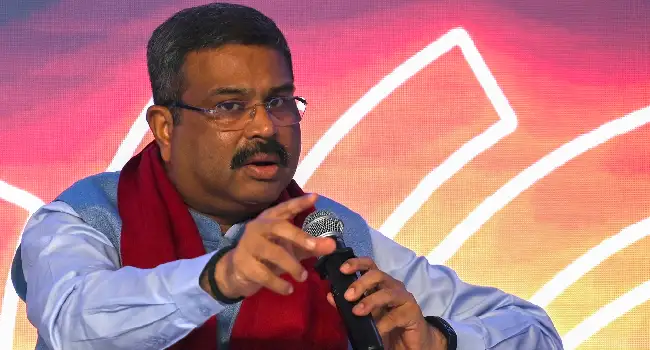
Dharmendra Pradhan steps down following days of mass demonstrations demanding accountability over examination irregularities, as youth-led movement broadens campaign to education reforms, jobs and democratic governance.
By A1NEWS International
NEW DELHI, India — July 26 2026
India’s Education Minister, Dharmendra Pradhan, has resigned following days of nationwide protests sparked by allegations of examination paper leaks and growing concerns over the integrity of the country’s education system, marking one of the most significant political setbacks for Prime Minister Narendra Modi’s government since its re-election in 2024.
The resignation came after sustained demonstrations led largely by students and young graduates, who accused the government of failing to protect the credibility of competitive examinations that determine access to higher education and public sector employment.
The protests, initially centred on alleged irregularities surrounding India’s highly competitive entrance examinations, rapidly evolved into a broader youth movement demanding systemic reforms, greater employment opportunities and increased government accountability.
Resignation Follows Mounting Public Pressure
Announcing his decision on Saturday through a statement posted on the social media platform X, Pradhan confirmed that he had submitted his resignation to Prime Minister Narendra Modi.
“I have sent my resignation letter to the Prime Minister,” the minister stated.
In a separate resignation message written in Hindi, Pradhan acknowledged the growing public anger.
“I am pained to see the events of the past 10 days. This is not a matter of personal prestige for me. India’s youth power is the real strength of this nation. My resolve is that we will not let the country’s youth get trapped in a vicious cycle of confusion.”
His departure came just before a planned third round of negotiations between government officials and protest leaders.
Exam Leak Allegations Trigger Nationwide Demonstrations
The protests erupted after reports of examination paper leaks involving major national tests, raising fears that thousands of students who spent years preparing for highly competitive examinations had been unfairly disadvantaged.
Competitive examinations in India play a decisive role in determining admission into universities, medical schools, engineering institutions and government employment, making their credibility central to the country’s education system.
Students accused authorities of failing to prevent repeated examination breaches, while critics argued that weak oversight had undermined public confidence in the fairness of the selection process.
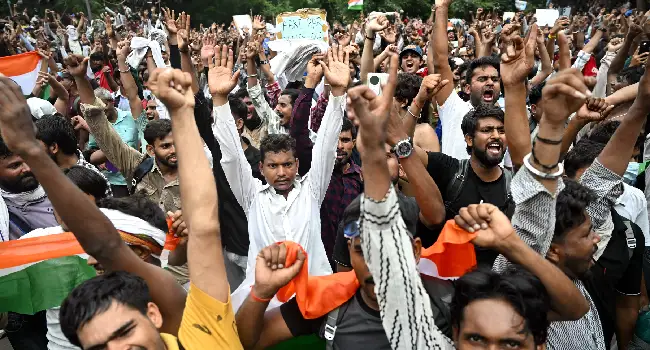
Demonstrations that began at Jantar Mantar in central New Delhi quickly spread to several other cities across India.
Youth Movement Expands Beyond Education
The protests were spearheaded by the Cockroach Janta Party (CJP), a youth-driven movement that emerged largely through social media mobilisation.
Although initially focused on examination irregularities, the movement gradually expanded its demands to include:
- Comprehensive reforms of India’s examination system;
- Greater transparency in recruitment processes;
- Compensation for candidates affected by examination failures;
- Withdrawal of legal cases filed against protesters;
- Increased employment opportunities for young people.
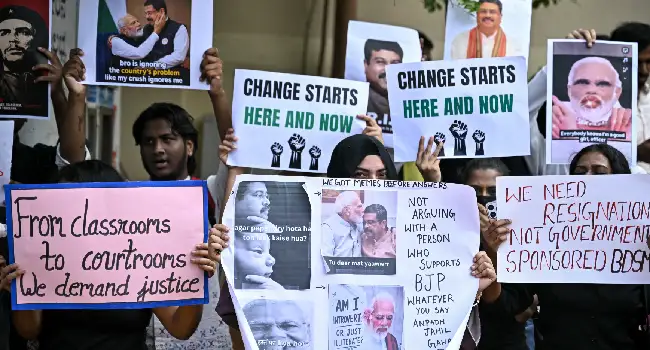
Movement leaders also criticised what they described as shrinking democratic space and increasingly authoritarian governance.
Police Crackdown Intensifies Tensions
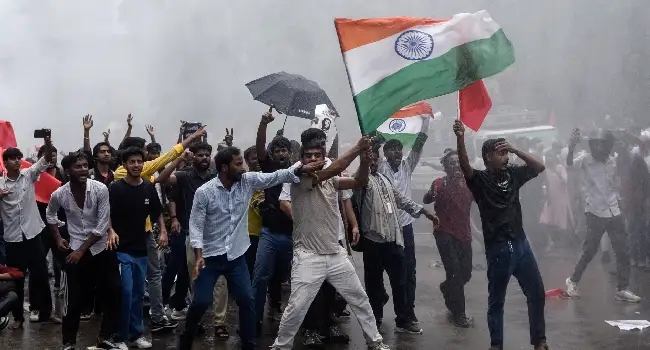
As demonstrations gained momentum, security agencies moved to prevent protesters from marching towards Parliament in New Delhi.
Television footage and eyewitness accounts showed police deploying tear gas and baton charges to disperse demonstrators attempting to breach security cordons.
Despite the crackdown, protests continued throughout the week, drawing thousands of students, graduates and civil society supporters.
Solidarity rallies were also held in several major cities, including Mumbai and Bengaluru.
Negotiations Fail to Break Deadlock
The Indian government held two rounds of discussions with representatives of the CJP earlier in the week in an effort to defuse tensions.
However, negotiators failed to reach an agreement, with protest leaders insisting that the resignation of the Education Minister remained a central demand.
Pradhan’s resignation was announced shortly before a scheduled third round of negotiations.
Following the announcement, large crowds gathered at the main protest venue celebrated what many described as a significant victory for student activism.
“We have done it,” CJP founder Abhijeet Dipke declared to cheering demonstrators.
Political Implications for Modi Government
Political observers say the protests represent one of the most serious domestic challenges facing Prime Minister Narendra Modi since securing another term in office in 2024.
The demonstrations have exposed growing frustration among young Indians over education, unemployment and economic opportunities at a time when millions of graduates compete annually for limited university placements and public sector jobs.
Analysts note that India’s youthful population has become an increasingly influential political force capable of shaping national discourse through coordinated online and street mobilisation.
The government’s handling of the protests is likely to remain under close scrutiny as opposition parties seek to capitalise on public dissatisfaction.
Investigative Perspective: Why Examination Integrity Matters
India operates one of the world’s largest competitive examination systems, with millions of candidates participating annually in tests for university admissions and government recruitment.
Repeated allegations of examination paper leaks have generated widespread concern about institutional accountability and equal opportunity.
Education experts warn that compromised examinations not only undermine public confidence but also threaten social mobility by eroding trust in merit-based selection.
The latest crisis has renewed calls for stronger cybersecurity, tighter examination security, greater transparency in testing procedures and tougher penalties for those involved in examination fraud.
What Comes Next?
While the resignation of the Education Minister satisfies one of the protesters’ immediate demands, movement leaders insist their campaign will continue until broader reforms are implemented.
Key issues expected to dominate future negotiations include:
- Independent investigations into examination irregularities;
- Compensation for affected candidates;
- Comprehensive education sector reforms;
- Employment generation initiatives;
- Protection of peaceful demonstrators from prosecution.
Whether the government agrees to these demands may determine whether the protests subside or evolve into a broader national movement.
The resignation of Education Minister Dharmendra Pradhan marks a significant political development in India’s ongoing education crisis.
What began as protests over examination paper leaks has transformed into a nationwide youth movement demanding transparency, accountability and structural reforms extending beyond the classroom.
As India grapples with restoring confidence in its education system, the government’s next steps will be closely watched by millions of students whose futures depend on the credibility of the country’s examination process.





Leave a Reply