
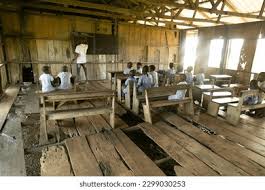
School Insecurity Crisis Deepens As FG, World Bank Restructure $500m Education Fund; NUT Threatens Nationwide Shutdown Over Killings, Abductions
By A1NEWS International / May 29, 2026
ABUJA, Nigeria —FG, World Bank Restructure Education Funding Amid Rising School Attacks
Nigeria’s education sector is facing fresh uncertainty after the Federal Government and the World Bank restructured the $500 million HOPE for Quality Basic Education for All programme, reducing allocations for classroom construction even as insecurity, kidnappings, and killings continue to threaten schools across the country.
The restructuring comes at a time when the Nigeria Union of Teachers (NUT) is warning of a possible nationwide shutdown of basic education schools if the Federal Government fails to guarantee the safety of teachers and students.
Documents obtained from the World Bank revealed that the funding review followed a sharp reduction in Nigeria’s Global Partnership for Education (GPE) System Transformation Grant allocation, forcing significant changes in project priorities and disbursement structures.
The development has raised concerns among education stakeholders, who fear that Nigeria’s already fragile education system may face deeper crises if insecurity and underfunding persist simultaneously.
Funding Cuts Hit Classroom Construction Targets
According to a World Bank restructuring paper dated May 20, 2026, the allocation for constructing 13,000 new classrooms under the programme was drastically reduced.
The report disclosed that the GPE allocation to Nigeria was slashed from $107.59 million to $53.975 million, compelling the Federal Government to restructure the implementation framework.
Originally, the GPE grant was to be jointly managed by the World Bank and the United Nations Children’s Fund (UNICEF). However, under the revised arrangement, the entire reduced grant will now be administered solely through the World Bank-managed HOPE-Education programme.
The restructuring document stated:
“These changes stem from a reduction in the total allocation for Nigeria’s GPE STG funding from $107.59m to $53.975m.”
Under the revised arrangement, funding for classroom construction under Disbursement Linked Indicator (DLI) 4 dropped significantly.
The allocation supporting government-community agreements for classroom projects in 15 states was cut from $500,000 to $300,000, while funding earmarked for the construction of 13,000 classrooms fell from $5.2 million to $2.25 million.
Despite the reduction, the World Bank maintained the overall target of delivering 13,000 classrooms nationwide.
States Expanded Despite Funding Reduction
In what analysts describe as a “redistribution strategy,” the number of states eligible for targeted interventions under Results Area 1 increased from three to six.
The newly added states are Abia, Bauchi, and Kwara, joining Akwa Ibom, Kebbi, and Lagos.
The restructuring also adjusted allocations for teacher mentoring, learning materials, literacy programmes, school grants, and annual school census reporting.
Funding for annual school grants increased from $4.73 million to $7.865 million, while allocations for school census reporting rose from $4.45 million to $5.676 million.
However, allocations tied to literacy and numeracy improvement and out-of-school children interventions suffered notable reductions.
Education policy experts say the changes suggest a shift toward administrative reforms and system monitoring rather than infrastructure expansion.
Rising Insecurity Threatens Nigeria’s Education System
The funding review coincides with a wave of violent attacks targeting schools in different parts of the country.
Recent incidents in Oyo, Borno, and Kebbi states have intensified concerns over the safety of teachers and pupils.
Gunmen reportedly attacked three schools in Oyo State — Baptist Nursery and Primary School, Community Grammar School, and LA Primary School — abducting about 39 pupils and seven teachers.
In Borno State, more than 50 pupils of Mussa Central Primary School in Askira-Uba Local Government Area were reportedly kidnapped.
The attacks have renewed criticism of the Federal Government’s Safe School Initiative, which was launched to strengthen security around educational institutions.
NUT Threatens Nationwide School Shutdown
Speaking with A1NEWS International, NUT President, Comrade Titus Amba, warned that teachers could soon withdraw services nationwide if attacks on schools continue.
Amba said the union could no longer tolerate what he described as worsening insecurity around schools.
“If teachers are not safe where they work, then the system has failed because our schools are endangered,” he said.
The union leader lamented that despite repeated assurances from authorities, kidnappings, killings, and violent attacks on schools had continued unabated.
“The Safe School Initiative was good, but we are not yet there. It has not ensured the security of our schools because pockets of kidnappings, banditry and killings have been going on in Borno and recently in Kebbi and Oyo,” he stated.
Amba revealed that the union had already directed teachers in high-risk areas of Oyo State to stay away from classrooms.
“No teacher should go to school where lives are not guaranteed,” he warned.
He added that the next major attack on schools could trigger a nationwide shutdown of the basic education sector.
Teachers, Students Paying The Price
The NUT President painted a grim picture of the dangers confronting teachers across the country.
According to him, several teachers and students remain in captivity, while some victims have been killed during attacks.
“Teachers are being killed and kidnapped. In Kebbi, teachers and students were carted away; the vice principal was killed in the presence of the family,” he said.
He also cited reports from Oyo State where abducted teachers were allegedly tortured and murdered.
The union insisted that teachers cannot continue working under life-threatening conditions while government authorities fail to provide adequate security.
Questions Over Government Priorities
The restructuring of the HOPE-Education programme has sparked debate over whether Nigeria is prioritising educational access or merely attempting to manage a collapsing system.
Analysts note that reducing infrastructure funding at a time when school enrolment gaps, overcrowded classrooms, and insecurity are worsening may deepen inequalities in access to education.
Critics also argue that insecurity has become one of the biggest barriers to achieving sustainable educational reforms in Nigeria.
While the World Bank described the programme as making “early progress,” concerns persist over whether implementation can succeed amid escalating violence targeting schools and rural communities.
The restructuring of Nigeria’s $500 million education support programme underscores the growing pressures confronting the country’s education sector — shrinking international support, rising insecurity, and mounting threats against teachers and students.
As attacks on schools continue and teachers threaten industrial action, the Federal Government faces increasing pressure to prove that its education reforms can survive Nigeria’s deteriorating security environment.
For millions of children already out of school, the stakes could not be higher.










Leave a Reply