
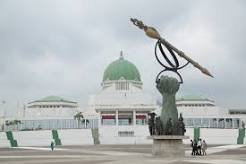
House of Representatives receives 46 state creation requests, 117 new LGA demands as Nigerians question viability, cost and political implications
By Baron Eloagu / Abuja, Nigeria — July 3, 2025
Nigeria may be heading toward one of the most far-reaching political restructurings since the return to democratic rule in 1999, following confirmation by the House of Representatives Committee on the Review of the 1999 Constitution that it has received 46 formal proposals for the creation of new states and 117 requests for additional local government areas.
The proposals, submitted by groups and stakeholders across the country’s six geopolitical zones, have triggered intense national debate over whether expanding Nigeria’s federating structure would deepen grassroots governance or worsen the country’s already fragile economic and political realities.
From Savannah State in the North-East to Lagoon State in the South-West, the requests reflect decades of agitation by ethnic minorities, regional blocs and political interests seeking greater representation, resource control and administrative autonomy.
However, critics warn that creating additional states without fixing structural governance failures could merely multiply inefficiency, corruption and fiscal dependence.
Constitution Review Committee Faces Historic Test
The constitution review process, currently being handled by the House Committee on Constitutional Amendment, is expected to examine the constitutional, political and economic implications of the proposals before any recommendation is presented to the National Assembly.
Political analysts describe the latest wave of state creation demands as evidence of growing dissatisfaction with Nigeria’s current federal structure, which many groups argue has failed to ensure equitable development and political inclusion.
Nigeria currently operates 36 states and the Federal Capital Territory under a heavily centralized federal arrangement, with most states depending largely on monthly allocations from the Federation Account.
The latest agitation reopens long-standing debates over restructuring, fiscal federalism and the viability of subnational governance.
Breakdown of Proposed States Across Geopolitical Zones
The proposals cut across all six geopolitical zones, with some states and regions producing multiple requests.
North-East Zone
Proposed states from the North-East include Savannah State in Borno State, Kwararafa, South Sardauna and Muri in Taraba State, Katagum in Bauchi State and Amana in Adamawa State.
Proponents argue that the vast geographical spread and security challenges in the region justify smaller and more manageable administrative units.
North-West Zone
In the North-West, proposals include Gurara and New Kaduna in Kaduna State, Gobir in Sokoto State, Hadejia in Jigawa State, Kainji spanning Kebbi and Niger States, as well as Tiga and Ghari in Kano State.
Supporters claim that rapid population growth and uneven development require administrative decentralization.
North-Central Zone
The North-Central recorded some of the highest requests, including Edu in Niger State, Okun and Okura in Kogi State, South Plateau and Lowland in Plateau State, New Kogi involving parts of Kogi, Nasarawa and Edo States, Ifesowapo in Kwara State, Abuja State from the FCT, and Apa, Apa-Agba and Ayatutu in Benue State.
Analysts note that many of the requests are tied to identity politics and demands for minority representation.
South-East Zone
The South-East proposals include Orashi spanning Anambra, Imo and Rivers States, Orlu, Anioma, Etiti, Aba and Adada State in Enugu.
Many of the demands in the region are linked to long-standing complaints about marginalization and imbalance in state distribution compared to other regions.
South-South Zone
The South-South submissions include Atlantic City, Bori and Iwuroha in Rivers State, Obolo in Akwa Ibom State, Warri and Toru-Ebe in Delta State, and Ogoja in Cross River State.
Oil-producing communities behind several proposals argue that new states would improve resource management and local participation in governance.
South-West Zone
In the South-West, requests include Ijebu and Remo in Ogun State, Oke-Ogun, Ibadan and New Oyo in Oyo State, Ife-Ijesha spanning Osun, Ondo and Ekiti States, Lagoon State covering parts of Lagos and Ogun States, and Igbomina involving Osun, Kwara and Ekiti States.
The proposals have generated mixed reactions among traditional institutions, political elites and youth groups in the region.
Supporters Say New States Will Deepen Inclusion
Advocates of state creation insist that Nigeria’s current governance structure has left many communities politically and economically marginalized.
They argue that smaller administrative units could bring governance closer to the people and accelerate infrastructural development in neglected areas.
Some constitutional lawyers and regional leaders also contend that additional states could strengthen internal security coordination, improve access to public services and create opportunities for local economic planning tailored to specific regional realities.
Supporters further point to examples like Lagos State and Anambra State, which have developed distinct economic models and internally generated revenue frameworks despite limited federal allocations.
Critics Warn Against “Creating More Poverty Centres”
Opponents, however, argue that most existing states are already financially unsustainable and heavily dependent on federal allocations for survival.
Economic analysts warn that adding more states could significantly increase governance costs at a time Nigeria is battling rising debt, inflation, unemployment and declining purchasing power.
Critics also fear that new states may merely reproduce the same bureaucratic inefficiencies that currently plague the federation.
Several civil society groups cautioned that the proposals could inflame ethnic tensions, territorial disputes and indigeneship conflicts, especially in politically sensitive regions like Benue, Plateau, Rivers and Delta States.
Some political observers described the state creation campaign as a potential avenue for elite patronage, political appointments and access to federal revenue rather than genuine grassroots development.
Public Skepticism Dominates Social Media Conversations
Reactions across social media platforms reflected widespread public distrust toward the initiative.
Many Nigerians questioned whether creating additional states would improve governance outcomes or simply expand political bureaucracy.
A social media user wrote:
“Most states are already struggling economically and surviving almost entirely on federal allocations. Creating new ones without economic productivity is dangerous.”
Another commenter argued:
“Nigeria does not necessarily need more states. What it needs is accountable leadership and stronger institutions.”
The online debate exposed growing frustration among citizens over corruption, underdevelopment and poor service delivery at both federal and state levels.
Fiscal Federalism Debate Resurfaces
The renewed push for state creation has once again revived calls for broader constitutional reforms and fiscal federalism.
Governance experts argue that structural reform may be more important than territorial expansion.
Among the reforms frequently proposed are:
- Greater resource control by states
- Increased fiscal autonomy
- Full local government autonomy
- Improved internally generated revenue systems
- Reduction in dependence on oil revenue
- Stronger accountability mechanisms at subnational levels
Analysts say without economic viability and governance reforms, new states may become financially burdensome entities dependent on Abuja for survival.
Political Implications Ahead of 2027
Political strategists believe the state creation debate may also reshape alliances ahead of the 2027 general elections.
State creation historically influences representation in the National Assembly, allocation formulas, ministerial appointments and political influence at the federal level.
Observers note that many proposals are emerging from regions seeking greater political relevance and negotiating power within Nigeria’s power-sharing framework.
Conclusion
The proposal for 46 new states represents more than a constitutional exercise — it is a reflection of Nigeria’s unresolved questions about identity, inclusion, governance and national cohesion.
While supporters see state creation as a pathway to equity and grassroots development, critics fear it could deepen economic strain and administrative fragmentation.
As the National Assembly begins deliberations, the central issue remains whether Nigeria’s challenge lies in the number of states it has, or in the quality of governance within the existing structure.
For many Nigerians, the debate is no longer simply about creating new states, but about whether the country is prepared to reform the systems that have left many of its current states struggling to survive.


Leave a Reply