
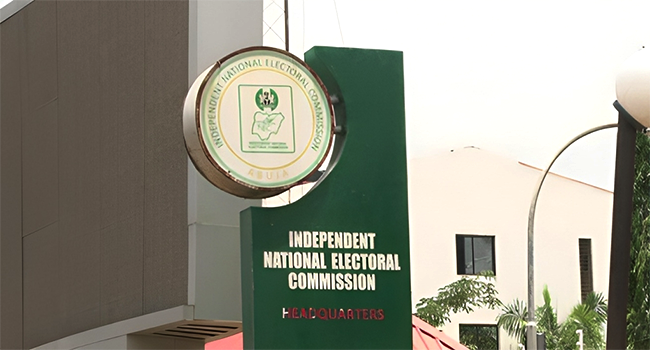
Actor-turned-politician alleges violation of privacy rights after voter registration details surface online; DSS joins investigation into suspected unauthorized access of INEC database.
By John Ishaku / June 3, 2026
Abuja, Nigeria – Fresh concerns over the security of Nigeria’s electoral database have emerged following allegations that sensitive voter information belonging to veteran Nollywood actor and politician, Emeka Ike, was accessed and publicly disclosed without authorization.
The development has prompted the Independent National Electoral Commission (INEC) to launch an internal investigation, while the Department of State Services (DSS) has reportedly commenced a parallel probe into the circumstances surrounding the alleged breach.
The controversy has also opened a broader debate on data privacy, cybersecurity, and the protection of personal information held by government institutions.
ACTOR CRIES FOUL OVER ALLEGED EXPOSURE OF PERSONAL INFORMATION
Emeka Ike, who recently contested for the House of Representatives ticket for the AMAC/Bwari Federal Constituency under the Nigerian Democratic Congress (NDC), has strongly condemned the alleged release of his voter registration records.
The actor’s reaction followed reports that screenshots containing details from his voter registration profile were circulated online.
According to reports, the information allegedly disclosed included his voter identification number, registration records, passport photograph, and other personal details stored within INEC’s voter registration database.
Speaking during an interview on Channels Television’s The Morning Brief, Ike described the incident as disturbing and dangerous, warning that it raises fundamental questions about citizens’ privacy and the security of government-held databases.
He argued that the matter transcends partisan politics and touches directly on constitutional rights and the protection of personal information.
“It is quite shocking, extreme, and the height of political rascality for a government official to gain access to a citizen’s information and expose it publicly,” Ike reportedly stated.
LEGAL BATTLE LOOMS
The veteran actor has threatened legal action against Lere Olayinka, media aide to the Minister of the Federal Capital Territory, Nyesom Wike, over the alleged publication of the information.
Ike insists that regardless of political disagreements, no public official or private individual has the right to access and disseminate personal data without authorization.
Legal analysts say the case could become a significant test of Nigeria’s evolving data protection framework and may establish important precedents regarding accountability for unauthorized access to government databases.
Observers note that the dispute arrives at a time when concerns about digital privacy and cybersecurity are growing across the country.
INEC COMMENCES INVESTIGATION
Responding to the controversy, INEC confirmed that it has initiated a comprehensive investigation into the alleged unauthorized access of its Continuous Voter Registration (CVR) database.
In a statement issued by National Commissioner and Chairman of the Information and Voter Education Committee (IVEC), Mohammed Haruna, the Commission said it takes the allegations seriously and has begun examining the circumstances surrounding the incident.
According to the Commission, authorized registration officers were granted controlled access to portions of the CVR system strictly for official duties during the ongoing voter registration exercise.
INEC explained that such access is limited and normally withdrawn once official assignments are completed.
The electoral body disclosed that preliminary audit checks have already enabled investigators to identify the user account through which the information was allegedly accessed.
Officials connected to the incident have reportedly been questioned as investigators seek to determine whether internal access-control procedures were violated.
DSS JOINS INVESTIGATION
In a significant development, INEC confirmed that the Department of State Services has also commenced an independent investigation.
The Commission pledged full cooperation with security agencies and stated that anyone found culpable would face appropriate legal consequences.
“The Commission is examining all technical, administrative and operational factors associated with the matter in order to establish responsibility and determine whether any breach of internal access-control protocols occurred,” the statement said.
Security experts say the involvement of the DSS underscores the seriousness of the allegations, particularly given the sensitive nature of voter registration data.
CONCERNS OVER DATA PROTECTION AND CYBERSECURITY
The incident has reignited public concerns over the security of personal information stored by government institutions.
Data protection advocates warn that unauthorized access to voter records could undermine public confidence in electoral processes and discourage citizen participation in voter registration exercises.
Analysts note that trust remains a critical component of any democratic system, particularly when citizens are required to provide sensitive personal information to government agencies.
The controversy has also triggered calls for stronger cybersecurity safeguards, enhanced monitoring of database access, stricter penalties for unauthorized disclosures, and improved compliance with Nigeria’s data protection regulations.
INEC ASSURES OVER 90 MILLION REGISTERED VOTERS
Despite the concerns, INEC has sought to reassure Nigerians that the alleged retrieval of a specific voter record does not indicate a compromise of the broader voter registration infrastructure.
The Commission emphasized that there is currently no evidence suggesting that the personal data of more than 90 million registered voters has been exposed.
However, electoral stakeholders insist that the outcome of the ongoing investigations will be crucial in restoring public confidence and demonstrating the Commission’s commitment to protecting sensitive voter information.
BROADER IMPLICATIONS FOR DEMOCRACY
Beyond the immediate dispute involving Emeka Ike and political actors, the case raises important questions about digital rights, privacy protection, institutional accountability, and the safeguarding of electoral records in the digital age.
Experts argue that as Nigeria continues to digitize public services and electoral processes, robust mechanisms must be established to prevent abuse, ensure transparency, and protect citizens from unauthorized exposure of personal information.
The findings of the investigations by INEC and the DSS are expected to determine whether the incident was the result of individual misconduct, systemic vulnerabilities, or breaches of established protocols.
For now, the controversy continues to dominate public discourse, with many Nigerians awaiting answers on how sensitive voter information found its way into the public domain.
The alleged exposure of Emeka Ike’s voter registration data has evolved beyond a political dispute into a major test of Nigeria’s commitment to data privacy, cybersecurity, and electoral integrity.
As investigations proceed, the outcome may shape future policies governing access to electoral databases and determine the extent to which public officials and institutions can be held accountable for the protection of citizens’ personal information.







Leave a Reply