
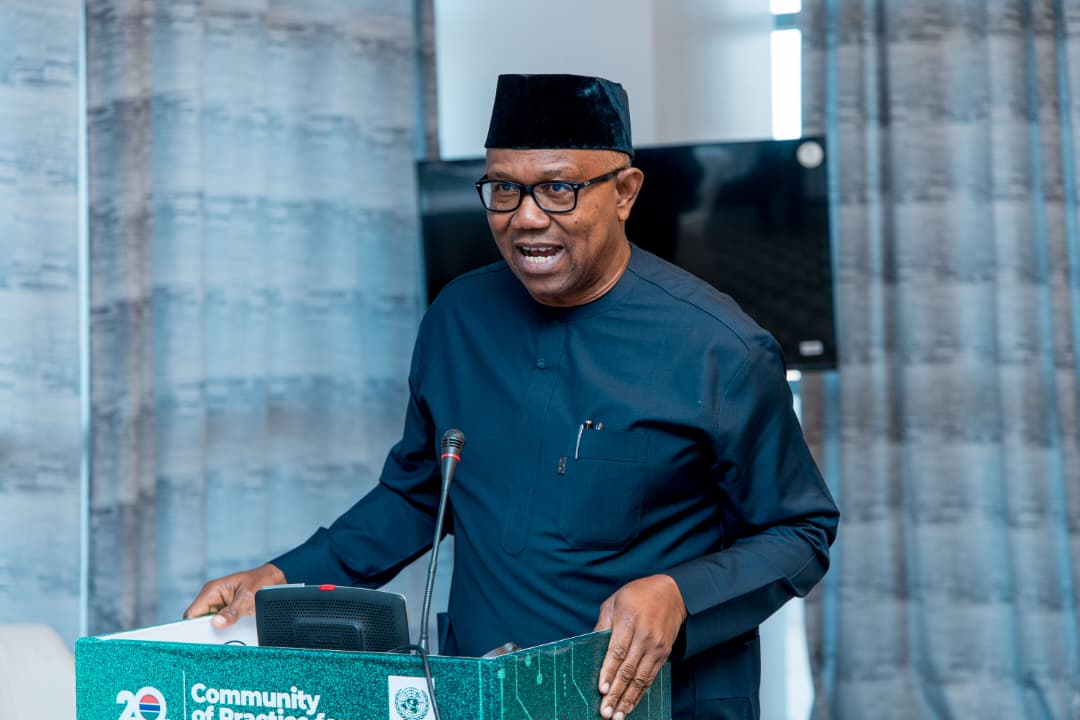
NDC Presidential Candidate Tells European Lawmakers Africa’s Biggest Challenge Is Poor Governance, Not Lack of Resources
By A1NEWS International Political Affairs Desk
BRUSSELS, BELGIUM — June 6, 2026
The presidential candidate of the Nigeria Democratic Congress (NDC) for the 2027 general election, Peter Obi, has reignited international debate over Africa’s development trajectory after declaring before members of the European Parliament that poor leadership remains the continent’s greatest obstacle to progress.
In a speech that has since generated widespread reactions across political, diplomatic and economic circles, Obi argued that Africa’s persistent developmental challenges are not the result of inadequate natural resources or human capital but rather the consequence of governance failures that have prevented the continent from realizing its vast potential.
The remarks, delivered during an engagement with European lawmakers, have triggered renewed discussions on governance, accountability, economic reforms and the future of Africa-Europe relations ahead of Nigeria’s increasingly competitive 2027 political season.
Africa Rich in Resources, Poor in Governance
Addressing policymakers and stakeholders at the European Parliament, Obi painted a picture of a continent endowed with immense advantages yet struggling to convert those assets into sustainable prosperity.
According to him, Africa possesses abundant mineral wealth, strategic geographic importance, a rapidly expanding market and one of the youngest populations globally.
Despite these advantages, he argued, millions of Africans continue to grapple with poverty, unemployment, insecurity and underdevelopment because political leadership has failed to create institutions capable of translating opportunities into economic growth.
Obi maintained that the continent’s development challenge should no longer be viewed primarily through the lens of foreign aid or resource availability but through the quality of governance and leadership.
“Leadership remains the critical factor that determines whether a nation succeeds or fails,” Obi reportedly emphasized during the seven-minute presentation.
Nigeria Presented as Africa’s Untapped Giant
Using Nigeria as a case study, Obi argued that the country’s demographic and economic profile positions it as a potential growth engine for both Africa and Europe.
With an estimated population of approximately 240 million people, Nigeria remains Africa’s most populous nation and one of the world’s largest emerging consumer markets.
According to Obi, effective governance could transform Nigeria into a manufacturing hub, investment destination and strategic economic partner capable of driving regional prosperity.
He noted that a productive and well-managed Nigerian economy would create benefits extending beyond Africa, strengthening trade relations, enhancing investment opportunities and fostering economic stability across international markets.
Analysts have long argued that Nigeria’s economic potential remains underutilized despite its vast natural resources, entrepreneurial population and strategic position within Africa.
Stronger Africa-Europe Partnership Through Good Governance
A major theme of Obi’s address focused on the relationship between Africa and Europe.
The former Anambra State governor suggested that supporting accountable governance and institutional reforms across Africa would yield significant benefits for both continents.
According to him, improved governance could facilitate deeper economic integration, stronger trade partnerships and increased foreign direct investment.
He further argued that many of the issues affecting Europe, including irregular migration, insecurity and economic instability linked to fragile states, could be mitigated if African countries experienced stronger governance and inclusive economic growth.
Political observers note that such arguments align with growing calls within European policy circles for partnerships that prioritize development, institution-building and sustainable economic cooperation over dependency-based aid models.
Governance, Accountability and Institutional Reforms
Throughout his address, Obi repeatedly stressed the importance of institutional reforms and responsible leadership as prerequisites for national development.
He argued that corruption, weak public institutions and poor policy implementation have consistently undermined Africa’s capacity to compete effectively in the global economy.
According to him, governments across the continent must prioritize transparency, fiscal discipline, human capital development and investment in productive sectors.
These themes have remained central to Obi’s political messaging since his emergence as a major national political figure and were prominent during his campaigns in previous election cycles.
Supporters contend that his focus on governance reform reflects a broader demand among young Africans for accountable leadership and evidence-based policymaking.
Speech Sparks Mixed Reactions
The address has generated diverse reactions across social media platforms and within political circles.
Supporters praised the speech as a candid assessment of Africa’s challenges and a necessary call for leadership accountability.
Many argued that Obi’s remarks accurately captured the disconnect between Africa’s enormous potential and the developmental outcomes experienced by many citizens.
Several commentators also highlighted his emphasis on governance reforms rather than external factors as a realistic approach to addressing longstanding economic and social challenges.
However, critics questioned whether the ideas presented differed significantly from previous political promises made by leaders across the continent.
Others argued that while governance remains a critical issue, structural global economic inequalities, historical factors and external influences also contribute significantly to Africa’s developmental challenges.
Some political opponents described the speech as part of an emerging campaign narrative ahead of Nigeria’s 2027 elections.
Political Implications Ahead of 2027
The timing of Obi’s intervention has attracted particular attention as political realignments and consultations begin to gather momentum ahead of the next general election.
Political analysts believe the speech could strengthen Obi’s image among voters who prioritize governance reforms, economic restructuring and institutional accountability.
The address also places leadership quality at the center of public discourse, a topic likely to dominate conversations as political parties prepare their strategies for the 2027 contest.
Observers note that issues such as insecurity, unemployment, inflation, public sector efficiency and economic diversification are expected to remain major determinants of voter behavior in the coming election cycle.
Broader Debate on Africa’s Future
Beyond immediate political considerations, Obi’s remarks have revived a broader conversation about Africa’s development model and future direction.
The debate touches on fundamental questions regarding leadership, state capacity, institutional effectiveness, economic management and regional cooperation.
For many analysts, the speech serves as a reminder that Africa’s future will largely depend on the ability of governments to convert demographic advantages and natural resources into sustainable development outcomes.
Whether one agrees with Obi’s assessment or not, his comments have succeeded in drawing renewed international attention to the governance challenges confronting Africa’s largest economies.
Conclusion
Peter Obi’s address before the European Parliament has once again placed the spotlight on one of Africa’s most enduring debates: whether the continent’s greatest challenge is a shortage of resources or a deficit in leadership.
By arguing that governance failures rather than resource limitations remain the primary obstacle to development, Obi has sparked conversations extending beyond Nigerian politics into broader questions about accountability, economic transformation and Africa’s role in the global economy.
As Nigeria moves steadily toward the 2027 general elections, the issues raised in Brussels are likely to remain central to public discourse, shaping debates about leadership, governance and the future direction of Africa’s most populous nation.



Leave a Reply