
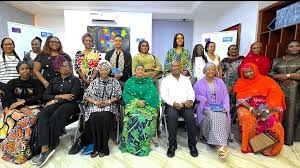
As Nigeria grapples with one of the lowest levels of female political representation in Africa, the House of Representatives Spouses Association (HORSA) has moved to strengthen advocacy for the Reserved Seats Bill through a proposed strategic partnership with the Policy and Legal Advocacy Centre (PLAC), signaling renewed efforts to increase women’s participation in governance and decision-making.
By Baron Eloagu | June 8, 2026
Abuja, Nigeria – Efforts to improve women’s representation in Nigeria’s political landscape received fresh momentum on Monday as the House of Representatives Spouses Association (HORSA) proposed a strategic partnership with the Policy and Legal Advocacy Centre (PLAC) to drive support for the Reserved Seats Bill currently before the National Assembly.
The initiative seeks to build broader stakeholder consensus and strengthen advocacy efforts aimed at increasing female participation in elective and appointive positions across the country.
The proposal was unveiled in Abuja during a courtesy visit by HORSA officials to the headquarters of PLAC, where discussions centered on practical strategies for advancing gender inclusion within Nigeria’s democratic framework.
THE RESERVED SEATS BILL: A PUSH FOR INCLUSIVE GOVERNANCE
At the heart of the engagement is the Reserved Seats Bill, a constitutional amendment proposal designed to create additional legislative seats specifically aimed at boosting women’s representation in governance.
Advocates argue that despite decades of democratic rule, women remain significantly underrepresented in Nigeria’s political institutions.
According to available legislative data, female participation in Nigeria’s National Assembly remains among the lowest globally, with women occupying only a small fraction of elective positions despite constituting nearly half of the country’s population.
Supporters of the bill contend that structural barriers, cultural challenges, financial constraints and entrenched political systems continue to hinder women’s access to leadership positions.
FATIMA ABBAS: “THIS IS ABOUT DEMOCRATIC INCLUSION”
Speaking during the meeting, Fatima Tajudeen Abbas, wife of the Speaker of the House of Representatives, described the proposed legislation as a critical instrument for strengthening democracy and ensuring equitable representation.
According to her, the bill transcends partisan politics and should be viewed as a national development initiative.
She emphasized that increasing women’s participation in governance would improve policy outcomes and deepen democratic legitimacy.
“This is more than a constitutional amendment. It is a pathway towards a more inclusive, representative and equitable democratic system,” she said.
Abbas noted that although progress has been recorded in recent years regarding women’s political participation, significant disparities remain across legislative and executive institutions.
HORSA SEEKS STRATEGIC ADVOCACY PARTNERSHIP
As part of efforts to accelerate support for the bill, HORSA proposed a formal collaboration with PLAC to coordinate advocacy campaigns and stakeholder engagement activities.
The association indicated its readiness to leverage its influence and network within political and governance circles to build momentum for the legislation.
Abbas proposed the convening of a high-level strategic workshop that would bring together lawmakers, civil society organizations, development partners, policy experts, traditional leaders and gender advocates.
According to her, such a platform would provide an opportunity to identify practical pathways for strengthening support and overcoming resistance to the bill.
BUILDING A COALITION FOR CHANGE
Observers say one of the biggest challenges facing gender-focused constitutional reforms in Nigeria has been the absence of a broad coalition capable of sustaining long-term advocacy.
Political analysts argue that successful passage of the Reserved Seats Bill will depend on extensive consultations, public sensitization and strategic engagement with legislators across party lines.
Abbas maintained that a collaborative framework involving advocacy organizations and policymakers could help generate the necessary political will.
She expressed confidence that a coordinated campaign would identify influential champions within government institutions who could help drive the legislation through the legislative process.
ADDRESSING MISCONCEPTIONS ABOUT THE BILL
Also speaking at the event, Chairperson of the House Committee on Humanitarian Services, Tolulope Akande-Sadipe, sought to clarify misconceptions surrounding the proposed legislation.
According to her, the bill has been widely misunderstood as an attempt to diminish the political opportunities available to men.
She stressed that the proposal is not intended to replace male politicians or displace existing office holders.
Instead, she explained, the objective is to create additional opportunities that would strengthen inclusivity and ensure that women’s voices are adequately represented in governance structures.
“The bill is not anti-men. It is about expanding representation and creating a more balanced democratic system,” she said.
WHY WOMEN’S REPRESENTATION REMAINS A NATIONAL ISSUE
Nigeria continues to face criticism from international development organizations over low female representation in politics.
Experts argue that greater inclusion of women in governance contributes to improved policy formulation, stronger social development outcomes and enhanced democratic accountability.
Studies conducted by international organizations have repeatedly linked women’s participation in decision-making to advancements in healthcare, education, poverty reduction and community development.
Despite these findings, Nigerian women continue to face significant obstacles, including political violence, inadequate party support structures, funding challenges and cultural barriers.
THE ROAD AHEAD
While advocates remain optimistic, the passage of the Reserved Seats Bill is expected to face rigorous debate within the National Assembly.
Constitutional amendments require broad legislative support and approval through multiple constitutional processes before becoming law.
Political observers believe the coming months will be crucial in determining whether the bill can secure the consensus needed for passage.
The proposed HORSA-PLAC partnership may therefore emerge as a significant force in shaping public discourse and legislative engagement on gender inclusion.
The proposed alliance between HORSA and PLAC represents a significant development in ongoing efforts to address the gender imbalance in Nigeria’s political system.
As stakeholders intensify campaigns for the Reserved Seats Bill, the debate is likely to extend beyond legislative chambers into broader conversations about representation, inclusion and democratic development.
Whether the initiative succeeds or not, it has once again brought national attention to the question of how Nigeria can create a governance system that reflects the diversity and aspirations of all its citizens.
For advocates of the bill, the challenge now is transforming goodwill and advocacy into concrete legislative action capable of reshaping the future of women’s political participation in Nigeria.




Leave a Reply