
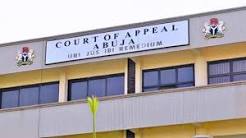
Majority appellate ruling affirms that only duly elected state executives can conduct party congresses, a decision that could reshape the ADC’s preparations for the 2027 general elections and cast uncertainty over the emergence of key presidential aspirants.
By A1NEWS International
ABUJA, Nigeria — July 13, 2026
In a landmark judgment with far-reaching implications for the African Democratic Congress (ADC) and Nigeria’s evolving 2027 electoral landscape, the Court of Appeal in Abuja has upheld a Federal High Court ruling restraining the Independent National Electoral Commission (INEC) from recognising or participating in state congresses organised by committees appointed by the party’s Senator David Mark-led Caretaker/Interim National Working Committee.
The decision, delivered on Monday by a three-member panel of the appellate court, reinforces judicial oversight over political party administration where constitutional and statutory violations are alleged, while potentially complicating the political future of candidates who emerged through structures established by the caretaker leadership.
The ruling is widely viewed as a significant legal setback for the Senator David Mark-led faction of the ADC, whose leadership has sought to reposition the party ahead of the 2027 general elections.
Majority Judgment Upholds Federal High Court Decision
Delivering the lead majority judgment, Justice Okon Abang, with Justice Donatus Okorowo concurring, held that there was no legal basis for overturning the April 29 judgment of the Federal High Court delivered by Justice Joyce Abdulmalik.
The appellate court consequently affirmed the lower court’s order restraining the David Mark-led caretaker executives from interfering with the tenure, responsibilities, and constitutional functions of the party’s duly elected State Executive Committees.
The court equally upheld the directive preventing INEC from recognising any congresses conducted by committees constituted by the caretaker leadership.
According to the court, responsibility for organising state congresses resides exclusively with constitutionally elected state executive committees rather than caretaker bodies established by the national leadership.
Court Rejects Caretaker Committee’s Authority
A central issue before both courts was whether the interim leadership possessed constitutional authority under the ADC Constitution to appoint committees for the purpose of conducting state congresses.
The appellate court agreed with the findings of the Federal High Court that neither the 1999 Constitution of the Federal Republic of Nigeria (as amended) nor the Constitution of the African Democratic Congress empowers a caretaker or interim National Working Committee to constitute such committees.
The court held that permitting caretaker officials to assume powers reserved for elected party organs would undermine internal democracy and violate constitutional safeguards governing political parties.
Judgment Could Affect 2027 Electoral Preparations
Legal analysts say the decision could significantly affect the ADC’s preparations for the 2027 general elections.
The judgment is expected to create uncertainty surrounding the legitimacy of political structures and candidates produced through congresses organised under the authority of the Senator David Mark-led caretaker leadership.
Among those potentially affected are former Vice President Atiku Abubakar and other aspirants reportedly associated with the party’s recent national congress organised by the caretaker faction.
While the judgment does not directly invalidate any presidential aspiration, it raises important legal questions regarding the validity of party processes that preceded such nominations.
Political observers believe further litigation may emerge as the 2027 election timetable approaches.
How the Legal Dispute Began
The case originated from a suit marked FHC/ABJ/CS/581/2026, instituted before the Federal High Court by several aggrieved members of the ADC.
The plaintiffs—Don Norman Obinna, Johnny Tovie Derek, Obah C. Ehigiator, Hon. Olona Yinka, Dr. Charles Idowu Omideji, Samuel Pam Gyang, and Obianyo Patrick—approached the court on behalf of themselves and the party’s elected State Chairmen and State Executive Committees nationwide.
Named as defendants were:
- African Democratic Congress (ADC);
- Senator David Mark;
- Senator Patricia Akwashiki;
- Mallam Bolaji Abdullahi;
- Ogbeni Rauf Aregbesola;
- Professor Oserheimen Osunbor (representing the Caretaker/Interim National Working Committee);
- Independent National Electoral Commission (INEC).
The plaintiffs challenged the legality of committees constituted by the caretaker leadership to conduct state congresses, arguing that the appointments violated both the party’s constitution and Nigeria’s constitutional provisions governing democratic internal party processes.
High Court Relied on Constitutional Provisions
In her earlier judgment, Justice Joyce Abdulmalik held that the tenure of the ADC’s elected State Working Committees and State Executive Committees remained legally valid until properly conducted congresses and a national convention were held in accordance with the party’s constitution.
The trial court relied heavily on Section 223 of the 1999 Constitution, which requires political parties to conduct periodic elections based on democratic principles.
The court also examined Article 23 of the ADC Constitution, which provides for fixed terms of office for national and state party officials.
Justice Abdulmalik concluded that the caretaker leadership lacked constitutional authority to replace elected structures through administrative appointments.
Appeal Court Distinguishes Constitutional Violations from Internal Party Affairs
One of the most significant aspects of the appellate judgment was its clarification regarding the limits of judicial intervention in political party disputes.
Although courts traditionally refrain from interfering in internal party matters, the Court of Appeal held that such restraint does not apply where constitutional or statutory violations are alleged.
Justice Abang observed that once a dispute transcends ordinary internal administration and raises constitutional questions, the courts become duty-bound to intervene.
“Once a complaint before the court is anchored on a constitutional infraction, the shield of internal affairs drops and the veil is lifted for judicial intervention,” Justice Abang stated.
The appellate court also relied on a recent Supreme Court decision arising from the Peoples Democratic Party (PDP) leadership crisis to reinforce its reasoning.
According to the majority, judicial intervention was necessary to prevent constitutional breaches and preserve democratic governance within political parties.
Dissenting Justice Says Matter Is Internal Party Affair
The judgment, however, was not unanimous.
Presiding Justice Abba Mohammed delivered a dissenting opinion, holding that the dispute primarily concerned the internal administration of a political party and therefore fell outside the jurisdiction of the courts.
According to him, the Federal High Court ought not to have entertained the suit.
His minority opinion underscores the continuing legal debate over the extent to which Nigerian courts should intervene in political party leadership disputes.
Implications for Nigeria’s Political Landscape
The ruling comes at a critical period when opposition political parties are restructuring ahead of the 2027 elections.
Internal democracy has increasingly become a focal point of judicial scrutiny, with courts consistently emphasizing that political parties must comply with their constitutions and Nigeria’s constitutional framework.
Legal experts say the judgment reinforces the principle that political expediency cannot override constitutional procedures.
They also note that the decision may influence future disputes involving caretaker committees across other political parties.
By affirming the Federal High Court’s restraining order, the Court of Appeal has delivered a significant judicial interpretation of internal party governance and constitutional compliance.
The ruling not only limits the authority of the Senator David Mark-led ADC caretaker committee but also places renewed emphasis on democratic internal processes within political parties.
As preparations intensify for the 2027 general elections, the judgment is expected to shape both the organisational structure of the ADC and the broader legal landscape governing party administration in Nigeria.








Leave a Reply