
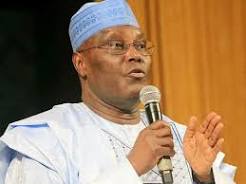
ADC presidential candidate alleges unprecedented increase in Service-Wide Vote raises transparency concerns; urges National Assembly to conduct comprehensive investigation as scrutiny of 2026 budget intensifies.
By John Ishaku
ABUJA, Nigeria — July 21, 2026
Former Vice President Atiku Abubakar has raised concerns over the Federal Government’s allocation of ₦12.8 trillion to the Service-Wide Vote (SWV) in the 2026 Appropriation Act, alleging that the provision represents a major transparency issue requiring urgent public explanation.
The former Vice President, who is also the African Democratic Congress (ADC) presidential candidate for the 2027 general election, described the increase as unprecedented and called on President Bola Tinubu’s administration to provide a detailed breakdown of the expenditure.
According to Atiku, the Service-Wide Vote rose from ₦638 billion in the 2025 budget to ₦12.8 trillion in 2026—an increase he estimated at approximately 1,918 per cent within one fiscal year.
The allegations were contained in a statement issued Monday by his Senior Special Assistant on Public Communication, Phrank Shaibu.
What Is the Service-Wide Vote?
The Service-Wide Vote is a budgetary provision traditionally used by the Federal Government to accommodate expenditures that cannot immediately be assigned to a particular ministry, department or agency during budget preparation.
Such expenditures may include:
- Salary adjustments
- Pension obligations
- Wage awards
- Contingency expenditures
- Special interventions
- Government-wide obligations
Fiscal policy analysts have long argued that because portions of the Service-Wide Vote are not always accompanied by detailed line-item disclosures, the provision requires strong legislative oversight and transparent reporting to prevent misuse.
Atiku Alleges Budget Lacks Transparency
In his statement, Atiku argued that the magnitude of the allocation raises fundamental questions about accountability.
He said Nigerians deserve to know:
- Who will spend the funds;
- Which agencies will receive them;
- The projects they will finance;
- The legal basis for the allocations.
According to him:
“No responsible government can expect citizens to accept a nineteen-fold increase in a notoriously opaque budgetary provision without disclosing exactly who will spend the money, what it will be spent on, and under what legal authority.”
He further contended that failure by the government to adequately explain the allocation could fuel public suspicion regarding the intended use of the funds.
Atiku alleged that the unexplained increase may generate concerns that the money could potentially be used for political purposes. However, he did not present documentary evidence supporting that allegation, and the Federal Government has not publicly accepted the claim.
Questions Over Personnel Allocation
The former Vice President also questioned what he described as inconsistencies in personnel allocations.
According to his statement:
- The Federal Ministry of Finance reportedly has a personnel allocation of approximately ₦54.8 billion.
- Meanwhile, the Ministry of Budget and Economic Planning allegedly carries ₦2.19 trillion under the personnel component of the Service-Wide Vote.
Atiku argued that such figures require clarification.
He asked:
“Who exactly are the workers earning ₦2.19 trillion? Where are they? What offices do they occupy? What agencies do they belong to?”
📚 Get "Spend Less, Save More" — Click here
He described the figures as requiring immediate public scrutiny.
Comparison With Critical National Sectors
The former Vice President further argued that the allocation to the Service-Wide Vote appears larger than the combined allocations to some major sectors including:
- Education
- Defence
- Agriculture
According to him, such prioritisation raises policy questions given Nigeria’s current economic and security challenges.
He maintained that greater transparency is necessary to sustain public confidence in government spending.
Call for National Assembly Investigation
Atiku called on the National Assembly to commence what he described as a comprehensive investigation into every component of the Service-Wide Vote.
He urged lawmakers to undertake a detailed review of the:
- ₦12.8 trillion total allocation;
- ₦2.19 trillion personnel provision;
- Beneficiary agencies;
- Legal authorisations.
According to him, legislative oversight is essential to maintaining fiscal accountability.
No Official Federal Government Response Yet
As of the time of filing this report, the Federal Government had not issued an official response specifically addressing Atiku’s allegations regarding the Service-Wide Vote.
Likewise, neither the Federal Ministry of Finance nor the Ministry of Budget and Economic Planning had publicly responded to the specific questions raised in the statement.
Should official clarifications be issued, they would provide additional context regarding the composition and intended utilisation of the allocation.
Budget Transparency Under Growing Public Scrutiny
The controversy comes amid increasing debate over Nigeria’s public finances, deficit spending, debt servicing obligations and budget implementation.
Public finance experts have repeatedly advocated:
- stronger legislative oversight,
- publication of detailed budget implementation reports,
- greater disclosure of contingency expenditures,
- improved fiscal accountability.
Transparency advocates argue that clearer budget documentation can strengthen investor confidence while reducing public distrust in government expenditure.
Editorial Context
Atiku’s statement represents allegations and political criticism directed at the Federal Government.
Whether the ₦12.8 trillion Service-Wide Vote is justified depends on the detailed breakdown of the appropriation, implementation framework and explanations provided by relevant government institutions.
Until official documentation and independent analysis are fully examined, the claims remain part of an ongoing public policy debate rather than established findings.
As Nigeria prepares for another election cycle amid difficult economic conditions, fiscal transparency is likely to become one of the defining issues in national politics.
Atiku’s call for greater scrutiny of the Service-Wide Vote has added fresh momentum to demands for more open budgeting processes and detailed disclosure of public expenditure.
Whether the Federal Government provides comprehensive explanations—or whether lawmakers undertake the extensive investigation being sought—may significantly shape public confidence in the management of Nigeria’s finances ahead of the 2027 general elections.

Leave a Reply