
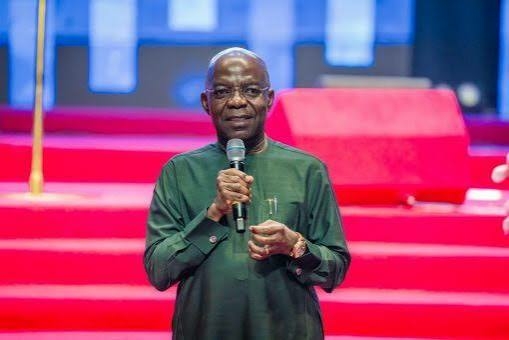
Abia governor distances the South-East from Imo Governor Hope Uzodimma’s declaration of support for President Bola Tinubu’s second-term bid, insisting the region has not taken a collective position on the 2027 presidential election.
By Uche Kalu
UMUAHIA, Abia State — July 24, 2026
A fresh political disagreement has emerged within the South-East over the 2027 presidential election after Abia State Governor Alex Otti publicly rejected claims that the region’s governors had collectively endorsed President Bola Ahmed Tinubu for a second term.
Otti declared that no individual governor possesses the constitutional or political authority to commit the entire South-East to any presidential candidate, describing the endorsement announced by Imo State Governor Hope Uzodimma as a personal political opinion rather than a regional consensus.
The development exposes emerging political fault lines within the South-East as discussions surrounding the 2027 general elections begin to gather momentum, with political observers suggesting that the differing positions may influence future alignments across the region.
Uzodimma Declares South-East Support for Tinubu
The controversy followed remarks by Governor Hope Uzodimma during a meeting with members of the Imo State Elders Council and the Imo State Traditional Rulers Council at the Government House in Owerri.
Uzodimma, who serves as Chairman of the South-East Governors’ Forum, stated that governors from the five South-East states had resolved to support President Tinubu’s re-election in 2027.
According to him, the decision was informed by what he described as the Tinubu administration’s measurable achievements in the South-East, arguing that the current administration had delivered more developmental projects to the region than previous governments.
The Imo governor also criticised politicians whom he accused of portraying the Federal Government negatively in the South-East.
“The attempt by certain politicians to use the South-East as a stage for anti-government sentiment is most despicable. We need to match propaganda with facts,” Uzodimma said.
Otti: Nobody Can Speak for the Entire Region
Responding to the claim, Governor Alex Otti firmly distanced both himself and Abia State from the endorsement.
He maintained that while every elected governor has the right to express personal political preferences, such opinions cannot be presented as the collective decision of all South-East governors.
“As a governor and as an individual, you can’t speak for everybody,” Otti stated.
Referring specifically to Uzodimma’s remarks, the Abia governor said:
“The governor of Imo State said something about re-electing the President, but I’m not sure it is right to say that. As a governor and as an individual, he can’t speak for every governor.”
Otti stressed that decisions regarding the 2027 presidential election would ultimately rest with Nigerian voters rather than political declarations made years before the election.
Governor Urges Focus on Governance
The Abia governor cautioned against allowing early political campaigns to distract leaders from pressing governance responsibilities.
According to him, Nigeria continues to face significant economic, developmental and security challenges requiring immediate attention.
He argued that discussions about the next general election should not overshadow the responsibility of governments to deliver effective leadership and improve citizens’ welfare.
“I’m sure there is an appropriate time when people will take their decision,” Otti said.
He added that governance, rather than electoral politics, should remain the primary focus of public office holders.
Otti Clarifies Position on Tinubu’s Administration
Despite rejecting Uzodimma’s endorsement, Otti clarified that his comments should not be interpreted as opposition to President Tinubu’s administration.
He acknowledged supporting several economic and governance policies introduced by the Federal Government, noting that some of his positions predated his election as governor.
“This is a government, and government sees all the work from the national level to the sub-national level and even to the corporate level,” he explained.
“Like I said the other day, there are a lot of policies that I have supported, even as a private citizen before I became the governor of the state.”
Political analysts view the clarification as an effort by the Abia governor to separate support for specific government policies from endorsement of future electoral ambitions.
Growing Debate Ahead of 2027 Elections
Although the next presidential election remains more than a year away, political consultations and strategic positioning have intensified across the country.
Uzodimma’s endorsement of President Tinubu is among the earliest high-profile declarations regarding the 2027 race and has generated widespread reactions within political circles.
The differing positions taken by governors within the South-East underscore the diversity of political interests across the region and suggest that no unified regional position has yet emerged regarding the next presidential election.
Analysts say the episode reflects broader debates over regional representation, political endorsements and the extent to which elected officials can legitimately speak on behalf of constituent states or geopolitical zones.
Constitutional and Political Implications
Constitutional experts note that while governors may express personal or party positions, they possess no constitutional mandate to bind other governors, political parties or the electorate to specific presidential candidates.
The disagreement also highlights the increasingly competitive political landscape ahead of 2027, where endorsements, alliances and regional negotiations are expected to shape campaign strategies.
Observers believe the South-East’s eventual position could become a significant factor in national political calculations, particularly as major political parties seek broader regional support.
Governor Alex Otti’s rejection of Hope Uzodimma’s endorsement of President Tinubu’s second-term bid has revealed differing political perspectives within the South-East and underscored that the region has not reached a collective decision on the 2027 presidential election.
While Otti reiterated his willingness to support government policies he considers beneficial, he insisted that electoral endorsements remain personal opinions until Nigerians exercise their constitutional right to vote.
As political consultations intensify ahead of 2027, the exchange between the two governors illustrates the evolving dynamics of regional politics and the continuing debate over leadership, representation and democratic choice in Nigeria.







Leave a Reply