
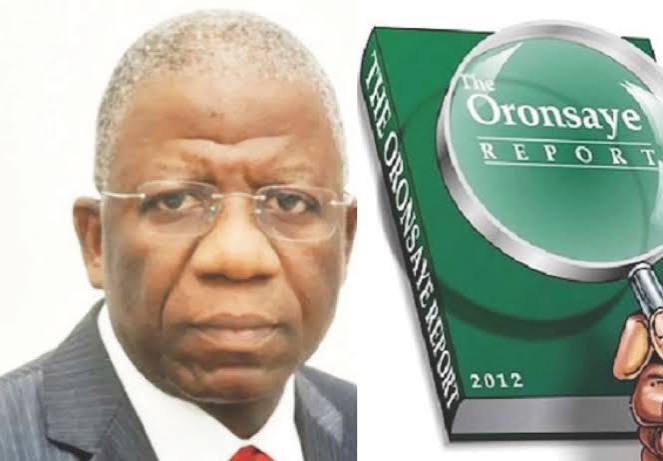
Agencies marked for abolition remain funded, while new ministries and regional commissions add about ₦1.13 trillion to the 2026 governance bill
By Amarachi Odenigbo
ABUJA, Nigeria — August 24, 2026
Fourteen years after the Stephen Oronsaye Committee recommended a sweeping restructuring of Nigeria’s federal public-sector architecture, the country is still grappling with the same problem the reform was designed to solve: too many institutions performing overlapping functions at an increasingly high cost to taxpayers.
An examination of the 2026 budget figures and the status of institutions identified for abolition, merger or absorption shows a striking contradiction. While successive governments have repeatedly pledged to reduce the cost of governance, several agencies targeted for restructuring remain operational, separately funded and staffed, even as the current administration has established or expanded additional ministries and regional development commissions.
The result is a public-sector structure in which old institutions have not necessarily disappeared while new ones have been added.
According to the material reviewed for this report, ministries and regional development commissions established or expanded under President Bola Ahmed Tinubu’s administration have attracted approximately ₦1.13 trillion in allocations, separate from the billions still being committed to some institutions previously identified for abolition or merger.
The central question arising from the figures is no longer whether Nigeria needs public-sector reform. The question is whether successive administrations have the political and legislative will to dismantle institutions that have outlived their intended structures and demonstrate measurable savings to taxpayers.
ORONSAYE REPORT: THE REFORM THAT NEVER FULLY HAPPENED
The Presidential Committee on the Restructuring and Rationalisation of Federal Government Parastatals, Commissions and Agencies, popularly known as the Oronsaye Committee, submitted its report on April 16, 2012.
The committee examined 541 statutory and non-statutory federal institutions and identified extensive duplication of mandates, overlapping responsibilities and administrative inefficiencies.
Its recommendations proposed collapsing 263 agencies into 161, a restructuring intended to produce a leaner and more efficient federal government.
But implementation has proved politically and administratively difficult.
The report has survived several administrations, reviews and presidential directives without producing the comprehensive restructuring originally envisaged.
In February 2024, President Tinubu approved what was described as the full implementation of the report.
Yet the eventual arrangement did not amount to the wholesale abolition of all institutions identified for elimination.
Instead, the government approved the merger of 29 agencies, subsuming of eight, relocation of four and scrapping of two.
That decision left a fundamental question unresolved: What happened to the institutions that were supposed to disappear?
THE ₦1.13 TRILLION EXPANSION
Rather than producing an unmistakably smaller federal institutional structure, the administration has established or expanded ministries and regional development commissions with substantial budgetary implications.
The combined allocation cited in the source material amounts to approximately ₦1.13 trillion.
Among the allocations are:
| Institution | 2026 Allocation |
|---|---|
| Ministry of Livestock Development | ₦81.19bn |
| Ministry of Regional Development | ₦27.23bn |
| Ministry of Art, Culture, Tourism and Creative Economy | ₦70.30bn |
| Ministry of Steel Development | ₦21.52bn |
| Ministry of Marine and Blue Economy | ₦149.20bn |
| Ministry of Gas Resources | ₦71.59bn |
| Four Regional Development Commissions | ₦705.61bn |
| Total | ≈ ₦1.13tn |
The four regional commissions alone account for ₦705.61 billion, according to the figures reviewed.
The North-West commission received ₦145.61 billion, while the South-West, South-East, South-South and North-Central commissions were each allocated ₦140 billion.
The scale of the allocations raises an important fiscal question: To what extent are these new structures introducing genuinely new government functions, rather than institutionalising responsibilities that could have been performed by existing ministries, departments and agencies?
That distinction is crucial.
Creating a new institution does not merely create another name on the government organogram. It can mean additional management structures, personnel, offices, procurement systems, administrative overheads and capital expenditure.
THE ‘GHOST AGENCY’ PROBLEM
The institutional expansion becomes more complicated because some recently established entities reportedly do not have clearly identifiable standalone budget lines.
Among those cited are the Nigerian Education Loan Fund (NELFUND), Nigerian Independent System Operator (NISO) and National Health Technology and Data Analytics Office (NHTDAO).
The absence of separate budgetary allocations does not necessarily mean such institutions receive no public resources.
Instead, it raises questions about where their funding is captured, which ministry or agency bears their expenditure and how their financial obligations are reflected in the national budget.
This is where institutional proliferation can become difficult for citizens and even policymakers to track.
Another recent development cited in the material is the emergence of the Nigeria Ports Economic Regulatory Agency (NPERA).
Its establishment raises questions about the future statutory and regulatory roles of the Nigeria Shippers Council (NSC) and the Nigerian Ports Authority (NPA) and whether responsibilities could overlap.
Without clearly defined institutional boundaries, the creation of new regulators can produce competition rather than coordination.
SCRAPPED ON PAPER, STILL FUNDED
Perhaps the clearest evidence of the unfinished Oronsaye reform is found among institutions that were already identified for abolition.
One example is the Pension Transitional Arrangement Directorate (PTAD).
The Oronsaye recommendations proposed that its responsibilities be transferred to the Federal Ministry of Finance.
Yet PTAD has continued to operate as a standalone institution, complete with management, personnel and a separate budgetary provision.
The 2025 federal budget contained approximately ₦4.72 billion for its headquarters, including personnel and overhead costs.
This illustrates a wider problem with institutional reform in Nigeria: a recommendation to abolish an agency does not automatically dismantle the legal and administrative structures that sustain it.
NPC: FROM PROPOSED ABOLITION TO ₦110.68 BILLION
The National Productivity Centre (NPC) presents an even more striking example.
The Oronsaye Committee recommended its abolition, with earlier estimates putting potential annual savings at approximately ₦2.7 billion.
Instead, the 2026 budget provides ₦110.68 billion for the centre under the Federal Ministry of Labour and Employment.
That figure represents more than 60 per cent of the ministry’s reported ₦183.63 billion allocation.
The discrepancy between the earlier estimated savings and the current allocation is substantial.
The allocation is more than 40 times the earlier estimated annual savings associated with abolishing the centre.
Even more noteworthy is the range of projects contained within the centre’s 2026 budget, including provisions relating to fertiliser and agricultural inputs, food supply, roads, palaces, medical outreach and stadium projects.
This raises a basic public-finance question: Are these activities directly connected to the centre’s core productivity mandate, and if not, why are they being funded through it?
The answer matters because unclear institutional mandates can make it difficult to determine which agency should be held accountable for specific expenditures.
ICRC MERGER — BUT STILL IN THE BUDGET
The Infrastructure Concession Regulatory Commission (ICRC) provides another example of the gap between reform decisions and budgetary reality.
The Federal Executive Council approved its merger with the Bureau of Public Enterprises (BPE) to create a new institution.
Yet the 2026 budget proposal still reportedly lists ICRC as a standalone MDA, with approximately ₦748.4 million in capital expenditure.
The apparent contradiction illustrates one of the most difficult aspects of public-sector restructuring.
A merger announced politically does not necessarily translate into immediate administrative consolidation.
Until enabling laws are amended, structures dissolved, employees transferred and budgets consolidated, the old institution can continue to exist in practice.
NALDA’S ALLOCATION JUMPS
The National Land Development Authority (NALDA) was another institution targeted by the Oronsaye recommendations.
The committee proposed returning its responsibilities to the Ministry of Agriculture and Food Security.
Instead, NALDA remains separately funded.
Its allocation reportedly increased from ₦7.43 billion in 2025 to ₦25 billion in 2026.
Of the 2026 allocation:
- ₦274.75 million is for personnel;
- ₦763.26 million is for overhead;
- ₦23.966 billion is for capital projects.
The dramatic increase makes the question of institutional duplication even more important.
If functions were originally considered suitable for integration into an existing ministry, what changed sufficiently to justify maintaining a separately funded authority?
FEDERAL CHARACTER COMMISSION RESISTS ABOLITION
The Federal Character Commission (FCC) was also recommended for abolition under the original reform proposals.
A 2021 review estimated potential savings of approximately ₦3.6 billion based on the commission’s then-current budget.
The commission, however, remains operational and had an allocation of about ₦6.5 billion in 2026.
It reportedly defended the expenditure before the Senate on the grounds that it is required to monitor compliance across more than 700 MDAs.
The case demonstrates why institutional reform is not simply a matter of deleting names from a government list.
An agency may have a continuing operational role even where a reform committee has recommended its abolition.
The critical question is whether that role can be absorbed efficiently by another institution without weakening oversight.
FINANCIAL REPORTING COUNCIL REMAINS
The Financial Reporting Council of Nigeria (FRCN) was also recommended for abolition following the repeal of its enabling law.
Nevertheless, it remains a standalone federal institution.
The 2026 budget reportedly provides approximately ₦1.99 billion for its operations.
This raises a particularly important legal and administrative question: when an institution’s enabling legal framework changes, what mechanism determines whether its budgetary and operational existence should continue?
Without a transparent public record, citizens are left to reconcile legislation, executive decisions and annual budget documents themselves.
WHERE ARE THE SAVINGS?
Perhaps the most significant weakness in the reform process is the absence of a publicly demonstrated baseline showing exactly what Nigeria has saved.
The material reviewed states that government has not established a clear record of:
- How many targeted agencies have actually been abolished;
- How many employees have been removed from duplicated structures;
- How much has been saved;
- Which functions have been transferred;
- Which institutions have inherited the transferred responsibilities.
This is the accountability gap at the heart of the Oronsaye saga.
A restructuring programme cannot be judged solely by announcements.
It needs measurable outcomes.
If an agency is abolished but its workers, vehicles, offices, overheads and functions are simply moved elsewhere, the nominal reduction in the number of agencies may produce little or no fiscal saving.
‘THE PROBLEM IS POLITICAL WILL’
Dr Yunana Bature, a retired official of the Central Bank of Nigeria, argues that the fundamental problem is no longer identifying weaknesses in Nigeria’s public-sector architecture.
According to Bature, the more difficult question is whether government is prepared to confront the political interests that benefit from maintaining existing structures.
He called for the government to publish a baseline showing the annual cost of agencies targeted for abolition, merger or rationalisation and the savings expected from the reforms.
Without such measurements, he warned, restructuring could become another bureaucratic exercise without meaningful fiscal consequences.
That argument strikes at the heart of the issue.
Agencies are not merely administrative entities. They can represent positions for political appointments, boards for political representation, contracts, procurement opportunities and institutional influence.
That creates powerful incentives for preserving structures even when their original rationale has weakened.
‘REDUCE FUNCTIONS, NOT JUST AGENCY NAMES’
Investment banker Tolulope Alayande takes a different but complementary view.
He argues that reform should focus on functions rather than institutional names.
In his assessment, abolishing an agency while transferring its employees, offices, vehicles, overheads and responsibilities to another institution merely renames bureaucracy rather than reducing it.
Nigeria, he argues, does not necessarily need fewer government responsibilities. It needs fewer institutions performing overlapping responsibilities.
That distinction is fundamental.
A lean government is not necessarily one with the fewest agencies.
It is one in which responsibilities are clearly allocated, duplicated functions are eliminated, administrative layers are reduced and every naira spent can be traced to a defined public objective.
THE REAL TEST: MONEY SAVED, NOT AGENCIES SCRAPPED
Alayande argues that the success of the reform should ultimately be measured against practical outcomes.
Those outcomes include:
Lower cost of governance.
Shorter administrative processes.
Greater accountability.
Reduced duplication.
More resources for infrastructure, healthcare, education and employment.
In other words, the number of institutions on an official government list is a poor measure of reform success if the financial and administrative burden remains unchanged.
The source material captures the central challenge: Nigeria already knows many of the structural problems affecting its federal bureaucracy. The unresolved issue is implementation.
INVESTIGATIVE QUESTIONS GOVERNMENT SHOULD ANSWER
Fourteen years after the Oronsaye report, a credible implementation audit should answer several basic questions:
- How many of the 263 agencies recommended for collapse have actually disappeared?
- How many employees were affected by the restructuring?
- What happened to their personnel costs?
- Which agencies inherited the abolished institutions’ functions?
- How much has the Federal Government saved since the 2012 recommendations?
- Why are agencies recommended for abolition still receiving separate appropriations?
- Why are new institutions being created where existing MDAs appear to have overlapping mandates?
- Which enabling laws have been repealed, amended or left untouched?
- How much does Nigeria spend annually maintaining overlapping institutional structures?
- What measurable fiscal target has government set for reducing the cost of governance?
Until those questions are answered with verifiable budgetary, legislative and personnel data, the implementation of the Oronsaye reforms will remain difficult to assess.
NIGERIA’S BUREAUCRATIC PARADOX
The Oronsaye report was conceived to confront a problem that remains remarkably familiar: too many public institutions, overlapping mandates and an expensive administrative structure competing for scarce public resources.
Fourteen years later, the paradox is that institutions identified for abolition continue to receive public funding while new ministries and regional commissions have been created or expanded.
The issue is therefore not simply that Nigeria has “too many agencies.”
The deeper problem is the absence of a transparent mechanism for determining which government function belongs where, what each institution costs, what measurable outcome it delivers and what taxpayers save when it is abolished or merged.
As Nigeria faces mounting fiscal pressures and growing demands for infrastructure, healthcare, education, jobs and social protection, every naira committed to maintaining the machinery of government carries an opportunity cost.
The real measure of the Oronsaye reform should consequently not be the number of agencies announced for abolition.
It should be the verifiable reduction in personnel costs, overheads, duplicated functions and administrative expenditure — and the amount of public money ultimately redirected to services that directly benefit Nigerians.
Fourteen years after the report, the question remains painfully simple:
Can Nigeria finally move from announcing bureaucratic reform to actually delivering measurable savings?









Leave a Reply