

President Bola Tinubu orders a comprehensive forensic audit of IPPIS, federal agencies and government systems following ICPC findings on ghost workers, “fake agencies” and control failures.
By John Ishaku
ABUJA, Nigeria — August 29, 2026
President Bola Tinubu has ordered a comprehensive forensic audit of Nigeria’s Federal Government payroll, personnel and administrative systems following findings by the Independent Corrupt Practices and Other Related Offences Commission (ICPC) involving alleged ghost workers, purported “fake agencies” and other weaknesses in government controls.
The directive places the Integrated Personnel and Payroll Information System (IPPIS) and the wider architecture through which federal personnel, agencies and public funds are administered under renewed scrutiny.
Presidential spokesman Bayo Onanuga, in a statement issued Friday, said Tinubu had directed the Minister of Finance and Co-ordinating Minister of the Economy, Taiwo Oyedele, to oversee and coordinate the exercise.
The investigation follows a Federal Executive Council resolution of August 19, 2026, prompted by ICPC findings on irregularities within government systems.
Audit to Trace Ghost Workers and Payroll Fraud
At the centre of the forensic review is the government’s personnel and payroll infrastructure, with investigators expected to establish not only how irregular records entered the system but also whether weaknesses in interconnected government platforms enabled them to persist.
According to the presidency, the first component of the exercise will focus on IPPIS and related payroll, personnel, pension and financial-management platforms.
The review will examine reported cases of ghost workers and payroll fraud, reconcile figures identified by the ICPC, trace how fictitious or ineligible individuals were enrolled, and assess controls governing identity verification, biometrics, access rights and bank accounts.
The scope goes beyond identifying questionable names on payroll.
The presidency says auditors will examine whether irregularities arose from system defects, procedural failures, inadequate segregation of duties or deliberate circumvention of established controls.
That distinction could prove significant in determining whether the problems represent isolated administrative failures or deeper vulnerabilities embedded in the federal government’s financial-management architecture.
IPPIS, GIFMIS, Remita and TSA Interfaces Under Review
The forensic exercise will also examine the links between IPPIS and other major government platforms, including the Government Integrated Financial Management Information System (GIFMIS), Remita, the Treasury Single Account (TSA) and Sub-TSA systems.
These interfaces are critical because government personnel and financial data do not operate in isolation. Weaknesses at the points where systems exchange information can create opportunities for inaccurate records, duplicate entries, unauthorised access or manipulation if verification and reconciliation mechanisms fail.
The presidency said the audit will therefore seek to determine whether alleged fraud was facilitated by technological shortcomings, process failures or weaknesses in institutional controls.
‘Fake Agencies’ Trigger Wider Government-Wide Review
The second arm of the audit will extend beyond payroll to virtually the entire federal administrative structure.
All Federal Government agencies, departments, commissions, councils, parastatals and other government bodies will be examined as part of an effort to establish a definitive inventory of entities operating within the federal system.
According to Onanuga, auditors will verify the legal basis of such bodies while examining how entities obtain official recognition, budgetary consideration, correspondence privileges, office facilities and access to government systems.
The exercise raises a fundamental governance question: which government entities are legally constituted, formally recognised and legitimately entitled to draw on public resources?
The answer, according to the presidency, is expected to emerge from a systematic reconciliation of the government’s institutional records.
Investigation to Examine Procurement and Internal Controls
The review will also assess governance, procurement, internal audit and oversight mechanisms across the Federal Government.
The stated objective is to identify and close systemic weaknesses that could enable irregular entities or individuals to gain access to government resources.
This approach represents a shift from simply identifying allegedly fraudulent beneficiaries to examining the institutional mechanisms that allowed questionable records or entities to gain recognition in the first place.
The presidency said the exercise is expected to determine the “nature and extent” of weaknesses in government control systems and how those weaknesses may have been exploited.
ICPC to Collaborate With Audit Team
President Tinubu has directed that the exercise be conducted with the highest standards of independence, professionalism and forensic integrity.
The audit team will have access to relevant government systems and records and is expected to collaborate with the ICPC.
The presidency said such collaboration is intended to ensure that the forensic review complements ongoing investigations, prosecutions and recovery efforts rather than interfering with them.
The arrangement could allow findings from the audit to feed into existing anti-corruption investigations while also providing government with a broader picture of vulnerabilities across its administrative systems.
Beyond Ghost Workers: Presidency Targets Systemic Weaknesses
The significance of the directive extends beyond the immediate issue of ghost workers.
The presidency said Tinubu expects the exercise to identify weaknesses in the “architecture of Government” and establish measures capable of preventing similar failures in the future.
Among the stated objectives are stronger data verification and reconciliation, tighter accountability mechanisms, improved institutional controls and ensuring that only duly constituted government entities and eligible personnel have access to public resources.
The administration has therefore framed the exercise as both an investigative and institutional-reform initiative.
Whether the audit produces prosecutions, recoveries, administrative sanctions or structural reforms will depend on what investigators ultimately uncover and how government agencies respond to the findings.
What the Forensic Audit Must Establish
For the exercise to deliver a credible picture of the problem, the audit will need to establish several critical facts:
- The actual number of questionable or inactive personnel records identified across government systems.
- How allegedly fictitious or ineligible personnel entered and remained on government payrolls.
- Whether identity, biometric and bank-account verification mechanisms were bypassed or inadequately applied.
- Whether discrepancies exist between IPPIS, GIFMIS, Remita, TSA and related databases.
- The legal status and operational legitimacy of federal agencies and other government bodies.
- How government entities obtain recognition, funding and access to official infrastructure.
- Whether procurement, internal audit and oversight failures contributed to the alleged irregularities.
- Which individuals or institutions may bear responsibility where deliberate wrongdoing is established.
- What technological and administrative reforms are required to prevent recurrence.
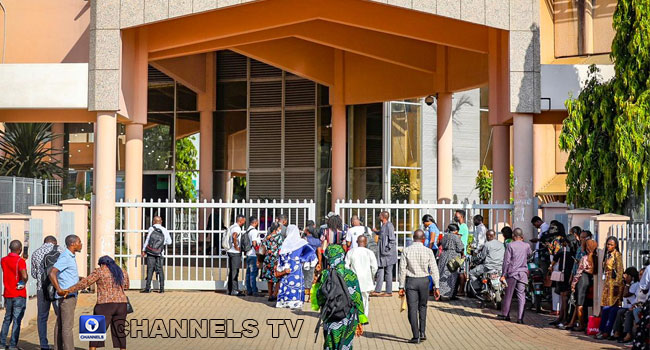
President Bola Tinubu’s decision to subject IPPIS, federal agencies and related government systems to a comprehensive forensic audit places Nigeria’s public-sector accountability architecture under an unusually broad examination.
The exercise will test whether government can move beyond identifying individual cases of suspected fraud to uncovering the institutional weaknesses that make such irregularities possible.
Its credibility, however, will ultimately depend on the independence of the audit, the quality of the evidence examined, the transparency of its findings and whether proven violations result in appropriate sanctions and recoveries.
For an administration that has made fiscal governance and institutional accountability central themes of its reform agenda, the outcome could have consequences far beyond the payroll: it could determine how effectively the Federal Government verifies its workforce, recognises its institutions and protects public resources.











Leave a Reply