
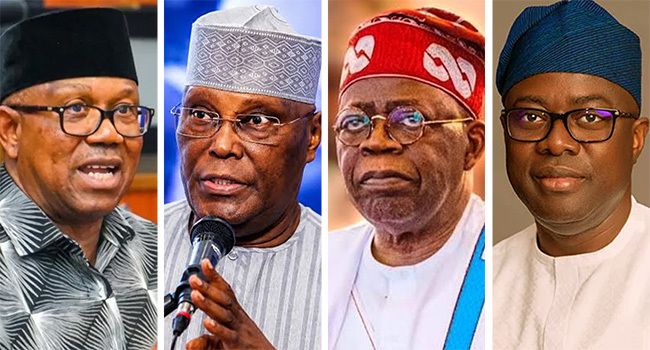
From economic promises and national identity disputes to judicial accountability, university misinformation and electoral credibility, five major developments expose the growing political and institutional tensions ahead of Nigeria’s 2027 general elections.
BY BARON ELOAGU
ABUJA, NIGERIA | NOVEMBER 14, 2026
Nigeria’s political landscape is witnessing renewed tension as political parties, government officials and key democratic institutions find themselves at the centre of controversies with potentially significant implications for the 2027 general elections.
From former Vice-President Atiku Abubakar’s promise to restore fuel and electricity subsidies to Aviation Minister Festus Keyamo’s 48-hour ultimatum to former Bayelsa State Governor Seriake Dickson over the use of Nigeria’s former national anthem, the latest developments reveal competing political positions on economic management, national identity and democratic accountability.
The African Democratic Congress (ADC) has also accused the Nigerian Bar Association (NBA) of displaying political bias after the professional body referred lawyer Kalu Kalu to a disciplinary panel over his comments concerning a Federal High Court judge.
Meanwhile, the Federal Government has moved to dispel viral claims that the National Universities Commission (NUC) identified 2,000 universities and approximately 100 fake professors in Nigeria, while the Independent National Electoral Commission (INEC) has dismissed reports suggesting that its chairman, Professor Joash Amupitan, is preparing to resign.
Taken together, these developments raise important questions about political accountability, institutional independence, responsible public communication and the credibility of democratic institutions as the country approaches another crucial electoral cycle.
ATIKU PROMISES TO RESTORE FUEL AND ELECTRICITY SUBSIDIES, REVIVE KOLMANI OIL PROJECT
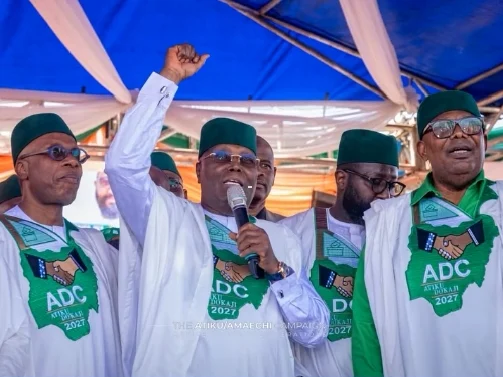
Former Vice-President and African Democratic Congress presidential candidate, Atiku Abubakar, has promised to restore petroleum and electricity subsidies if elected president in the 2027 general elections.
Atiku made the declaration during an ADC campaign rally at the Sir Abubakar Tafawa Balewa Stadium in Bauchi State, where he also pledged to address insecurity, particularly in the North-East, and sustain petroleum exploration at the Kolmani oil field.
The former Vice-President presented the proposed subsidy restoration as part of his commitment to reducing the economic pressure on Nigerian households and businesses.
He said his administration would restore petroleum subsidies and introduce electricity subsidies to ease the financial burden associated with energy consumption.
Atiku also promised to continue exploration activities at Kolmani, describing the project as an additional potential source of national revenue.
The economic questions behind Atiku’s promise
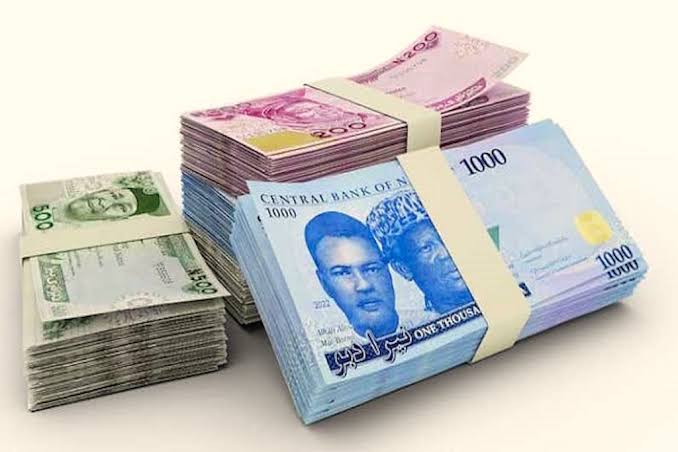
The subsidy declaration is likely to generate considerable public debate, particularly because the removal of petroleum subsidies and subsequent changes in energy pricing have remained contentious issues in Nigeria’s economic policy discussions.
While supporters of subsidy restoration may view it as an avenue for providing consumer relief, its implementation would require substantial government expenditure and a transparent financing arrangement.
The central question is not simply whether subsidies should return, but how such interventions would be funded without creating unsustainable fiscal pressure.
Would the proposed arrangement be targeted at vulnerable households? Would it involve a universal subsidy? How would the government prevent corruption, diversion and inefficiencies associated with subsidy administration?
These are important questions that any administration proposing a return to subsidies must address.
Atiku’s Kolmani pledge also deserves attention. Reviving exploration could create opportunities for investment, employment and regional development, but the commercial viability, infrastructure requirements and production prospects of the project would need to be clearly established.
For voters, campaign promises must ultimately be assessed against their financing arrangements, implementation strategies and measurable economic outcomes.
NATIONAL ANTHEM CONTROVERSY: KEYAMO GIVES SERIAKE DICKSON 48 HOURS TO CLARIFY NDC’S POSITION
Minister of Aviation and Aerospace Development, Festus Keyamo, has challenged former Bayelsa State Governor and Nigeria Democratic Congress (NDC) national leader, Senator Seriake Dickson, to clarify within 48 hours whether his party officially endorses the singing of Nigeria’s former national anthem.
The minister’s demand followed an incident at an NDC town hall meeting in Oregun, Lagos State, where the party’s presidential candidate, Peter Obi, and some supporters sang the former national anthem, “Arise, O Compatriots”, rather than the current anthem, “Nigeria, We Hail Thee”.
The incident generated political controversy after footage from the gathering circulated on social media.
Reacting on Saturday, Keyamo argued that the national anthem represents Nigeria’s history, values, sovereignty and national identity.
He maintained that deliberately rejecting the anthem prescribed by law in favour of another could raise questions about national unity and sovereignty.
The minister went further, arguing that an organised group adopting an alternative national anthem could be laying the foundation for secession.
He consequently challenged Dickson to state whether the NDC officially endorsed the action.
National identity versus political expression
The controversy raises a broader question about the relationship between national symbols, legislation and political expression.
President Bola Tinubu signed legislation restoring Nigeria’s original national anthem, “Nigeria, We Hail Thee”, in May 2024, replacing “Arise, O Compatriots”, which had been in use since 1978.
The current legally prescribed anthem is therefore “Nigeria, We Hail Thee”.
However, the singing of the former anthem at a political gathering does not, by itself, establish that a political organisation has adopted a secessionist position.
Keyamo’s secession argument remains his political interpretation of the incident, not an established legal determination against the NDC.
The distinction is important.
A political party’s official position should be established through its authorised statements and actions rather than assumptions drawn exclusively from an event involving supporters.
Dickson’s response and any formal clarification from the NDC would therefore be important in determining whether the incident represented an organised party position or an expression by individual participants.
The episode also demonstrates how national symbols can become instruments of political contestation during an increasingly competitive electoral period.
3. ADC ACCUSES NBA OF POLITICAL BIAS OVER DISCIPLINARY ACTION AGAINST LAWYER KALU KALU
The African Democratic Congress has accused the Nigerian Bar Association of taking sides in the political dispute involving the opposition following its decision to refer lawyer and politician Kalu Kalu to the Legal Practitioners Disciplinary Committee.
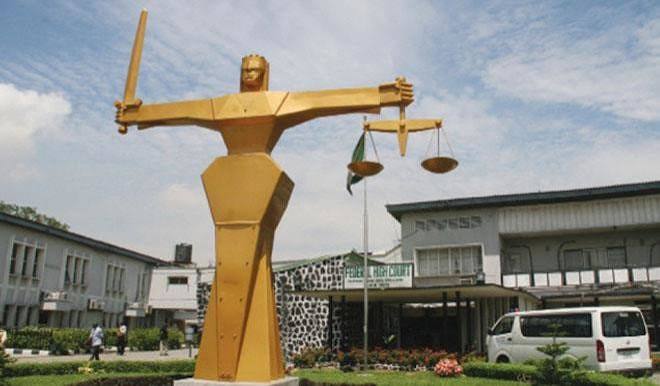
The controversy followed remarks Kalu made about Federal High Court judge, Justice Peter Lifu, during a November 11 edition of Channels Television’s Politics Today, hosted by Seun Okinbaloye.
During the programme, Kalu, who is associated with the ADC and serves as a lawyer to former Vice-President Atiku Abubakar, described the judge as a “coconut judge” while discussing a court judgment concerning the ADC leadership crisis.
The remark prompted the programme’s presenter to caution him against making personal attacks on a sitting judicial officer. Kalu subsequently withdrew the comment.
The NBA later referred the matter to the disciplinary committee.
NBA President, Oyinkansola Badejo-Okusanya, SAN, maintained that lawyers have the right to examine judicial decisions, challenge legal reasoning and identify errors in judgments but should do so through professional arguments rather than personal attacks against judicial officers.
She also indicated that Kalu would have an opportunity to respond to the complaint.
ADC questions the NBA’s consistency
In a statement signed by its National Publicity Secretary, Bolaji Abdullahi, the ADC questioned the association’s decision, alleging that its response demonstrated selective concern.
The party argued that the NBA should also address previous judicial criticisms concerning Justice Lifu, particularly a June 2026 Court of Appeal ruling which the ADC cited in support of its position.
The opposition party warned the NBA against allowing itself to be drawn into the political crisis involving the opposition.
It maintained that defending judicial independence should include scrutiny of judicial conduct and not merely disciplinary action against lawyers who criticise judges.
However, the NBA’s stated position centres on professional conduct and the distinction between legitimate criticism of judicial decisions and personal attacks on judicial officers.
Why the dispute matters beyond party politics
The disagreement raises fundamental questions about the independence of professional institutions and the standards expected of legal practitioners.
The NBA has a responsibility to uphold professional ethics, protect the integrity of the legal profession and defend the independence of the judiciary.
At the same time, disciplinary procedures must be transparent, consistent and free from political considerations.
The referral of a complaint to a disciplinary committee should not be interpreted as a finding of guilt. The committee must consider the available evidence and give the affected lawyer an opportunity to respond.
Equally, political affiliation should not shield any legal practitioner from professional accountability.
The credibility of the legal profession depends on its ability to enforce ethical standards consistently, regardless of the political identity of the individuals involved.
FG DISMISSES VIRAL CLAIMS OF 2,000 UNIVERSITIES AND 100 FAKE PROFESSORS
The Federal Government has dismissed viral reports claiming that the National Universities Commission identified 2,000 universities and uncovered approximately 100 fake professors in Nigeria.
The Federal Ministry of Education described the claims as recycled misinformation intended to mislead the public and damage confidence in the country’s university system.
In a statement issued on Saturday, Minister of Education, Dr Maruf Tunji Alausa, clarified that the NUC had never declared the existence of 2,000 universities in Nigeria.
The ministry also denied that the commission had published, endorsed or authenticated the list of individuals circulating online as alleged fake professors.
According to the ministry, the claims concerning fake professors originated from a distorted interpretation of a media report published on December 3, 2019, relating to an NUC exercise to verify the directory of full professors in Nigerian universities.
The ministry explained that the original report did not contain the names currently circulating on social media and that the commission had disowned the purported list.
Misinformation and the credibility of Nigerian universities
The clarification highlights the dangers associated with the circulation of unverified information, particularly when allegations concern academic qualifications and institutional credibility.
Nigeria’s university system faces legitimate challenges involving funding, infrastructure, research capacity, accreditation and academic standards.
However, these challenges must be investigated and reported using credible evidence rather than sensational claims.
False allegations about universities and academic professionals can damage reputations, undermine public confidence and create unnecessary uncertainty among students, parents, employers and international academic partners.
The government’s clarification should therefore be accompanied by sustained public communication and accessible verification systems.
The NUC and relevant education authorities must continue to make reliable information about recognised institutions and academic standards available to the public.
For media organisations and social media users, the lesson is straightforward: information should be verified before publication or redistribution.
5. INEC DENIES AMUPITAN RESIGNATION RUMOUR AMID ELECTORAL CREDIBILITY CONCERNS
The Independent National Electoral Commission has dismissed reports circulating on social media claiming that its Chairman, Professor Joash Amupitan, is preparing to resign.
The commission described the report as false, fabricated and misleading, urging Nigerians to disregard the claim and rely on its official communication channels for verified information.
The denial comes amid growing public scrutiny of INEC’s preparations for the 2027 general elections, particularly following complaints concerning the preliminary voters’ register and allegations of irregularities.
On November 9, Amupitan disclosed that the commission had removed 1,608,660 invalid registrations from the preliminary register following a review of entries from the 2025 and 2026 Continuous Voter Registration exercises.
He also said 54 individuals across 10 states had been identified over alleged registration irregularities and could face disciplinary action, including prosecution.
The commission has also faced public criticism over suspected multiple registrations, questionable photographs and other concerns associated with the voters’ register.
London protest adds pressure on electoral commission
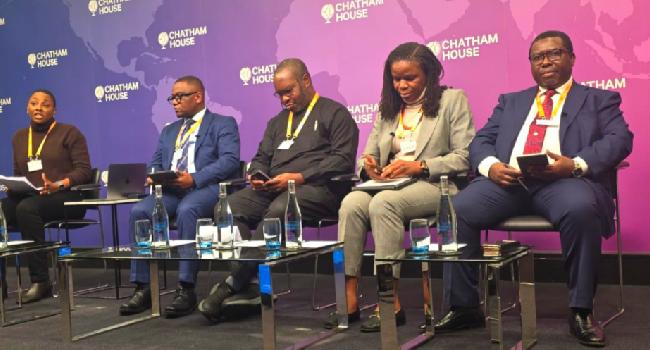
The controversy surrounding INEC’s preparations extended to London, where protesters reportedly confronted the commission chairman’s vehicle outside Chatham House following his engagement on Nigeria’s electoral preparations.
Some protesters demanded his resignation over alleged problems with the voters’ register.
Amupitan, however, has urged Nigerians to have confidence in the commission’s preparations, acknowledging that controversies surrounding the 2023 general elections had damaged public trust.
He also announced plans for a nationwide mock accreditation and voting exercise scheduled for November 28 to test technological upgrades to the Bimodal Voter Accreditation System and electronic transmission of results.
The commission says it has introduced additional safeguards intended to prevent inaccurate polling-unit results and figures indicating over-voting from being uploaded to its Result Viewing Portal.
Public confidence remains INEC’s biggest test
INEC’s denial of the resignation report addresses the immediate misinformation, but the wider challenge facing the commission extends beyond social media rumours.
Electoral credibility is built through transparency, consistency, technological reliability and public confidence.
As Nigeria approaches the 2027 elections, the commission must demonstrate that its voter registration processes, accreditation systems, result management procedures and dispute-resolution mechanisms can withstand public scrutiny.
The public deserves accurate information, and allegations of electoral irregularities must be investigated through transparent and credible procedures.
The ultimate measure of INEC’s performance will not be the number of press statements issued to deny allegations but the integrity, transparency and credibility of the elections it conducts.
THE BIGGER PICTURE: FIVE DEVELOPMENTS, ONE CENTRAL QUESTION OF PUBLIC ACCOUNTABILITY
Although these developments concern different sectors, they share an underlying theme: the increasing importance of institutional credibility and accountability in Nigeria’s democratic environment.
Atiku’s subsidy promises place economic policy and the cost of living at the centre of the 2027 political conversation.
Keyamo’s ultimatum to Dickson introduces questions about national identity, the interpretation of political conduct and the boundaries of public criticism.
The ADC-NBA disagreement highlights the delicate relationship between professional discipline, judicial accountability and political neutrality.
The Federal Government’s clarification on the universities and fake professors allegations demonstrates the need for evidence-based public communication.
INEC’s denial of its chairman’s alleged resignation, meanwhile, reflects the pressure on electoral institutions to maintain public confidence ahead of a major national election.
These developments should not be examined merely as isolated political headlines. They represent issues that directly affect citizens’ confidence in government, the justice system, education and the electoral process.
BEYOND POLITICAL HEADLINES, NIGERIANS DESERVE ANSWERS
As the 2027 general elections draw closer, Nigeria’s political environment will likely witness more policy declarations, institutional disagreements, competing narratives and public controversies.
But beyond the headlines and political exchanges, Nigerians deserve clear answers.
They deserve to know how proposed economic policies will be financed, how public institutions will maintain independence, how professional standards will be enforced fairly, how misinformation will be confronted and how electoral credibility will be protected.
Political leaders must recognise that public office is a responsibility, not merely an opportunity to make promises or engage opponents.
Professional institutions must demonstrate impartiality, while government agencies must communicate with accuracy, transparency and accountability.
Similarly, political parties and their supporters must understand that democratic competition requires respect for the law, responsible public engagement and evidence-based criticism.
Ultimately, Nigeria’s democratic strength will not be determined by political declarations, social media controversies or competing accusations alone.
It will be measured by the ability of its institutions to uphold the rule of law, protect citizens’ rights, deliver credible public services and guarantee that the people’s democratic choices are respected.
For A1NEWS International, the central issue remains clear: Nigerians deserve accountability, not political theatrics; evidence, not misinformation; and institutions that serve the public interest above partisan considerations.



Leave a Reply