
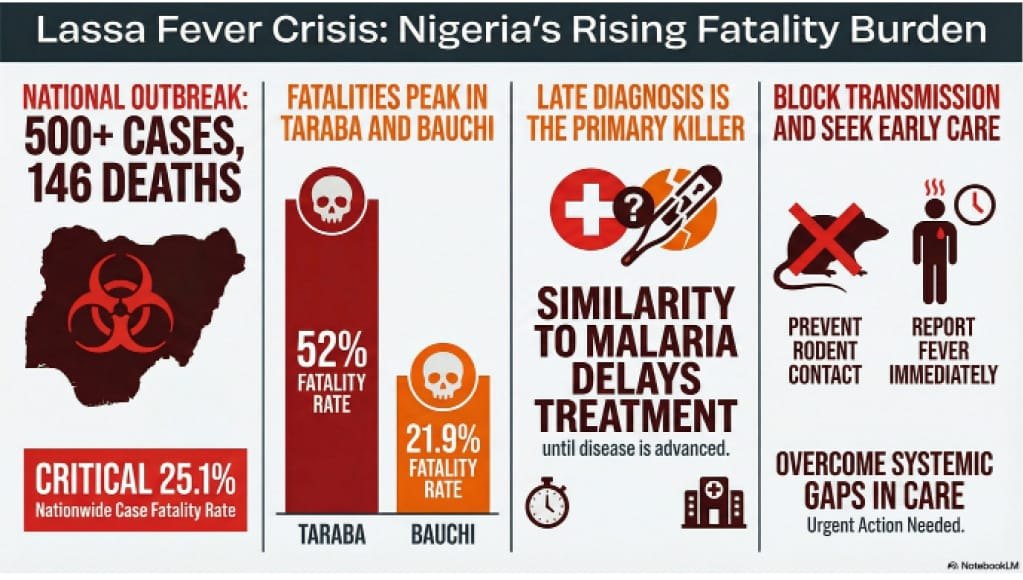
Rising infections and delayed care drive high mortality, experts warn urgent action is needed.
By Deborah Ade | Abuja, Nigeria
Nigeria’s Lassa fever outbreak continues to escalate, with the latest figures showing 146 deaths and over 500 confirmed cases between January and mid-March 2026. Bauchi and Taraba states account for the highest fatalities, reflecting both delayed treatment and systemic gaps in the country’s health response. Health experts warn that without urgent improvements in early detection and treatment access, mortality rates could climb further.
Rising Cases Across Multiple States
Data from the Nigeria Centre for Disease Control and Prevention (NCDC) indicate confirmed cases surged from 40 in week 10 to 66 in the latest reporting period. New infections were recorded in Bauchi, Ondo, Taraba, Plateau, Edo, Benue, Kogi, Gombe, and Niger states. A total of 21 states and 82 local government areas have reported cases in 2026, showing the outbreak is spreading beyond traditional endemic zones.
Bauchi, Taraba Driving Fatalities
Bauchi has recorded 311 confirmed cases with 68 deaths since October 2025, representing a case fatality rate of about 21.9 per cent. Médecins Sans Frontières (MSF) is supporting early diagnosis, treatment, and community outreach in Bauchi, Kirfi, Toro, and Tafawa Balewa LGAs. Delays in diagnosis, often caused by malaria-like symptoms and misinformation, remain a key challenge.
Taraba’s outbreak is even more severe. At the Federal Medical Centre in Jalingo, 50 deaths were recorded among 95 confirmed cases—a case fatality rate exceeding 52 per cent. Health officials attribute the high mortality to late presentation, severe complications, and limited intensive care capacity.
Healthcare Workers at Risk
At least 38 healthcare workers have been infected, with three deaths. Experts attribute infections to inadequate protective equipment, delayed case recognition, and high-risk emergency interventions.
Gaps in Health System Worsen Outcomes
Physicians note persistent weaknesses in early detection, referral systems, and treatment access. Many primary healthcare facilities cannot differentiate Lassa fever from malaria or typhoid, causing patients to present late at specialised centres. Uneven distribution of treatment facilities and inconsistent infection prevention further compound the risk.
Community Transmission and Behavioural Risks
Rodent exposure during the dry season, poor hygiene, and misinformation drive continued transmission. Residents often delay hospital visits, relying on self-medication or traditional remedies, which increases mortality. Epidemiological trends suggest the disease may be spreading into northern states previously less affected, including Bauchi and Taraba.
Recommendations from Experts
Experts call for:
- Expanded rapid diagnostic capacity at community level
- Strengthened referral systems
- Decentralised treatment facilities in underserved regions
- Improved public awareness on preventive measures
- Enhanced real-time surveillance and data reporting
The high mortality rate highlights systemic weaknesses in Nigeria’s outbreak response. Without early detection, effective referral, and community engagement, Lassa fever will continue to claim lives even as seasonal patterns temporarily reduce transmission.









Leave a Reply