
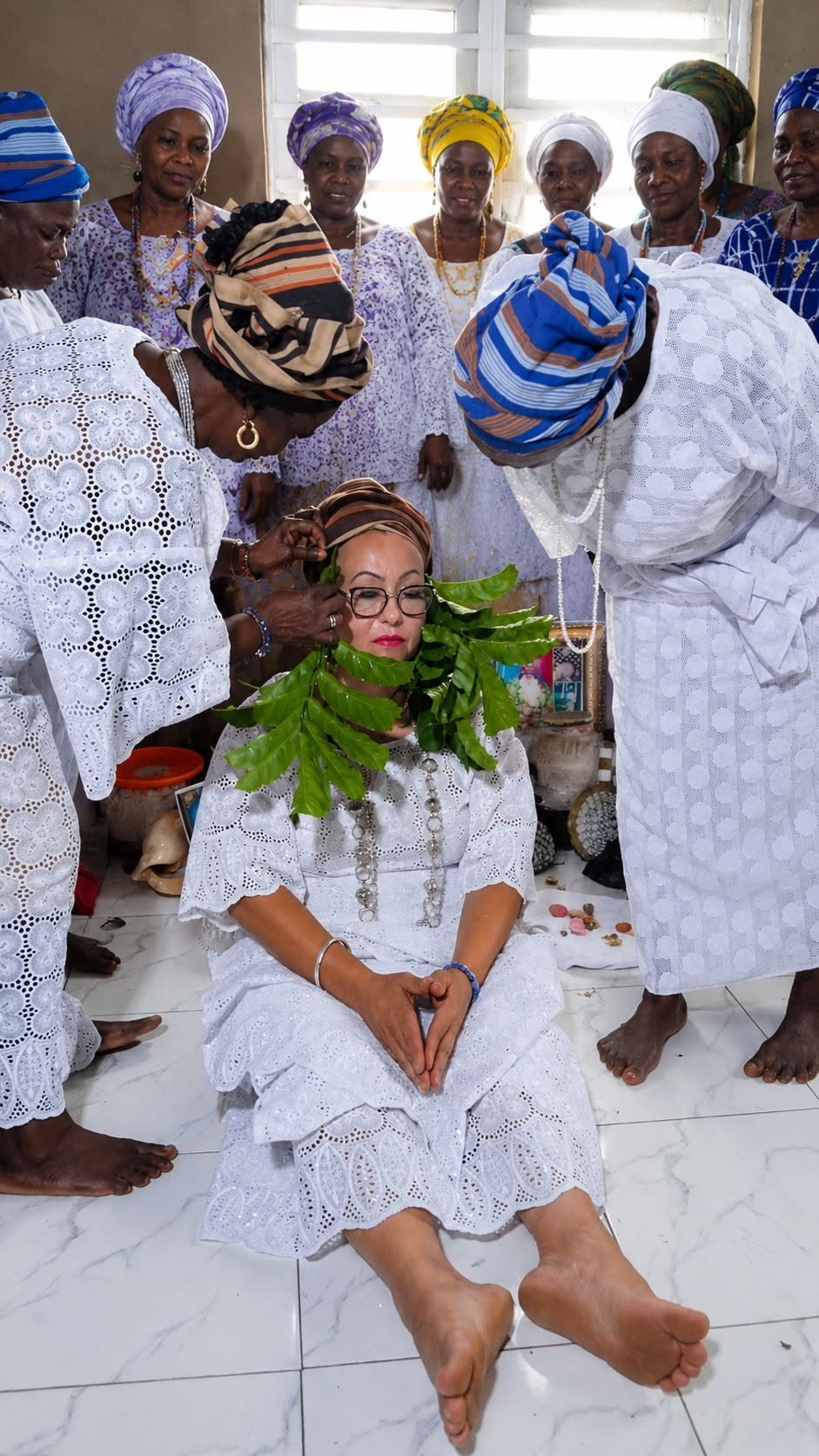
The Alaafin of Oyo, Oba Abimbola Akeem Owoade I, says the chieftaincy title granted to Brazilian national Paola Almeida Ferreira by Yemoja worshippers was conferred without palace approval—and has therefore been declared officially invalid.
By Anita Babalola
OYO, Nigeria — Thursday, Aug. 27, 2026 — In a swift intervention aimed at protecting traditional authority, the Alaafin of Oyo, Oba Abimbola Akeem Owoade I, has declared invalid a traditional chieftaincy title allegedly conferred on Brazilian national Paola Almeida Ferreira by Yemoja worshippers in Oyo.
In a public statement released on Aug. 26, 2026 and signed by the monarch, the palace said the title was issued without the knowledge and permission of the Alaafin, who described himself as the “prescribed authority” and custodian of Oyo’s historical and cultural heritage.
Palace Says Title Was Conferred Without Approval
According to the Alaafin’s statement—issued under reference number AL 1/VOL.8/105—the title “Yeye Atayese Oniyemoja of Oyo Land” bestowed on Ferreira on Aug. 23, 2026 is not valid under the native laws, customs and chieftaincy traditions of Oyo Land.
The monarch stated that traditional titles within Oyo community and its environs cannot be conferred without the awareness and approval of the palace authority.
Alaafin’s Certification: “Officially Invalid”
The statement, titled “Title Yeye Atayese Oniyemoja of Oyo Land,” clarifies that the Alaafin is empowered under Oyo’s native laws and customs to certify the validity of chieftaincy matters.
It concludes with a direct declaration that the title—bestowed to PAOLA ALMEIDA FERREIRA, a Brazilian citizen—is “OFFICIALLY INVALID.”
Ferreira Publicly Celebrated the Title on Social Media
Ferreira had reportedly celebrated the conferment in a Facebook post on Aug. 24, 2026, portraying the title as a role tied to sacred responsibility.
In her account, she described Atayese Oniyemoja as a priestly title associated with the Yemoja cult—linking it to themes of “strength, protection, and transformative power.” She said Yemoja represents a “source of life,” motherhood, acceptance, depth, and strength, and described the waters of Yemoja as nourishing, protecting and renewing.
Ferreira also emphasized the title’s moral and spiritual obligations, stating it carries responsibility both to Yemoja and to devotees who seek positive transformation.
Religious Identity vs. Traditional Authority: The Core Dispute
While Ferreira framed the title as recognition connected to her faith practice and devotion, the Alaafin’s palace position centers on governance of titles within Oyo.
The palace insists that—regardless of the spiritual interpretation—traditional titles in Oyo must follow established processes under the recognized custodian of authority. Investigators say this distinction is likely to fuel ongoing debate over who holds legitimate power to confer titles in Oyo, especially where indigenous religious traditions intersect with formal chieftaincy structures.
The Alaafin of Oyo has formally withdrawn legitimacy from a traditional title reportedly given to a Brazilian worshipper by Yemoja devotees, citing lack of palace approval as the reason the conferment is void under Oyo’s native laws and chieftaincy traditions.
As the story develops, the controversy raises pressing questions about cultural authority, religious practice, and compliance with traditional governance frameworks in Oyo Land.










Leave a Reply