
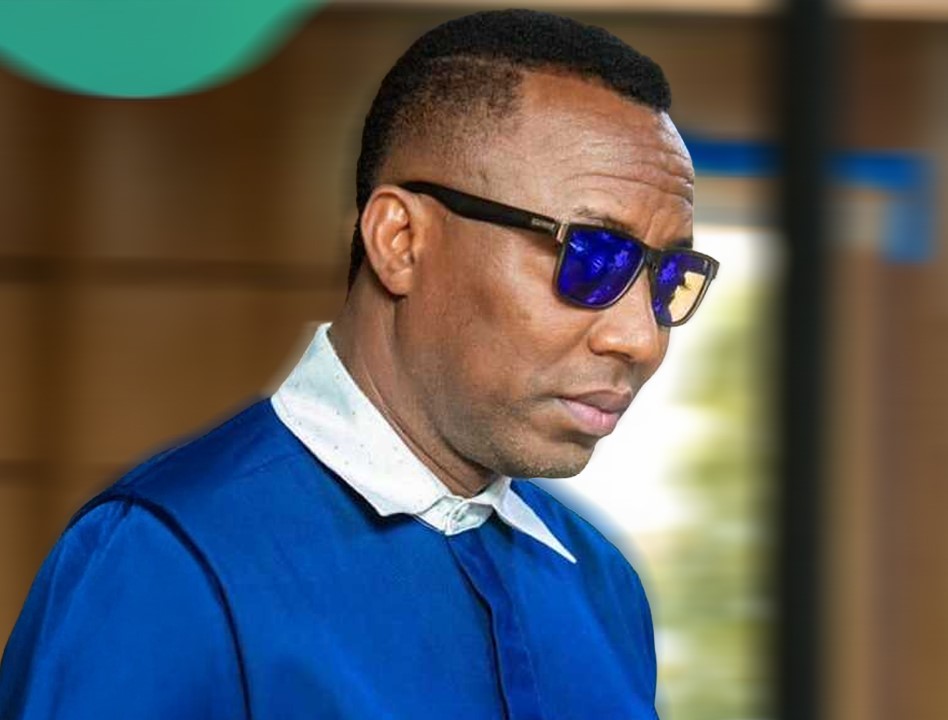
Federal High Court insists on daily proceedings as Omoyele Sowore faces criminal defamation charges over social media posts targeting President Bola Tinubu.
By Angela Udende / June 5, 2026
Abuja, Nigeria —The Federal High Court in Abuja has ordered former presidential candidate and activist-journalist, Omoyele Sowore, to commence his defence in an ongoing criminal defamation case instituted against him over statements allegedly made against President Bola Ahmed Tinubu.
Justice Mohammed Umar, who presided over the matter, rejected an application by the defendant seeking to delay proceedings until after the court’s annual vacation and instead directed that the trial continue on a day-to-day basis in line with provisions of the Administration of Criminal Justice Act (ACJA).
The ruling marks a significant development in a closely watched legal battle involving freedom of expression, political criticism, and the limits of social media commentary in Nigeria’s evolving democratic landscape.
Court Rejects Request for Further Delay
At Thursday’s proceedings, counsel to Sowore, Marshall Abubakar, urged the court to adjourn the matter until after the court vacation, citing his client’s political commitments and preparations ahead of future electoral activities.
However, the request was strongly opposed by the prosecution, led by Senior Advocate of Nigeria, Akinlolu Kehinde, who argued that criminal proceedings should not be delayed on account of political engagements.
Kehinde maintained that the matter had reached the defence stage and that the law required the defendant to proceed with presenting his case.
According to the prosecution, the court had already received the response of the Chief Judge regarding a petition previously submitted by Sowore seeking reassignment of the case to another judge.
Controversy Over Chief Judge’s Response
A major point of contention during the proceedings centered on the interpretation of a letter issued by the Chief Judge of the Federal High Court.
The defence argued that the communication gave room for a formal application regarding the request for reassignment of the case.
The prosecution disagreed, insisting that the Chief Judge had merely declined the request and directed that the trial continue before Justice Umar.
To resolve the disagreement, Justice Umar personally reviewed the contents of the letter in open court.
After examining the document, the judge ruled that the defence’s interpretation was incorrect.
According to the court, the letter did not instruct the defendant to file any fresh application before the court as a condition for proceeding with the trial.
Justice Umar emphasized that while Sowore retained the right to file any lawful application before judgment, such a possibility did not prevent the court from moving forward with the case.
Alleged Defamatory Statements
The Department of State Services (DSS), which is prosecuting the matter on behalf of the Federal Government, alleges that Sowore published defamatory statements against President Tinubu on his social media platforms.
According to the prosecution, the activist made posts on X (formerly Twitter) and Facebook in which he allegedly described the President as “a criminal.”
The government contends that the statements were false and defamatory, warranting criminal prosecution under relevant laws.
Sowore, a former presidential candidate of the African Action Congress (AAC) and publisher of an online news platform, has consistently denied wrongdoing.
The case has attracted national attention due to its political implications and broader debates surrounding free speech, media freedom, and political criticism in Nigeria.
Judge Orders Daily Hearing
Following arguments from both parties, Justice Umar ruled that the matter must proceed without further delay.
The court ordered Sowore to formally open his defence beginning Friday, June 5, 2026.
The judge further directed that subsequent proceedings be conducted daily in accordance with the Administration of Criminal Justice Act, which encourages speedy determination of criminal matters.
The prosecution welcomed the ruling, arguing that prolonged delays undermine the objectives of criminal justice administration.
“There is no room for dilatory tactics in a criminal trial,” Kehinde told the court, insisting that the defence either proceeds with its case or risks being foreclosed from presenting evidence.
Legal and Political Implications
The trial continues to generate public interest because it sits at the intersection of law, politics, and civil liberties.
Legal analysts note that the outcome could have implications for how political speech and criticism of public office holders are treated under Nigerian law.
Civil society groups and media freedom advocates are also closely monitoring the proceedings, arguing that the case raises important questions about freedom of expression and the criminalization of speech in democratic societies.
Supporters of the prosecution, however, contend that public figures are entitled to legal protection against defamatory statements and that accountability must apply to all citizens regardless of political affiliation.
What Happens Next?
With the court now ordering the defence phase to commence immediately, attention shifts to Sowore’s legal team and the evidence they may present in response to the allegations.
The coming days are expected to be crucial as the court hears the defendant’s case and determines whether the prosecution has sufficiently established its claims.
For now, the Federal High Court has made it clear that the matter will proceed without interruption, setting the stage for a potentially landmark judgment in one of Nigeria’s most politically sensitive criminal cases.
Justice Mohammed Umar’s decision to compel Omoyele Sowore to enter his defence and proceed with daily hearings underscores the judiciary’s commitment to expeditious criminal trials. As the case moves into a critical phase, it is likely to remain a focal point in national conversations about political accountability, free speech, judicial independence, and the balance between criticism of public officials and protection against alleged defamation.



Leave a Reply