
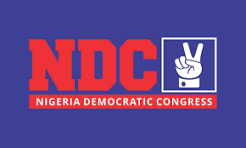
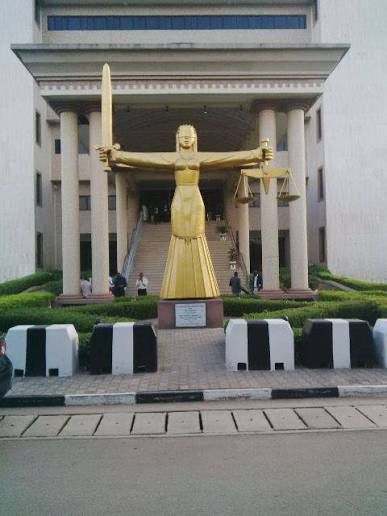
A Federal High Court in Lokoja has set aside its earlier judgment directing the Independent National Electoral Commission (INEC) to register the Nigeria Democratic Congress (NDC) as a political party, citing a breach of the constitutional right to fair hearing. The ruling throws the party’s legal status into uncertainty and could have far-reaching implications for political realignments ahead of the 2027 general elections.
By A1NEWS International – June 27, 2026
LOKOJA, Kogi State – Barely months after securing a landmark court victory compelling the Independent National Electoral Commission (INEC) to register it as a political party, the Nigeria Democratic Congress (NDC) has suffered a major legal setback following a fresh ruling by the Federal High Court in Lokoja.
Justice Isah Dashen, in a ruling delivered on Friday, nullified the court’s earlier judgment of December 10, 2025, which had ordered INEC to register the NDC.
Rather than determining the substantive question of whether the NDC qualifies for registration, the court held that the earlier proceedings were fundamentally flawed because an interested party—the Peace Movement Party (PMP)—was not joined in the suit despite claims that its rights could be affected by the outcome.
The decision effectively resets the litigation process, placing the NDC’s legal status in limbo and reopening one of Nigeria’s most closely watched electoral disputes as political parties intensify preparations for the 2027 general elections.
Court Cites Violation of Fair Hearing
Delivering the ruling, Justice Dashen emphasized that the constitutional principle of fair hearing cannot be compromised.
According to the court, the Peace Movement Party (PMP) claimed ownership of a logo allegedly submitted by the NDC as part of its registration documents with INEC.
Since the dispute directly affected the rights and interests of the PMP, the court ruled that it ought to have been joined as a necessary party before any judgment affecting its interests could be delivered.
Consequently, the court declared that the December 2025 judgment could not stand and ordered that all parties be restored to the positions they occupied before the earlier decision.
The judge further directed that all necessary parties be joined before the matter proceeds to a fresh hearing.
Legal analysts say the ruling reinforces one of the cardinal principles of Nigerian jurisprudence—that no individual or organisation should be condemned or have its rights affected without being afforded an opportunity to be heard.
How the Legal Challenge Emerged
The application seeking to set aside the earlier judgment was filed by the Peace Movement Party through its counsel, C.S. Ekeocha.
According to the applicant, the PMP discovered during the registration process that the logo submitted by the NDC bore substantial similarity to one it had previously presented to INEC.
The party argued that since ownership of the logo could directly affect its legal rights and recognition, it should have participated in the original proceedings.
After reviewing the application, the court agreed that failure to include the PMP amounted to a procedural defect significant enough to invalidate the earlier judgment.
Immediate Implications for the NDC
The ruling has immediate legal consequences for the Nigeria Democratic Congress.
With the earlier judgment now set aside, the order compelling INEC to register the party no longer has legal effect.
This effectively suspends all actions previously taken pursuant to the December 2025 judgment, including:
- Recognition of the NDC as a political party;
- Issuance of any certificate of registration;
- Inclusion of the NDC in INEC’s register of political parties;
- Preparations connected to the party’s participation in future elections.
Election law experts note that until the matter is finally determined by the court, the NDC cannot rely on the nullified judgment as evidence of its legal status.
Has the Court Rejected the NDC’s Registration?
Despite the setback, the ruling does not amount to a rejection of the NDC’s application for registration.
Instead, the court confined its decision to procedural issues.
Justice Dashen did not determine whether the NDC satisfies the constitutional and statutory requirements for registration as a political party.
That substantive question remains pending and will only be resolved after a fresh hearing in which all interested parties are represented.
This distinction is critical because it means the NDC still has an opportunity to pursue its registration through the judicial process.
Fresh Hearing to Determine the Party’s Future
The case will now return to the Federal High Court in Lokoja for a fresh trial.
At the resumed proceedings, both the NDC and the Peace Movement Party will have the opportunity to present documentary evidence and legal arguments.
Among the issues expected to be examined are:
- Whether the disputed logo infringes on the rights of the Peace Movement Party;
- Whether the NDC complied with INEC’s registration requirements;
- Whether there are any other legal obstacles preventing the registration of the proposed political party.
Legal observers believe the outcome could shape the political landscape ahead of the 2027 elections.
Implications for INEC
The judgment also has implications for the Independent National Electoral Commission.
INEC is expected to comply fully with the latest court order by suspending any actions connected to the earlier judgment until the fresh proceedings are concluded.
The Commission is likely to maintain a neutral position while awaiting a final judicial determination.
Electoral law specialists note that the ruling underscores the importance of ensuring that disputes involving party registration are comprehensively resolved before administrative actions are implemented.
2027 Political Calculations
The timing of the judgment is particularly significant.
With political alignments already taking shape ahead of the 2027 general elections, uncertainty surrounding the legal status of the NDC could affect its organisational planning, membership mobilisation and electoral preparations.
Political analysts say delays in obtaining final registration may influence candidate recruitment, party structure, fundraising and nationwide mobilisation.
However, they caution that the ultimate impact will depend on how quickly the fresh proceedings are concluded.
Broader Lessons for Emerging Political Parties
The case also serves as an important reminder for political associations seeking registration.
Experts note that proposed party names, emblems, logos and symbols must be carefully scrutinised to ensure they do not conflict with existing submissions or recognised political identities.
Failure to conduct adequate legal due diligence can result in prolonged litigation capable of delaying or even frustrating party registration.
The ruling also reinforces the judiciary’s commitment to procedural fairness in electoral disputes.
The Federal High Court’s decision to set aside its earlier judgment directing INEC to register the Nigeria Democratic Congress has reopened one of Nigeria’s most consequential electoral disputes ahead of the 2027 general elections.
While the ruling temporarily places the NDC’s legal status in uncertainty, it does not foreclose the party’s quest for registration.
Instead, it underscores the judiciary’s insistence that constitutional principles—particularly the right to fair hearing—must take precedence over procedural expediency.
As the case returns to court for a fresh hearing, attention will focus not only on the fate of the NDC but also on how the outcome could influence Nigeria’s evolving political landscape and the integrity of the country’s electoral process.





Leave a Reply