
WHO warns outbreak investigation is far from over as countries adopt conflicting quarantine measures following deadly MV Hondius evacuation.
By A1NEWS International — May 12, 2026
Dutch health authorities have confirmed that all 26 passengers evacuated to the Netherlands from the hantavirus-stricken cruise vessel, MV Hondius, tested negative for the deadly Andean strain of the virus, even as the World Health Organization (WHO) warned that the global health threat linked to the outbreak remains unresolved.
The outbreak aboard the Dutch-flagged expedition cruise ship has sparked international scrutiny after three passengers died during the voyage, exposing major concerns over cruise ship health protocols, international coordination, quarantine enforcement, and preparedness for emerging infectious diseases.
Dutch Authorities Confirm Negative Results
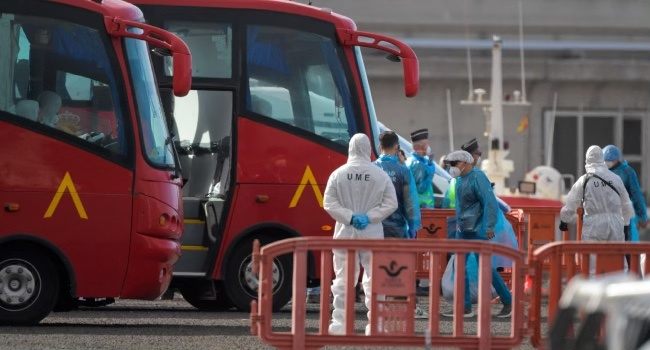
According to the Dutch National Institute for Public Health and the Environment, all 26 evacuees who arrived from Tenerife on Sunday night underwent extensive medical screening and laboratory testing immediately after landing.
Health officials said no traces of the Andean hantavirus strain — one of the few strains known to transmit between humans — were detected among the passengers.
Despite the negative results, Dutch authorities ordered mandatory quarantine measures as a precaution due to the virus’ lengthy incubation period.
Two additional evacuation flights carrying 28 more passengers and crew members later arrived in the Netherlands, with health screening and quarantine protocols also activated for the new arrivals.
WHO Warns ‘Work Is Not Over’
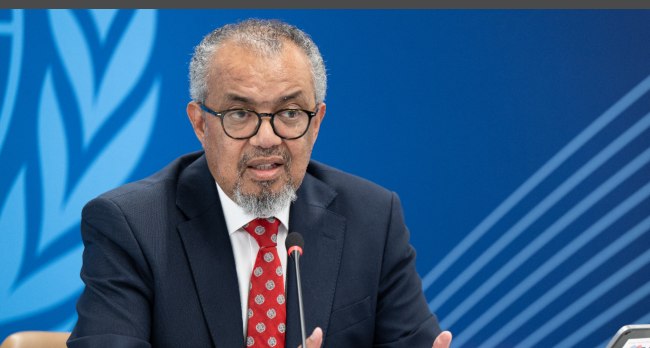
Speaking during a joint press conference in Madrid with Spanish Prime Minister Pedro Sanchez, WHO Director-General Tedros Adhanom Ghebreyesus cautioned that the situation remains fluid despite current containment efforts.
“Our work is not over,” Tedros said, warning that additional cases could emerge in the coming weeks because of the virus’ prolonged incubation period.
The WHO chief, however, stressed that there is currently no indication the outbreak is evolving into a broader global health emergency similar to the early stages of COVID-19.
Health authorities worldwide continue to classify the broader public health risk as low.
What Is the Andean Hantavirus?
The Andean strain of hantavirus has drawn particular concern because it is one of the rare hantavirus variants capable of human-to-human transmission.
The disease is associated with severe respiratory complications and carries a high fatality rate in serious cases.
Currently, there are no approved vaccines or targeted antiviral treatments for hantavirus infections, leaving supportive medical care as the primary treatment option.
The outbreak aboard the MV Hondius has renewed global debate over infectious disease management aboard international cruise vessels, where confined environments can accelerate exposure risks.
Contradictory Global Quarantine Responses Raise Questions
One of the most controversial aspects of the crisis has been the inconsistent response adopted by different countries receiving evacuees.
Most governments have aligned with WHO recommendations requiring 42-day quarantine periods and intensive monitoring of high-risk contacts.
However, acting Director of the Centers for Disease Control and Prevention, Jay Bhattacharya, indicated that American passengers may not automatically face mandatory quarantine measures.
The differing approaches have raised concerns among global health observers about whether inconsistent protocols could undermine containment efforts.
Tedros publicly appealed for governments to comply with WHO recommendations to avoid gaps in surveillance and monitoring.
Diplomatic Disputes Over Ship Handling
The outbreak also triggered diplomatic complications as countries debated responsibility for receiving the infected vessel and managing affected passengers.
Authorities in Cape Verde reportedly refused to allow the ship to dock near the capital, Praia, forcing the vessel to remain offshore while emergency evacuations were coordinated.
Eventually, Spain permitted the cruise ship to anchor near the Canary Islands to facilitate the evacuation operation, although the move generated strong resistance from regional authorities in the archipelago.
Defending Spain’s decision, Sanchez said global health emergencies require international solidarity rather than fear-driven isolation policies.
“The world does not need more selfishness or more fear. What it needs are countries that show solidarity,” the Spanish leader stated.
Cruise Industry Under Renewed Scrutiny
The incident has once again placed the global cruise industry under intense examination following years of criticism over onboard disease management systems after the COVID-19 pandemic.
Public health experts say the MV Hondius case highlights continuing vulnerabilities in international maritime health regulations, emergency isolation infrastructure, and cross-border coordination mechanisms.
Investigators are expected to closely examine how the outbreak was initially detected, how passengers were managed onboard, and whether early containment opportunities were missed.
Although initial testing of evacuees in the Netherlands returned negative results, global health officials warn that the hantavirus crisis surrounding the MV Hondius remains a developing international concern.
With no vaccine available, varying quarantine rules among countries, and fears of delayed infections due to the virus’ incubation period, authorities face mounting pressure to strengthen coordination and avoid policy inconsistencies that could complicate containment efforts.
The coming weeks are expected to determine whether the outbreak remains isolated or evolves into a wider international health challenge.








Leave a Reply