
President Bola Tinubu orders sweeping reforms of Nigerian football after NFF leadership exits, World Cup setbacks and mounting criticism expose deeper governance and development concerns.
By A1NEWS International Newsroom
ABUJA, Nigeria — August 29, 2026
President Bola Tinubu has ordered a comprehensive reform of Nigerian football following the resignation of Nigeria Football Federation (NFF) President Ibrahim Gusau and mounting criticism over the country’s failure to qualify for major international tournaments.
The presidential directive comes amid an increasingly intense debate over whether Nigeria’s football crisis is fundamentally a leadership problem or the consequence of structural weaknesses that have accumulated over decades.
Tinubu’s intervention followed the latest setbacks involving the Super Eagles and Super Falcons, developments that have intensified calls for institutional change within the country’s football administration.
Presidential spokesman Bayo Onanuga said the reform is intended to address longstanding weaknesses in governance, administration, stakeholder representation, player-development pathways, domestic competitions and accountability.
“The reform must respond to a longstanding need to strengthen governance, administration, stakeholder representation, development pathways, domestic competitions and accountability across Nigerian football,” Tinubu said.
The President has directed National Sports Commission (NSC) Chairman Shehu Dikko to work with the NFF Secretariat and relevant football stakeholders to maintain essential football administration while facilitating a broad and consultative reform process.
The process, according to the presidency, will include engagement with FIFA and CAF while ensuring that Nigeria continues to meet its obligations under the international football framework.
NFF Leadership Shake-Up Follows Mounting Pressure
Gusau resigned as NFF president hours before Tinubu announced the reform initiative.
In explaining his decision, Gusau said he was stepping aside to give other Nigerians an opportunity to contribute to the development of the country’s football.
The former NFF president also maintained that his administration was leaving the federation in a better condition than it found it, despite the failures of the national teams to secure World Cup qualification.
That assessment, however, has been sharply challenged by former internationals and football stakeholders who argue that results on the pitch remain the ultimate measure of the health of Nigerian football.
The leadership changes have therefore opened a much larger debate: Is Nigeria’s football problem the people running the system, the system itself, or both?
Tinubu: Football Suffers From ‘Structural Deficits’
Tinubu acknowledged the progress recorded in other sporting disciplines following the restructuring of Nigeria’s sports administration under the re-established NSC but argued that football has continued to underperform.
“Football, Nigeria’s most popular sport and the greatest beneficiary of public support, investment and national attention, has continued to struggle basically due to structural deficits within the system,” he said.
The President’s position places the focus beyond the immediate performance of the national teams.
His administration wants the reform to examine how football is governed, how talent is identified and developed, how domestic competitions operate and how stakeholders are represented.
The stated objective is to build institutions capable of converting Nigeria’s considerable football talent, public enthusiasm and financial resources into sustained international success.
Idah Peterside Calls Last Four Years a ‘Disaster’
Former Nigeria international Idah Peterside has welcomed the leadership change but delivered a scathing assessment of the state of Nigerian football.
Appearing on Channels Television’s Sunrise Daily, Peterside described the last four years of Nigerian football as a “disaster”.
“We’ve had four years of disaster,” Peterside said, arguing that his earlier interest in contesting for the NFF leadership was driven by a desire to address weaknesses he and others had identified within the system.
He described Gusau’s resignation as overdue and welcomed the intervention by Tinubu and the NSC.
Peterside also called for a renewed emphasis on grassroots football, warning that Nigeria’s traditional dominance in African football has been steadily eroded.
“We need to come back to the grassroots development,” he said.
His criticism extends to the national teams, with Peterside arguing that Nigeria’s inability to consistently qualify for the World Cup represents a major decline from the country’s historical position in African football.
The Super Falcons and Super Eagles Setback
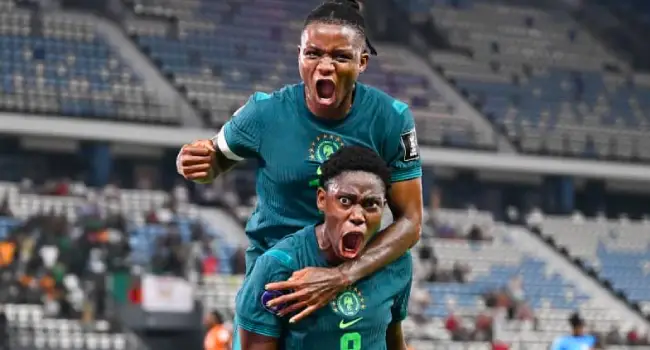
The pressure on the NFF intensified after setbacks involving both senior national teams.
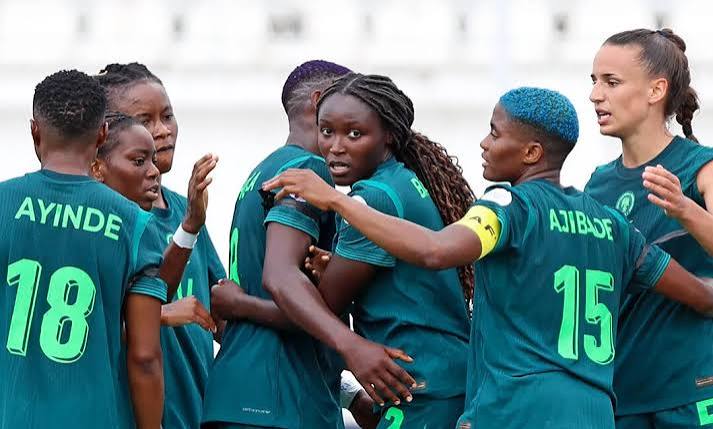
The Super Falcons’ failure to qualify for the Women’s World Cup represented a particularly significant blow because Nigeria had previously participated in every edition of the tournament since its inception in 1991.
The women’s team’s failure followed its elimination after losing to Cameroon, according to the account supplied for this report.
The Super Eagles have also faced major qualification difficulties, adding to concerns about the sustainability of Nigeria’s football development pipeline.
For a country that has historically regarded World Cup participation as a benchmark of footballing status, simultaneous difficulties involving the men’s and women’s national teams have amplified questions about administration, coaching, player development and competition structures.
Odegbami Warns Leadership Change Alone Will Not Work
While Peterside welcomed the shake-up, former Nigeria international and football administrator Segun Odegbami has offered a more cautious assessment.
Odegbami argued that replacing NFF officials without confronting the deeper institutional problems would simply reproduce the same failures under new leadership.
He described the current situation as part of a crisis that has developed over almost three decades.
“In the past almost 30 years or so, we have tied ourselves into a knot,” Odegbami said during an interview on Channels Television.
His central argument is that Nigeria’s football problems cannot be reduced to personalities.
“We have removed, one way or the other, the people on the board and we might as well just say, ‘Look, let’s get a new set to go on,’ but we’ll get the same results,” he said.
For Odegbami, the challenge is to untangle the administrative, legal and structural complications that have accumulated around Nigerian football and establish a system in which responsibilities and institutional relationships are clearly defined.
‘Everybody Is an Expert’ — The Stakeholder Problem
Odegbami also highlighted another obstacle: the sheer number of competing voices around Nigerian football.
“Football is a sport that everybody is an expert. Everybody has an answer, and everybody is right,” he said.
His warning underscores the difficulty facing the reform process.
A credible restructuring would have to balance the interests of government, the NFF, state football associations, clubs, players, coaches, former internationals, sponsors, supporters and international football bodies.
The presidential directive appears designed to create that broader consultation, with the NSC chairman instructed to work with the NFF Secretariat and relevant stakeholders.
The Grassroots Question
One of the most persistent concerns raised by critics is the state of grassroots development.
Nigeria has historically produced an extraordinary pool of football talent, but questions remain about the strength of the pathways connecting young players to organised competition, professional clubs and national teams.
Peterside argues that rebuilding grassroots football must become a central component of the reform.
Odegbami’s call for a “production line” points in the same direction: Nigeria needs a sustainable system that continually develops players rather than relying on individual generations of exceptional talent.
“You have to have a production line, a seamless production line,” Odegbami said, pointing to countries such as Brazil and England as examples of systems built around continuity.
The implication is significant. A football powerhouse cannot depend solely on talented individuals appearing periodically. It needs functioning youth competitions, coaching structures, scouting systems, club development and pathways into elite football.
What Does Success Really Mean?
The disagreement over Gusau’s legacy reveals another central fault line.
The outgoing NFF leadership has pointed to achievements recorded during its tenure and argued that the federation was stronger at the point of departure than when it assumed office.
Odegbami did not completely dismiss those claims.
“I’m sure he believes what he says and if you look at the issues that he’s talking about, yes, he has achieved some level of success,” he said.
But he argued that administrative achievements carry limited meaning for supporters if national teams fail to deliver results.
“As far as the man on the street is concerned, if your team does not win on the field of football, you have lost,” Odegbami said.
His assessment captures the fundamental challenge confronting Nigerian football administrators: institutional performance and sporting performance must ultimately reinforce each other.
NFF Legal Status Question Raises Stakes
Odegbami also raised a more fundamental issue concerning the legal status of the NFF.
According to the former Green Eagles captain, the federation’s status under Nigerian law is subject to a longstanding legal dispute and what he described as a subsisting court judgment.
“There’s a subsisting court judgment that has not been vacated up till now,” he said, arguing that the issue has remained unresolved for almost a decade.
The claim introduces a potentially important dimension to the reform debate because any restructuring of Nigerian football must operate within both Nigeria’s legal framework and the statutes governing international football.
The presidency has already acknowledged the need for engagement with FIFA and CAF, suggesting that the reform process will have to navigate both domestic institutional requirements and international football obligations.
The precise legal implications of the judgment and the current status of the proceedings would require verification from the relevant court records and legal authorities before definitive conclusions can be drawn.
Interim Administration Takes Shape
As the leadership crisis unfolds, the National Sports Commission has endorsed former NFF Deputy General Secretary Emmanuel Ikpeme to oversee the federation’s secretariat as interim General Secretary.
Former NFF Director of Media and Communications Ademola Olajire is expected to serve as interim Deputy General Secretary.
The changes are intended to provide administrative continuity during the transition.
At the same time, processes initiated in preparation for the NFF elective congress scheduled for September 27 have been suspended.
The suspension adds another layer of uncertainty to the federation’s transition and raises questions about the timetable, structure and eventual composition of a reformed football administration.
Reform Must Balance FIFA Autonomy and Government Oversight
Perhaps the most delicate aspect of the presidential intervention will be the relationship between government oversight and the autonomy traditionally required by international football governance.
Nigeria is a member of FIFA and CAF, and any domestic reform involving the football federation must take account of the statutes and obligations governing those relationships.
Tinubu’s directive specifically calls for appropriate engagement with FIFA and CAF.
That language suggests the administration is aware that restructuring Nigerian football cannot be undertaken solely as a domestic administrative exercise.
The challenge will be to improve accountability and performance without creating a governance arrangement that conflicts with international football regulations.
What the Reform Must Answer
The current crisis gives the government and football stakeholders an opportunity to address questions that have persisted for years:
- Why has Nigeria struggled to maintain consistent World Cup qualification?
- How effective are the country’s grassroots and youth-development pathways?
- Are domestic competitions producing enough elite-level talent?
- How should government funding and public investment in football be monitored?
- What governance structure can deliver accountability without compromising football autonomy?
- How should clubs, players, coaches and other stakeholders be represented?
- What is the precise legal and institutional status of the NFF?
- How can Nigeria establish a sustainable player-development pipeline?
- What mechanisms can prevent recurring leadership and administrative crises?
- How can Nigeria restore its competitive position in African and world football?
The Bigger Battle: Rebuilding a Football System
The resignation of Gusau may have ended one chapter of the NFF crisis, but it does not resolve the institutional questions confronting Nigerian football.
Peterside’s argument points toward leadership failure and the urgent need for grassroots reconstruction.
Odegbami’s position goes deeper, warning that changing personalities without untangling the underlying institutional and legal problems could produce another cycle of disappointment.
Tinubu’s directive attempts to move the conversation beyond the immediate leadership crisis by demanding a comprehensive reform of governance, administration, development and accountability.
The test will now be whether that ambition translates into a transparent and sustainable restructuring process.
Nigeria does not lack football talent. It does not lack public interest. It does not lack historical pedigree.
What remains in question is whether the country can build a football system capable of converting those advantages into consistent, sustainable success.
For millions of Nigerian supporters, the ultimate verdict will not come from boardrooms or administrative statements.
It will come on the pitch.
The NFF leadership shake-up should therefore be viewed not as the conclusion of Nigeria’s football crisis, but as a potential opening for a much larger institutional reset.
The Tinubu administration has placed governance, development, accountability and institutional structure at the centre of the reform agenda. Former internationals have demanded deeper change, while experienced administrators have warned against believing that new faces alone can fix old problems.
The credibility of the reform will ultimately depend on whether it produces transparent institutions, credible competitions, effective grassroots development and national teams capable of consistently competing at the highest level.
Nigeria’s football crisis has been years in the making. If the government and stakeholders are serious about solving it, the response will have to be measured not by the speed with which officials are replaced, but by whether a durable football system is finally built.



Leave a Reply