
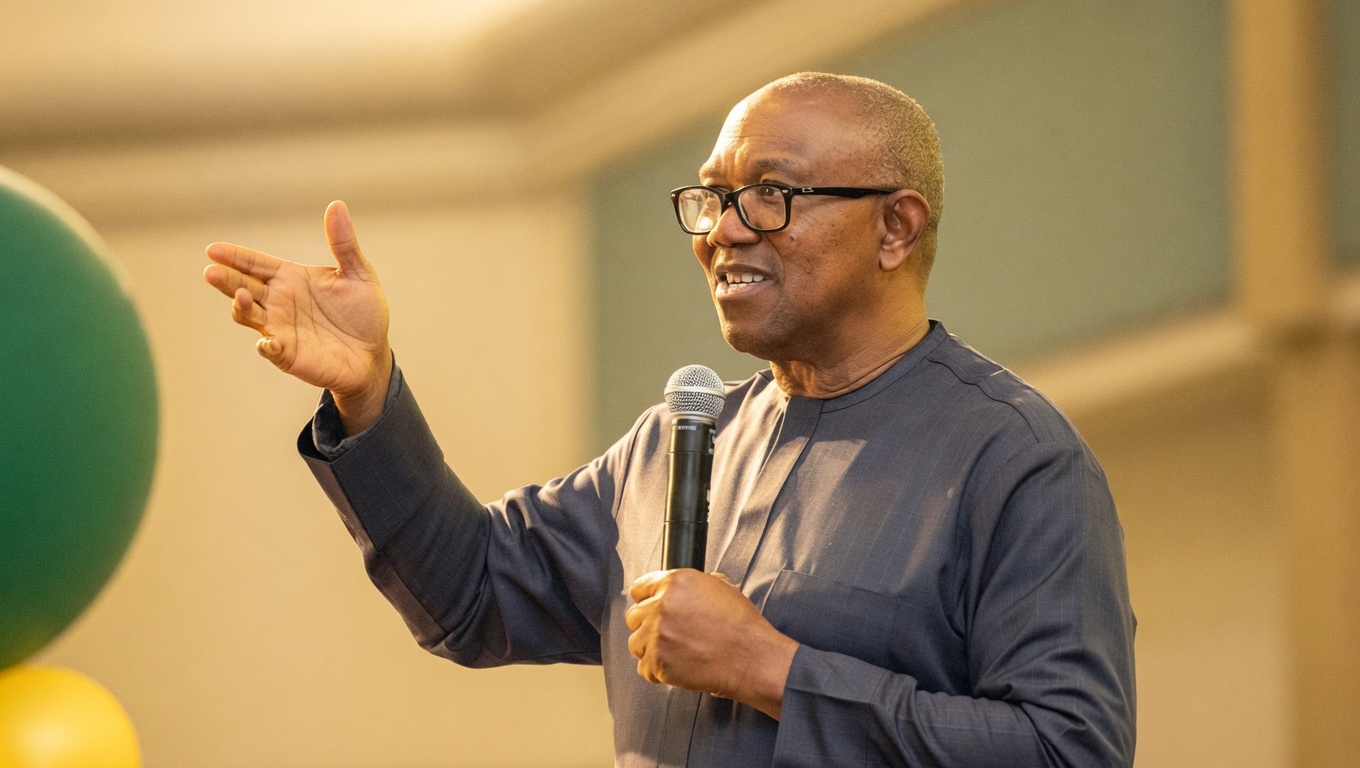
Opposition figure Peter Obi demands accountability over rising debt, while Presidency insists surge is driven by currency devaluation and inherited liabilities, not fresh borrowing.
By Baron Eloagu / June 9, 2026
ABUJA, NIGERIA —A fresh political and economic dispute has erupted over Nigeria’s public debt profile as former presidential candidate Peter Obi accused the Federal Government of unchecked borrowing, while the Presidency insists the reported surge in debt is largely a statistical effect of naira devaluation rather than new loans.
The disagreement has intensified national debate over fiscal transparency, debt sustainability, and the true drivers of Nigeria’s rising financial obligations, which some estimates place close to ₦200 trillion.
The exchange reflects growing tensions between opposition voices and the administration of President Bola Ahmed Tinubu as economic reforms continue to reshape Nigeria’s macroeconomic landscape.
OBI RAISES ALARM OVER RISING DEBT PROFILE
Obi, who is also the 2027 presidential candidate of the Nigeria Democratic Congress (NDC), raised concerns in a statement posted on his official X account, warning that Nigeria’s pace of borrowing raises serious questions about fiscal discipline and accountability.
He argued that Nigeria’s debt stock has increased by more than ₦100 trillion within three years, describing the trend as “imprudent borrowing” that requires urgent public scrutiny.
According to him, the country’s total debt is now approaching ₦200 trillion, a figure he says reflects weak oversight and limited transparency in public finance management.
Obi also compared the current trajectory with the previous administration of former President Muhammadu Buhari, under which he said debt accumulation occurred at a significantly slower pace over eight years.
He further questioned the lack of detailed disclosures on how borrowed funds have been deployed, particularly in infrastructure and economic development projects.
DISCREPANCIES IN BORROWING AND CAPITAL EXPENDITURE
Citing figures attributed to the Budget Office, Obi claimed the Federal Government borrowed ₦11.89 trillion between January and September 2025, exceeding its planned borrowing target of ₦10.34 trillion.
He argued that such deviations should normally trigger stronger legislative scrutiny and public explanations from relevant authorities.
Obi also raised concerns that only ₦3.10 trillion of borrowed funds within the period was allocated to capital expenditure, despite a capital budget of ₦17.58 trillion.
He described the gap as a “critical accountability failure,” questioning the destination of the remaining funds.
“The question Nigerians are rightly asking is what happened to the balance?” he said.
PRESIDENCY RESPONDS, BLAMES NAIRA DEVALUATION
In a swift reaction, the Presidency dismissed Obi’s interpretation of Nigeria’s debt profile, arguing that the increase in naira terms is largely a reflection of exchange rate adjustments rather than new borrowing.
The Special Assistant to the President on Social Media, Dada Olusegun, said the figures being cited do not reflect actual debt expansion in dollar terms.
“For the umpteenth time, Nigeria’s debt portfolio increase over the past three years is not a function of new borrowings,” Olusegun stated.
He explained that the depreciation of the naira significantly inflated the local currency value of external debt obligations.
According to him, Nigeria’s total debt in dollar terms has remained relatively stable, ranging between $108 billion in 2023 and $109 billion in 2026.
INHERITED LIABILITIES AND DEBT STRUCTURE DEBATE
The Presidency further argued that part of the current debt burden includes inherited obligations, particularly about ₦20 trillion in Ways and Means financing, which was later securitised under the current administration.
Officials maintain that this restructuring was necessary to improve repayment structure and financial management.
Olusegun also stressed that Nigeria’s public debt includes both federal and state-level obligations, cautioning against attributing the entire figure solely to the current administration.
He questioned the analytical approach used in Obi’s assessment, particularly the omission of exchange rate effects.
“If the naira strengthens tomorrow, does that mean debt has been repaid?” he asked.
ECONOMIC REFORMS AND RISING DEBT BURDEN
Nigeria’s debt debate is unfolding alongside major economic reforms introduced by the Tinubu administration, including fuel subsidy removal and foreign exchange market liberalisation.
Government officials argue that these reforms are necessary to stabilise the economy, attract investment, and correct long-standing fiscal distortions.
However, critics warn that rising debt servicing costs could undermine the gains of these reforms if borrowing is not matched with productive investment and economic growth.
President Tinubu previously disclosed that Nigeria is projected to spend approximately $11.6 billion on debt servicing in 2026, underscoring the growing pressure on public finances.
ANALYSTS CALL FOR TRANSPARENT DEBT REPORTING
Economists and policy analysts say the disagreement highlights the need for clearer debt reporting standards that separate currency valuation effects from actual borrowing.
They argue that while exchange rate movements can inflate debt figures in naira terms, public understanding requires transparent breakdowns of new loans, repayments, and securitised obligations.
There are also growing calls for independent audits and improved parliamentary oversight to ensure accountability in debt management.
POLITICAL AND ECONOMIC IMPLICATIONS
The clash between Obi and the Presidency is expected to deepen political tensions ahead of future elections, where economic performance and cost-of-living pressures are likely to dominate public discourse.
Opposition figures are increasingly framing debt and fiscal management as key indicators of government performance, while the administration maintains that reforms are laying the groundwork for long-term stability.
The debate also has implications for investor confidence, with markets closely watching Nigeria’s debt sustainability and reform trajectory.
As Nigeria’s debt discourse intensifies, the conflicting interpretations from opposition figures and the Presidency underscore deeper disagreements over how the country’s fiscal reality should be measured and communicated.
While Obi insists that borrowing levels and expenditure transparency raise urgent accountability concerns, the Presidency maintains that much of the increase is a statistical effect of currency devaluation and inherited obligations.
The absence of consensus highlights the need for clearer, more standardised public debt reporting as Nigeria continues to navigate complex economic reforms and rising fiscal pressures.






Leave a Reply