
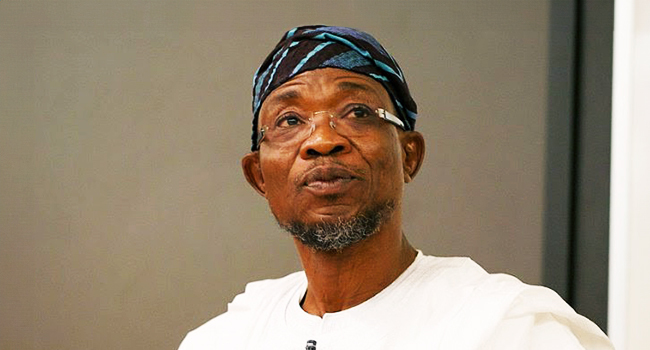
Opposition party demands due process if its national secretary is invited by security agencies, while Atiku questions heavy security deployment and urges INEC to guarantee transparent voting, counting and result transmission
By A1NEWS International Investigative Desk
ABUJA, NIGERIA — August 13, 2026: Tension has intensified ahead of Saturday’s Osun State governorship election as the African Democratic Congress (ADC) raised an alarm over an alleged plan to arrest its National Secretary, Rauf Aregbesola, while former Vice President and ADC presidential candidate Atiku Abubakar questioned the scale of security deployment for the poll.
The two interventions have placed the conduct of security agencies, the protection of opposition political activity and the credibility of the electoral process at the centre of the final hours before voting.
The ADC said it had received what it described as “credible reports” of plans to arrest Aregbesola, a former Osun governor and former Minister of Interior, shortly before the election. The party warned that any such action could undermine confidence in the poll if it was politically motivated.
Atiku, speaking at an ADC National Youth Leadership Summit in Abuja, separately warned the Independent National Electoral Commission (INEC), security agencies and the Federal Government against what he described as the militarisation of a democratic exercise. He argued that Saturday’s election would serve as an important test of Nigeria’s readiness for credible elections ahead of the 2027 general elections.
ADC ALLEGES PLAN TO ARREST AREGBESOLA
The ADC’s National Publicity Secretary, Bolaji Abdullahi, said the party had received reports of a possible arrest of Aregbesola in the days leading to the election.
The party expressed concern because of what it described as a broader pattern of intimidation, harassment and alleged misuse of state institutions against opposition parties.
Aregbesola served as governor of Osun State between 2010 and 2018 and later served as Minister of the Interior. He is now the National Secretary of the ADC.
The party, however, acknowledged that security agencies have the authority to invite any individual where there are lawful grounds for doing so.
Its objection is centred on timing, procedure and motive.
“If any security agency has a lawful reason to invite him, there are established procedures for doing so,” the ADC said.
‘ARREST ON EVE OF ELECTION WOULD RAISE QUESTIONS’
The opposition party argued that detaining its national secretary immediately before an election in which the party is participating would inevitably raise questions about whether the action was intended to disrupt its organisational activities.
The ADC said an arrest at such a critical moment could prevent Aregbesola from coordinating the party’s election operations.
It therefore called on the Federal Government and security agencies to avoid actions that could undermine confidence in the election or increase tension across Osun State.
“The eyes of Nigerians are on Osun,” Abdullahi said.
The party added that the credibility of the election would ultimately be judged by the actions of state institutions before, during and after voting—not merely by explanations offered after the results are announced.
WHAT IS NOT YET ESTABLISHED
Despite the seriousness of the ADC’s allegation, there is an important distinction between a party warning of an alleged arrest plan and confirmation that such a plan exists.
As of the latest available reports, the ADC had not publicly identified the security agency allegedly preparing to arrest Aregbesola, nor had authorities publicly confirmed that an arrest warrant or operational directive had been issued against him.
That makes independent verification essential.
An eventual invitation or arrest, if lawfully undertaken, would not by itself establish political persecution. Conversely, the proximity of any security action to election day would reasonably invite public scrutiny over its timing, legal basis and proportionality.
ATIKU QUESTIONS HEAVY SECURITY DEPLOYMENT
The controversy over Aregbesola’s alleged arrest plan coincides with Atiku’s criticism of the security arrangements surrounding the election.
Atiku questioned why the security posture for a civilian electoral exercise appeared, in his assessment, to resemble preparations for armed conflict.
“Elections are civil engagements, not military operations. Ballot papers are not bullets. Voters are not enemy combatants. Opposition members are not insurgents,” he said.
He also questioned why comparable security capacity was not being deployed with the same intensity against terrorists, kidnappers and bandits responsible for attacks on communities and the killing of Nigerians.
The criticism places the security deployment itself under scrutiny, although the presence of security personnel can also serve legitimate purposes, particularly in an election where authorities anticipate possible violence or intimidation.
The central issue, therefore, is not simply the number of security personnel deployed but how they are used and whether they remain politically neutral.
ATIKU WARNS INEC OVER ELECTION-DAY FAILURES
The ADC presidential candidate also warned INEC against what he termed “mysterious glitches, unexplained delays or manipulation.”
He demanded the timely distribution of election materials, unhindered voting, credible counting and transparent transmission of results.
His warning reflects concerns that electoral credibility can be compromised not only through overt violence but also through administrative failures, logistical breakdowns or opaque result-management processes.
Atiku said the security agencies and electoral commission belong to the Nigerian public rather than to any political party.
“The police belong to Nigeria. The military belongs to Nigeria. INEC belongs to the Nigerian people. None of them belongs to the APC,” he said.
OSUN ELECTION AS A TEST FOR 2027
Atiku described the Osun election as an important test of Nigeria’s democratic institutions ahead of the 2027 general election.
That assessment gives Saturday’s poll significance beyond the immediate contest for the Osun governorship.
The election will provide an opportunity to assess whether electoral institutions can guarantee:
- equal treatment of competing parties;
- freedom of movement for candidates and campaign officials;
- unhindered access to polling units;
- protection from intimidation;
- transparent counting;
- credible result transmission; and
- impartial conduct by security personnel.
Any major failure in these areas could reinforce existing concerns about the country’s electoral institutions.
THE SECURITY DILEMMA: PROTECTION OR INTIMIDATION?
Security deployment during elections presents an inherent dilemma.
Insufficient security can allow political thuggery, voter intimidation, ballot snatching and attacks on electoral officials.
Excessive or visibly partisan security deployment, however, can create a different danger: voters may feel intimidated rather than protected.
The credibility of the Osun election will therefore depend on whether security personnel operate according to clearly defined rules and maintain political neutrality.
The same standard should apply to all parties and candidates.
ATIKU REVIVES QUESTIONS OVER TINUBU’S CSU CERTIFICATE
Atiku also used the Abuja summit to revive his longstanding questions concerning the certificate President Bola Ahmed Tinubu submitted to INEC from Chicago State University (CSU).
According to reports from the summit, Atiku pointed to differences between documents relating to Tinubu’s academic credentials, including different dates and signatures, and asked who produced and authorised the document submitted to INEC.
The issue is not new.
During earlier litigation, Atiku’s lawyers argued that documents associated with Tinubu contained differences in dates and signatures. Tinubu’s lawyers, however, attributed the apparent discrepancy to a clerical error involving a replacement diploma.
Separately, documents released from Chicago State University in 2023 stated that Tinubu attended the university and was awarded a Bachelor of Science in Business Administration with honours in June 1979.
Consequently, the competing claims surrounding the certificate should not be presented as an established finding of forgery. The precise status and provenance of the particular document submitted to INEC remain the subject of political and legal argument.
SECTION 137 QUESTION RETURNS TO POLITICAL DEBATE
Atiku invoked Section 137(1)(j) of the Nigerian Constitution in arguing that questions surrounding the authenticity of a certificate submitted to INEC deserve scrutiny.
He asked who produced the certificate, when it was produced, who authorised it and whether Chicago State University authenticated the exact document submitted to the electoral commission.
The political significance of the issue is considerable because Atiku has previously challenged Tinubu’s academic credentials through litigation.
However, any constitutional consequence would ultimately depend on the applicable legal process and competent findings rather than political claims made during an election campaign.
ADC’S YOUTH POLITICAL AGENDA
Beyond the immediate Osun controversy, Atiku used the summit to outline his party’s proposed approach to youth participation in politics.
He pledged that at least 30 per cent of legislative candidates under his political programme would be below the age of 40, with a significant number below 30.
He urged young Nigerians to move beyond social-media activism and become directly involved in political organisation and leadership.
“Register. Organise. Lead,” he told participants.
The message reflects a broader debate over youth participation in Nigeria’s political system, particularly ahead of 2027.
THE QUESTIONS AUTHORITIES MUST ANSWER BEFORE SATURDAY
With the election only days away, several questions now require clear answers from the institutions responsible for the poll:
On Aregbesola:
- Is there an active investigation involving the ADC national secretary?
- Has any security agency issued a formal invitation?
- If so, what is the legal basis?
- Would any action be taken before or after voting?
- Can authorities guarantee that opposition leaders will be treated equally?
On security:
- What is the operational rationale for the scale of deployment?
- What safeguards are in place against political interference?
- How will security personnel respond to electoral disputes?
- What mechanisms exist for voters to report intimidation?
On INEC:
- Will election materials arrive on schedule?
- Will voting proceed without unnecessary delays?
- Will result collation and transmission be transparent?
- How will technical or logistical failures be communicated to political parties and voters?
These questions will be central to public assessment of the election.
The final days before the Osun governorship election have been marked by competing allegations, heightened security concerns and growing political scrutiny.
The ADC’s allegation of a possible plan to arrest Rauf Aregbesola has not been independently established, but the party’s warning places the conduct of security agencies under the microscope.
Atiku’s criticism of the security deployment similarly raises a legitimate democratic question: How can the state protect an election without making voters feel that they are entering a security operation rather than exercising a constitutional right?
The answer will be determined not by political speeches but by conduct on the ground.
Security agencies must operate lawfully and impartially. INEC must protect the integrity of the voting and collation processes. Political parties must restrain their supporters from violence. And voters must be allowed to cast their ballots without fear.
The Osun election is now more than a contest between political candidates. It is a test of whether Nigeria’s institutions can withstand intense partisan pressure while preserving the credibility of the democratic process.
A1NEWS International will continue to monitor the Osun election, security developments, political claims and the conduct of electoral institutions before, during and after the August 15 poll.
EDITORIAL NOTE
The alleged plan to arrest Rauf Aregbesola is an allegation made by the ADC and has not been independently established. Likewise, questions surrounding President Tinubu’s Chicago State University certificate remain contested; previous reporting records both allegations by Atiku’s camp and explanations from Tinubu’s legal team.




Leave a Reply