
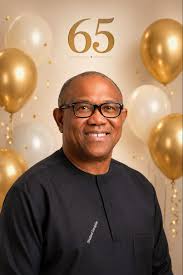
In an exclusive birthday interview, Peter Obi turns 65 with a familiar message: Nigeria is broken by bad leadership, opposition politics remain unstable, and the 2027 race will test whether his reformist pitch still commands enough force to challenge President Bola Tinubu, who has already secured his party’s nomination for a second term.
By A1NEWS International
ABUJA, Nigeria – July 19, 2026
Peter Obi marked his 65th birthday by doing what he has increasingly used his public platform to do: argue that Nigeria’s crisis is not abstract, but the product of leadership failures, weak institutions and what he calls “transactional governance.” In an exclusive interview published by The Sun, Obi said the country is “in a mess,” blamed its direction on bad leadership, and insisted he remains determined to be on the ballot in the 2027 presidential election.
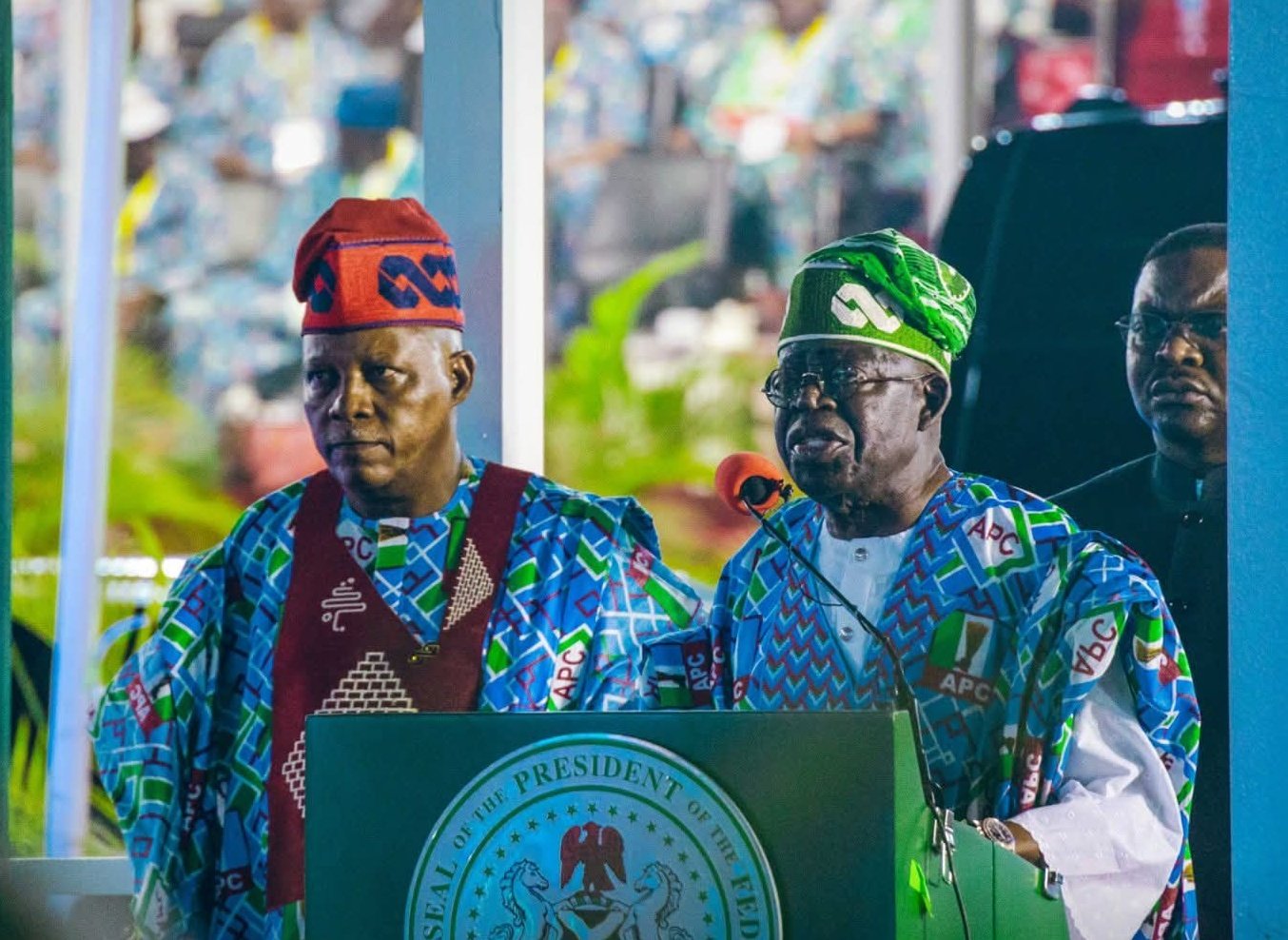
The interview lands at a politically sensitive moment. President Bola Tinubu has already won the ruling APC’s presidential primary and is set to seek a second term in the January 2027 election, while Reuters reported earlier this year that opposition hopes had been weakened after Obi and Rabiu Kwankwaso quit a coalition over legal wrangles and internal divisions.
65, Still on the Move
Obi presented himself in the interview as a man powered less by sleep than by purpose. He told The Sun that he routinely sleeps only three to four hours, and described a punishing travel schedule that took him from Lagos to the United States, then to several cities in Europe, before returning to Nigeria for more engagements. He attributed that pace to grace and a sense of duty to public service.
That image matters politically. Obi has built a public identity around discipline, austerity and physical stamina, which supporters often read as a contrast to the elite comfort they associate with Nigerian politics. In this interview, he extended that contrast into a larger argument: that the country does not merely need a younger face, but a different governing culture.
He also said he still expects to appear on the ballot in 2027. According to the interview, he had emerged from his party’s primary, the result had been uploaded to INEC, and he remained optimistic that he would contest. But he also suggested that Nigeria’s political environment has become hostile to fair competition, arguing that a president who is pleased when rival parties are in trouble should worry the public.
That point is central to Obi’s current posture. Rather than treating party turmoil as an internal problem, he framed it as a symptom of a damaged political system. He said the problem is not the NDC, the opposition logo or his personal political path, but a national order in which referees fail to play by the rules and opposition parties are not allowed to mature into credible alternatives.
Obi also defended his political alliances. He said his working relationship with Rabiu Kwankwaso is grounded in a shared commitment to poverty reduction and education, and dismissed talk of personal conflict. Reuters, however, has reported that the broader opposition coalition has been unstable, with both men previously leaving a coalition over legal disputes and internal fractures.
Obi’s Attack on ‘Transactional Governance’
If Part One of the interview was about endurance, Part Two was about indictment. Obi repeatedly argued that Nigeria’s crisis is rooted in what he called “transactional governance,” a phrase he used to describe a political culture driven by patronage, crisis management and self-interest rather than long-term development. He said the country’s problems are not abstract and should be visible to any citizen comparing life before and after the current administration took office.
His sharpest political swipe was directed at Tinubu. Obi said the president is “tired” and, in his view, no longer has the capacity to govern effectively. He added that the people pushing the president are those benefiting from confusion. That is a political attack, not an established fact, but it is one of the clearest statements yet of how Obi intends to frame the 2027 contest: as a judgment on competence, not just party machinery.
Obi also returned to the fuel subsidy debate. He argued that the problem is not removal itself, but what government does with the savings. In his telling, subsidy savings should have been directed toward education, health and poverty reduction, rather than disappearing into what he described as waste, duplication and “fake” agencies. He said he would still remove subsidy, but only as part of a transparent plan to redirect the savings into development.
That argument matters because subsidy removal remains one of the defining decisions of Tinubu’s presidency. Reuters reported that the administration is now planning to publish indicators tracking poverty, income and inequality to prove the reforms are working, while the IMF has warned that a large share of Nigeria’s population still lives in poverty. Reuters also noted that inflation, after a period of easing, picked up again earlier this year, underlining the political sensitivity of cost-of-living claims.
Obi amplified the scale of the hardship in forceful terms, claiming that poverty has risen from 87 million people to 140 million under the current federal government. That figure is Obi’s assertion, not an independently verified tally in the interview, but it shows the scale of the political pressure he wants to put on the Tinubu administration ahead of the 2027 race.
He linked the same argument to security and power. On insecurity, he said he supports state police and even community policing, arguing that security must be pushed downward to the local level. On electricity, he said he would aim for at least 10,000 megawatts of generation, transmission and distribution within four years, and cited embedded and distributed power models as examples Nigeria could replicate.
The broader theme, in Obi’s telling, is human capital. He said the country’s real cost problem is not the number of ministries but waste and corruption, and he insisted that education, health and anti-poverty investment matter more than symbolic cuts. He also repeated a familiar boast from his years as governor: that he left office without salary arrears, pension arrears or contractor debt, and with financial reserves intact. Those claims remain part of the moral argument that underpins his appeal to supporters.
Tinubu, the Economy and the Politics of Performance
Reform, resistance and the battle over Nigeria’s economic narrative
When President Bola Ahmed Tinubu assumed office in May 2023, he immediately launched one of the most ambitious—and controversial—economic reform programmes Nigeria had witnessed in decades.
Within days, fuel subsidy was removed.
The foreign exchange market was liberalised.
Fiscal reforms followed.
Supporters described the decisions as long overdue surgery for an economy weighed down by distortions. Critics argued the reforms transferred enormous hardship onto ordinary Nigerians before adequate social protections were in place.
Three years later, the economy itself has become the central battlefield for the 2027 presidential election.
No opposition figure has framed that battle more aggressively than Peter Obi.
His 65th birthday interview was less about personal reflection than a sustained critique of Tinubu’s economic stewardship.
Yet the debate extends far beyond campaign rhetoric.
The key question confronting Nigerians is whether the administration’s reforms are beginning to deliver measurable benefits—or whether the costs continue to outweigh the gains.
The Tinubu Economic Gamble
The administration inherited multiple structural challenges.
Among them were:
- declining foreign exchange reserves
- an expensive fuel subsidy regime
- multiple exchange rates
- mounting fiscal pressures
- weak investor confidence
The government argued that maintaining the previous system would have produced even deeper economic instability.
Consequently, it embarked on reforms welcomed by international financial institutions including the IMF and the World Bank.
According to the IMF’s 2026 Article IV Consultation, Nigeria’s macroeconomic fundamentals have strengthened considerably since the reforms began.
The IMF cited:
- improved fiscal balances
- greater exchange-rate flexibility
- stronger external reserves
- improving investor confidence
- enhanced economic resilience
while simultaneously warning that living conditions remain extremely difficult for millions of Nigerians.
Where Peter Obi Disagrees
Peter Obi does not fundamentally oppose every reform.
Indeed, he reiterated during the interview that he also supports removing fuel subsidy.
His disagreement lies elsewhere.
According to Obi:
“Nobody criticised subsidy removal. The issue is where the savings were invested.”
His argument is straightforward.
If Nigerians endure painful reforms—
then they should visibly experience:
- better healthcare
- better schools
- stronger infrastructure
- poverty reduction
- improved electricity
- better security
Instead, Obi argues the benefits have not reached ordinary citizens.
Those are political opinions advanced by the opposition leader.
Government officials reject the suggestion that reform gains have disappeared.
Government’s Defence
The Tinubu administration argues that economic reforms require time before citizens experience full benefits.
Finance officials recently announced plans to introduce a “shared prosperity scorecard” measuring:
- multidimensional poverty
- real income growth
- inequality
The objective is to demonstrate whether reform gains are reaching households.
Finance Minister Taiwo Oyedele acknowledged that stronger macroeconomic indicators alone are insufficient unless living standards improve.
The Cost of Reform
Even supporters acknowledge reforms have imposed significant short-term hardship.
Fuel prices increased sharply.
Transport costs rose.
Food inflation accelerated.
Electricity tariffs increased for some consumers.
Manufacturers struggled with exchange-rate adjustments.
Households experienced declining purchasing power.
The IMF similarly observed that despite stronger macroeconomic stability, approximately 63% of Nigerians remain below the national poverty line, with millions experiencing food insecurity.
Politics Meets Economics
For Obi, these hardships represent evidence that government priorities are misplaced.
For Tinubu’s supporters, they represent temporary sacrifices necessary for long-term stability.
Thus, the economic debate heading into 2027 is unlikely to centre on whether reforms occurred.
Rather, it will revolve around one question:
Have the reforms improved Nigerians’ lives?
The Numbers Behind Peter Obi’s Claims
Separating verified facts, disputed statistics and political opinion
Political campaigns frequently rely upon broad claims.
Responsible journalism requires examining each claim independently.
Below is an evidence-based assessment using available official statistics, IMF reports, World Bank publications and government statements.
A1NEWS INTERNATIONAL FACT CHECK
| Claim | Rating | Analysis |
|---|---|---|
| Nigeria is suffering severe hardship | ✅ Supported | IMF, World Bank and government officials all acknowledge widespread hardship despite improving macroeconomic indicators. |
| Fuel subsidy should have been removed | ✅ Supported as Obi’s stated policy | Obi consistently maintained before and after the 2023 election that subsidy should end, although he proposed a more phased and transparent implementation. This is consistent with his long-stated public position. |
| The problem is not subsidy removal but how savings were spent | 🟡 Opinion supported by ongoing public debate | Whether subsidy savings have been effectively utilised remains politically contested. Government points to fiscal reforms, while critics argue public services have not visibly improved. |
| 140 million Nigerians are now poor | 🟡 Partially supported / needs context | Obi’s figure broadly aligns with projections that around 60–63% of Nigerians could be in poverty. IMF estimates place poverty at about 63% of the population under the national poverty line, but precise totals vary depending on methodology and whether multidimensional or income poverty is measured. |
| This government borrowed more than all previous governments combined | ❌ Not established by available evidence | Nigeria’s public debt has continued to rise, but available official data do not support the categorical claim that borrowing under the current administration exceeds all previous governments combined. Debt should be evaluated using DMO figures, debt composition and debt-to-GDP ratios rather than rhetoric alone. |
| Tinubu lacks capacity to govern | 🔵 Political opinion | This is an opinion expressed by Obi. It cannot be verified objectively and should not be reported as fact. The Presidency has consistently defended the President’s leadership and reform agenda. |
| Education and human capital should receive greater investment | ✅ Supported by development evidence | IMF and World Bank consistently identify education, skills and human capital investment as essential to long-term poverty reduction and sustainable growth. |
The Poverty Debate
Perhaps no statistic has become more politically significant than poverty.
Obi argues Nigeria has moved from approximately 87 million poor people to 140 million.
Available international estimates show poverty remains alarmingly high.
However, experts caution against comparing figures drawn from different methodologies.
The IMF currently estimates that approximately 63% of Nigerians live below the national poverty line, while the World Bank projects poverty will remain elevated before gradually declining if reforms are sustained and accompanied by stronger job creation and social investments.
The broad conclusion is clear:
Nigeria continues to face a severe poverty challenge.
The exact headline number depends on the measurement used.
Debt: More Complex Than Politics
Obi argued that the current administration has borrowed more than previous governments.
Official debt statistics present a more nuanced picture.
While public debt has continued to increase in nominal terms, international institutions also note that Nigeria’s debt-to-GDP ratio remains moderate by international comparison, though debt-service costs relative to government revenue remain a significant fiscal concern.
Economists therefore distinguish between:
- How much government owes
- How expensive that debt is to service
- How borrowed funds are utilised
The third question often becomes the most politically contentious.
Subsidy: The Debate Has Shifted
Few mainstream economists now advocate restoring universal fuel subsidy.
Instead, debate has shifted toward:
- transparency
- accountability
- targeted social protection
- reinvestment of savings
That evolution is reflected in Obi’s own position.
Rather than opposing subsidy removal itself, he argues that citizens should see tangible improvements in education, healthcare, infrastructure and poverty reduction as evidence that the fiscal savings are being put to productive use.
Government officials, meanwhile, argue that reforms are laying the groundwork for long-term prosperity and have announced new measures to track whether macroeconomic gains translate into improved household welfare.
Security, State Police and the Search for Stability
Can Nigeria Defeat Insecurity Without Restructuring Its Security Architecture?
By A1NEWS International Investigations Desk
Security Remains Nigeria’s Biggest Governance Test
Beyond inflation, unemployment and economic hardship, insecurity remains perhaps the greatest challenge confronting Nigeria ahead of the 2027 elections.
Virtually every geopolitical zone continues to battle one form of violent conflict or another:
- Boko Haram and ISWAP insurgency in the North-East
- Banditry across the North-West
- Kidnapping-for-ransom in North-Central and South-West
- Farmer-herder conflicts across the Middle Belt
- Oil theft and pipeline vandalism in the Niger Delta
- Separatist agitation and violence in parts of the South-East
For presidential candidates, security has become both a governance test and an electoral issue.
During his 65th birthday interview, NDC presidential candidate Peter Obi argued that Nigeria’s insecurity is primarily a consequence of weak political leadership rather than inadequate laws.
He maintained that decisive leadership, better investment and political will could substantially improve the security situation.
Obi’s Position: Security Requires Political Commitment
Asked what he would do differently if elected president, Obi replied that government resources must first be redirected toward what he described as “critical sectors.”
He identified:
- Security of lives and property
- Electricity
- Education
- Human capital
as immediate priorities.
According to him:
“Security is a critical area. Security of life and property is critical. You deal with it.”
Rather than offering entirely new security doctrines, Obi argued that implementation—not policy formulation—is Nigeria’s biggest weakness.
The State Police Debate Returns
Perhaps Obi’s clearest policy position concerns decentralised policing.
He reiterated his long-standing support for:
- State Police
- Community policing
- Local security structures
According to Obi, Nigeria’s current centralised policing model has become overstretched for a country of more than 220 million people.
What Obi Proposes
His proposal includes:
- constitutional state police
- community-based policing
- improved intelligence gathering
- locally recruited personnel
- stronger coordination between federal and state agencies
He recalled that as Governor of Anambra State, his administration equipped local vigilante groups with vehicles, communication equipment and operational funding.
According to Obi, that model significantly reduced violent crime during parts of his administration.
Why State Police Remains Controversial
Despite growing political consensus, state policing remains one of Nigeria’s most divisive constitutional issues.
Supporters argue it would:
- improve response time
- increase intelligence gathering
- strengthen local accountability
- reduce pressure on the Nigeria Police Force
- better reflect local realities
Critics warn that state police could:
- become instruments of political persecution
- be abused during elections
- deepen ethnic tensions
- produce conflicting chains of command
Former security chiefs have repeatedly argued that without constitutional safeguards, decentralised policing could generate fresh governance problems.
Expert Perspective
Security analysts interviewed over the past two years generally agree on one point:
Nigeria requires policing reform.
Where experts differ is how that reform should occur.
Some recommend:
- phased implementation
- federal standards
- independent oversight commissions
- judicial review mechanisms
- national recruitment benchmarks
rather than immediate full decentralisation.
The IPOB Question
One of the most politically sensitive portions of Obi’s interview concerned insecurity in the South-East.
Businesses across parts of the region have suffered from:
- enforced sit-at-home orders
- attacks on public facilities
- killings
- declining investor confidence
Although the Federal Government continues to designate the Indigenous People of Biafra (IPOB) as a proscribed organisation, the movement and related violence remain subjects of intense political and legal debate.
Obi Distances Himself from Violence
Asked specifically about IPOB-related insecurity, Obi stated that he had consistently condemned attacks on businesses and civilians.
He argued that insecurity had damaged commerce across the South-East and driven investors elsewhere.
He also suggested that his administration as governor managed similar tensions through dialogue alongside security operations.
However, Obi did not provide detailed operational proposals regarding:
- negotiations
- intelligence reforms
- military deployments
- prosecution strategies
leaving significant policy questions unanswered.
Security Through Development?
Throughout the interview, Obi repeatedly linked insecurity to poverty.
His central argument is straightforward:
poverty fuels crime.
His proposed response therefore combines:
- economic growth
- education
- youth employment
- investment
- policing reform
This reflects a broader development-security framework increasingly discussed by international organisations, which argues that long-term stability depends not only on military responses but also on addressing structural drivers of conflict.
How Does This Compare with the Tinubu Administration?
The Tinubu administration has emphasised:
- military offensives
- intelligence-led operations
- increased defence spending
- regional security cooperation
- forest clearances against bandits
- procurement of military hardware
Government officials argue these efforts have produced measurable improvements in some areas, including the reopening of previously inaccessible roads and reduced insurgent activity in certain regions.
Critics, however, contend that kidnapping, banditry and communal violence remain widespread and that many Nigerians still perceive security conditions as inadequate.
Independent security data indicate that while some regions have recorded operational gains, violence remains uneven across the country, with persistent threats in several zones.
A1NEWS Assessment
Peter Obi presents security largely as a governance challenge requiring competent leadership, institutional reform and investment in human development.
His support for state police aligns with growing calls for decentralisation but would require constitutional amendments and robust safeguards against political abuse.
Ultimately, voters will judge competing security visions not only by their rhetoric but by the feasibility of implementation and measurable outcomes.
Power, Industrialisation and Nigeria’s Economic Future
Can Electricity Become the Engine of National Transformation?
Power Supply Remains Nigeria’s Economic Bottleneck
No issue illustrates Nigeria’s development challenge more clearly than electricity.
Despite being Africa’s largest economy and one of its largest natural gas producers, Nigeria continues to generate and distribute far less electricity than its population and industries require.
The consequences are profound:
- high production costs
- reduced manufacturing competitiveness
- limited industrial expansion
- reliance on diesel generators
- weakened investor confidence
- slower economic growth
Successive governments have pledged reforms, yet reliable electricity remains elusive for many households and businesses.
Obi’s Electricity Pledge
During the interview, Obi reiterated one of the central promises of his economic agenda.
He said:
“Within four years we will generate, transmit and distribute at least 10,000 megawatts.”
He argued that Nigeria already possesses the technical knowledge to achieve this objective.
Embedded Generation as a Model
Rather than relying solely on the national grid, Obi pointed to the integrated power model in Aba, Abia State, where dedicated generation and distribution arrangements have improved electricity supply for industrial users.
He suggested that similar embedded power projects could be replicated across multiple industrial clusters.
Potential advantages include:
- improved reliability for manufacturers
- reduced transmission losses
- attraction of new investment
- increased job creation
Such projects are increasingly viewed as complementary to the national grid rather than replacements for it.
What Would It Take to Reach 10,000 MW?
Energy experts caution that increasing available electricity involves more than building generating plants.
The value chain includes:
Generation
New power stations, gas supply, renewable energy and plant rehabilitation.
Transmission
Expansion and modernisation of the transmission network to evacuate generated power efficiently.
Distribution
Upgrading distribution infrastructure to reduce technical and commercial losses and improve revenue collection.
Market Reform
Improved cost recovery, contract enforcement, metering and investor confidence.
Without progress across all four segments, additional generation alone may not translate into more electricity reaching consumers.
Comparative Lessons
Several countries cited in development debates have achieved significant improvements in electricity access through long-term reform.
Egypt
Expanded generation capacity through major gas-fired plants, transmission upgrades and renewable energy investments, reducing chronic shortages.
Indonesia
Combined state investment with private-sector participation to improve electrification across thousands of islands.
Vietnam
Integrated rural electrification, industrial planning and power-sector reforms to support rapid manufacturing growth.
While these experiences offer useful lessons, analysts caution that each country’s institutional context differs from Nigeria’s.
The Tinubu Administration’s Power Agenda
The current administration has pursued reforms that include:
- implementation of the Electricity Act, which allows greater state participation in electricity markets
- efforts to improve metering
- initiatives to address debts within the power sector
- promotion of renewable energy and mini-grids
- attempts to attract private investment
The decentralisation framework is intended to encourage states to develop local electricity markets, though implementation remains at an early stage.
Industry stakeholders note that sustained investment, regulatory certainty and financial viability will be essential to realise these reforms.
Can Power Drive Industrialisation?
Economists broadly agree that reliable electricity is a prerequisite for large-scale industrial growth.
Improved power supply can:
- lower production costs
- increase factory output
- attract foreign direct investment
- support small and medium-sized enterprises
- create employment
- expand exports
However, electricity alone cannot transform the economy. Complementary investments in transport, education, digital infrastructure and regulatory efficiency are also necessary.
Expert Commentary
Energy policy specialists emphasise that Nigeria’s electricity challenge is institutional as much as technical.
Key priorities frequently identified include:
- stable regulatory frameworks
- financially sustainable tariffs with protections for vulnerable consumers
- reduction of transmission bottlenecks
- accelerated metering
- stronger governance of distribution companies
- increased investment in renewable and gas-based generation
Experts generally agree that consistency of policy over many years—not short-term interventions—is critical to achieving lasting improvements.
Peter Obi’s emphasis on electricity as a catalyst for industrialisation reflects a widely shared view among economists that energy is foundational to development.
His focus on embedded generation and regional power projects aligns with emerging trends in decentralised electricity systems.
At the same time, achieving sustained improvements would require coordinated reforms across generation, transmission, distribution, financing and regulation—areas where successive administrations have encountered significant challenges.
As the 2027 election approaches, the debate is likely to centre less on whether Nigeria needs more reliable electricity and more on which policy mix can realistically deliver it at scale, within fiscal constraints and over a credible timeframe.
Political Structure, Opposition Realignment and the Battle for 2027
Can Peter Obi Convert Popular Appeal into a Winning Political Machine?
An A1NEWS International Sunday Special examining whether Nigeria’s opposition can transform public enthusiasm into an electoral structure capable of challenging the ruling establishment.
Elections Are Won by More Than Popularity
Nigerian elections have historically been determined by a combination of public sentiment, party organisation, financial capacity, institutional credibility and the ability to mobilise voters across the country’s diverse regions. While charisma and mass appeal can energise campaigns, translating enthusiasm into votes requires a nationwide political infrastructure capable of recruiting polling agents, protecting votes, coordinating logistics and sustaining grassroots engagement.
Peter Obi’s 2023 presidential campaign demonstrated that a candidate outside the traditional two-party establishment could mobilise millions of supporters, particularly among young Nigerians, urban professionals and first-time voters. Yet, despite this unprecedented mobilisation, he ultimately finished behind the candidates of the APC and PDP in the officially declared results.
As the 2027 elections approach, a central question has emerged: Can Obi and the opposition convert popular support into a durable political structure capable of competing nationwide?
The Obidient Movement
From Social Media Wave to Political Organisation
Perhaps no political movement has reshaped Nigeria’s democratic landscape in recent years more dramatically than the Obidient Movement.
Originally emerging as a largely volunteer-driven coalition ahead of the 2023 presidential election, the movement attracted:
- students;
- young professionals;
- members of the Nigerian diaspora;
- entrepreneurs;
- civil society actors;
- professionals dissatisfied with traditional politics.
Unlike conventional party machinery, the movement relied heavily on:
- digital mobilisation;
- volunteer networks;
- crowdfunding;
- issue-based messaging;
- decentralised coordination.
Its rapid expansion surprised many political observers and demonstrated the growing influence of digital political organising in Nigeria.
What Made the Movement Different?
Unlike previous presidential campaigns, the Obidient Movement was not initially driven by governors, political financiers or long-established party structures.
Instead, its momentum was fuelled by:
- citizen volunteers;
- online advocacy;
- community organising;
- town hall meetings;
- youth participation;
- diaspora engagement.
Political scientists note that this represented one of the most significant examples of grassroots mobilisation in Nigeria’s Fourth Republic.
However, grassroots enthusiasm does not automatically translate into electoral success under Nigeria’s complex voting system.
The Structural Challenge
While enthusiasm generated momentum, observers pointed to structural weaknesses during the 2023 election, including:
- uneven grassroots penetration in rural communities;
- limited polling-unit organisation in some states;
- inadequate election-day logistics in certain locations;
- dependence on volunteers rather than long-established party officials.
These limitations have informed discussions within opposition circles on the need to strengthen organisational capacity ahead of future elections.
Can the Obidient Movement Evolve?
The movement now faces an important transition.
Political analysts argue that to remain influential beyond electoral cycles, it must evolve from a campaign-driven network into a sustainable political organisation.
That transition could involve:
- structured membership systems;
- leadership development;
- policy research;
- continuous voter engagement;
- local government structures;
- ward-level mobilisation;
- candidate recruitment.
Whether such institutionalisation occurs may significantly affect its long-term political influence.
The Kwankwasiyya Alliance
Electoral Arithmetic or Shared Vision?
One of the most closely watched developments ahead of 2027 is Peter Obi’s alliance with former Kano State Governor Rabiu Musa Kwankwaso.
Kwankwaso commands the Kwankwasiyya Movement, a political network with deep roots, particularly in Kano State and parts of northern Nigeria.
Its organisational discipline has long been recognised by election analysts.
Why the Alliance Matters
Northern Nigeria consistently records some of the country’s highest voter turnout.
Kano State alone remains among Nigeria’s most populous voting states.
For opposition strategists, combining:
- Obi’s urban and southern appeal
with
- Kwankwaso’s northern political machinery
could potentially expand electoral reach across multiple regions.
However, electoral arithmetic alone does not guarantee electoral victory.
Ideological Partnership or Strategic Coalition?
During his interview, Obi described his partnership with Kwankwaso as being rooted in shared priorities, particularly:
- education;
- poverty reduction;
- human capital development.
He rejected suggestions of internal disagreements and portrayed the alliance as a collaboration focused on national transformation.
Political observers, however, note that coalitions in Nigeria often face significant pressures arising from:
- leadership ambitions;
- regional interests;
- candidate selection;
- resource allocation;
- party management.
Whether the partnership endures throughout the campaign season may prove critical to the opposition’s prospects.
Lessons from Previous Coalitions
Nigeria’s political history provides several examples of opposition alliances producing mixed outcomes.
Successful coalitions have generally required:
- clear leadership structures;
- agreed policy priorities;
- effective conflict resolution mechanisms;
- sustained cooperation beyond election periods.
Conversely, alliances built primarily around electoral convenience have often struggled to remain cohesive after campaigns.
Opposition Politics After the Labour Party Crisis
The opposition landscape has undergone significant changes since the 2023 elections.
Internal disputes within major opposition parties—including litigation over leadership, candidate selection and organisational control—have highlighted longstanding governance challenges.
These developments have reinforced a recurring feature of Nigerian politics: internal party disagreements frequently become matters for judicial resolution.
Such litigation can delay campaign planning, complicate candidate selection and divert attention from policy debates.
The Emergence of New Platforms
Against this backdrop, new political alignments have sought to present themselves as alternatives to established parties.
Supporters argue that these platforms offer opportunities for renewal, while critics question whether they possess sufficient organisational depth to compete nationally.
Their success will likely depend on their ability to expand beyond prominent personalities and build resilient institutions.
Can the NDC Become a National Party?
Peter Obi has expressed confidence in the Nigeria Democratic Congress (NDC), describing it as a platform capable of supporting his presidential ambitions.
For any emerging political party, however, national competitiveness requires more than presidential visibility.
Political scientists generally identify several indicators of institutional strength:
- functional state chapters;
- active local government structures;
- effective ward organisations;
- credible candidate recruitment;
- transparent internal governance;
- financial sustainability.
Developing these capacities within a relatively short electoral timeframe presents a significant organisational challenge.
Geographical Expansion
To compete effectively in a presidential election, a party must establish meaningful presence across Nigeria’s six geopolitical zones.
This involves:
- recruiting local leaders;
- engaging community stakeholders;
- adapting policy messages to regional priorities;
- maintaining organisational consistency.
Without broad geographic reach, even highly visible presidential campaigns may struggle to convert popularity into electoral success.
Internal Democracy
The Persistent Challenge
Virtually every major Nigerian political party has, at various times, experienced internal disputes concerning:
- congresses;
- conventions;
- delegate selection;
- primary elections;
- leadership succession.
These disagreements often generate litigation that can weaken party cohesion and affect electoral readiness.
Strengthening internal democratic processes has therefore become a recurring recommendation from governance experts.
Why Internal Democracy Matters
Transparent internal procedures can:
- enhance legitimacy;
- reduce factional disputes;
- improve candidate acceptance;
- strengthen public confidence;
- reduce reliance on court intervention.
Conversely, opaque processes may fuel defections, litigation and organisational instability.
Expert Commentary
Prof. Jideofor Adibe
Political scientist and public affairs analyst
Adibe has previously argued that charismatic leadership can attract supporters but lasting political influence depends on building durable institutions capable of surviving individual personalities.
He notes that sustainable parties require organisational depth, internal discipline and policy coherence.
Prof. Adele Jinadu
Political scientist
Jinadu has consistently emphasised that Nigeria’s democratic development depends on strengthening political parties as institutions rather than vehicles centred primarily on individual leaders.
He argues that internal democracy is fundamental to democratic consolidation.
Prof. Attahiru Jega
Former INEC Chairman
Jega has repeatedly advocated stronger internal party governance, transparent primaries and improved political accountability, arguing that credible elections begin within political parties themselves.
Dr. Ayo Obe
Human rights advocate
Obe has stressed that democratic competition is strengthened when opposition parties operate freely within constitutional and legal frameworks, enabling voters to make meaningful electoral choices.
Comparative Perspective
Established democracies generally feature political parties that maintain continuous organisational activity between elections.
These parties typically:
- develop policy platforms;
- recruit new members;
- train candidates;
- conduct internal elections;
- engage communities year-round.
Election campaigns therefore become the culmination of ongoing organisational work rather than the beginning of political mobilisation.
Many analysts suggest Nigerian parties could benefit from adopting similar long-term institutional approaches.
Popularity Alone Is Not Enough
Peter Obi enters the 2027 political season with significant public visibility, a committed support base and a reputation for issue-focused campaigning.
However, elections in Nigeria are won through a combination of:
- public support;
- organisational capacity;
- nationwide structures;
- coalition management;
- legal preparedness;
- effective election-day operations.
The Obidient Movement has demonstrated an ability to inspire political participation, particularly among younger Nigerians. Its next challenge is institutional transformation—building structures capable of sustained political engagement beyond election cycles.
Similarly, the alliance with Rabiu Kwankwaso offers potential strategic advantages by broadening regional appeal. Whether that partnership remains cohesive will depend on continued policy alignment, effective leadership coordination and transparent internal decision-making.
Ultimately, the strength of any opposition movement will be measured not only by its popularity but by its organisational resilience, commitment to internal democracy and ability to present a coherent national alternative.
As Nigeria approaches the 2027 general elections, the contest is likely to be shaped as much by institutional capacity as by campaign rhetoric. The evolution of opposition politics in the coming months may therefore prove as consequential as the policies advanced by individual candidates.
Key Takeaways
- The Obidient Movement remains one of Nigeria’s most significant grassroots political developments in recent years but faces the challenge of institutional consolidation.
- The Obi–Kwankwaso alliance has potential electoral significance, though its durability will depend on organisational cohesion and shared strategy.
- Strong internal democracy remains a prerequisite for sustainable political parties and reduced election-related litigation.
- Building a truly national political platform requires sustained grassroots organisation across all regions, not only presidential popularity.
- The quality of opposition institutions will influence both electoral competitiveness and the broader health of Nigeria’s democratic system.
Integrity, Accountability and the Politics of Trust
Peter Obi’s Anti-Corruption Narrative Under the Microscope
Why Integrity May Become the Defining Issue of 2027
Every presidential election revolves around a dominant national issue.
- 1999 centred on democratic transition.
- 2015 focused on corruption and insecurity.
- 2023 emphasised economic hardship, fuel subsidy, currency redesign and youth participation.
The 2027 election could increasingly become a referendum on leadership credibility and public trust.
With inflation, unemployment, public debt and governance dominating national conversations, Nigerians are likely to scrutinise not only campaign promises but also candidates’ records in public office.
Peter Obi has consistently presented himself as a leader defined by fiscal prudence, transparency and disciplined public spending.
His supporters describe him as one of Nigeria’s most accountable former governors.
His critics argue that such claims deserve rigorous examination alongside any unresolved questions about his administration and business interests.
For journalists, neither narrative should be accepted without evidence.
“What I Could Steal, I Left”
The Statement That Defines Obi’s Anti-Corruption Brand
One of the most striking moments of the birthday interview came when Obi reflected on corruption.
He stated:
“I’m not a saint. But what I could steal, I left.”
The remark reinforces a theme that has followed his political career for years—that he governed Anambra State without allegations of personal enrichment comparable to those that have affected numerous former public officials.
Unlike many politicians, Obi rarely campaigns on dramatic anti-corruption rhetoric alone.
Instead, he points to his own administrative record.
Examining the Anambra Record
Peter Obi served as Governor of Anambra State between 2006 and 2014, although his tenure was interrupted by legal disputes that were later resolved in his favour.
During that period, public records show that his administration emphasised:
- fiscal discipline;
- debt reduction;
- education investment;
- healthcare infrastructure;
- savings accumulation.
Government documents from the period, along with contemporaneous public reporting, indicate that his administration left financial reserves and relatively low debt obligations compared with several peer states.
Supporters frequently cite these outcomes as evidence of prudent financial management.
The Financial Reserve Claim
Obi reiterated that he left office with:
- approximately ₦36 billion in state savings; and
- about US$150 million in investments and reserves.
These figures have been repeated consistently by Obi over several years.
Public commentary from former officials and financial documents has broadly supported the existence of significant reserves at the end of his tenure, although interpretations differ regarding the composition of those assets and subsequent management by later administrations.
Financial analysts note that evaluating such claims requires distinguishing between:
- cash balances;
- investment portfolios;
- bond holdings;
- statutory allocations;
- inherited obligations.
Supporters’ View
Supporters argue that Obi’s administration demonstrated several strengths:
Fiscal Prudence
They contend that government spending became more disciplined.
Savings Culture
Supporters credit Obi with prioritising reserves over politically popular but fiscally unsustainable expenditure.
Education
His administration invested heavily in public schools, including partnerships with faith-based institutions and educational infrastructure.
Healthcare
Primary healthcare facilities reportedly received increased attention during his tenure.
Debt Management
Supporters argue that prudent borrowing enabled Anambra to maintain stronger fiscal flexibility than many states.
For many members of the Obidient Movement, these achievements form the foundation of his presidential credibility.
Critics’ Perspective
Critics, however, raise several counterarguments.
Some argue that:
- Anambra benefited from relatively strong internally generated revenue compared with many other states.
- Infrastructure expansion under Obi did not match the scale of physical projects undertaken in some neighbouring states.
- Excessive emphasis on savings may have delayed certain capital investments.
Others have questioned aspects of his business activities before entering politics, though no court has convicted him of corruption or illicit enrichment.
Additionally, political opponents have argued that governance performance should be assessed using a broader set of development indicators rather than fiscal reserves alone.
The Pandora Papers Debate
Obi’s name appeared in the Pandora Papers, an international investigation into offshore financial structures.
It is important to distinguish between being named in leaked documents and being found guilty of wrongdoing.
The reports raised questions about compliance with public asset declaration requirements.
Obi has denied wrongdoing, maintaining that his assets were lawfully acquired and appropriately declared in accordance with applicable laws.
To date, no Nigerian court has convicted him on the basis of the Pandora Papers revelations, and no judicial finding has established criminal liability arising from those reports.
Transparency Beyond Corruption
Modern governance extends beyond avoiding corruption.
Analysts increasingly assess leaders using broader indicators such as:
- procurement transparency;
- budget openness;
- institutional reforms;
- public reporting;
- audit compliance;
- service delivery.
Future presidential debates may therefore focus less on allegations alone and more on measurable governance outcomes.
Expert Commentary
Prof. Pat Utomi
Political economist
Utomi has frequently argued that Nigeria’s governance challenge is not simply corruption but poor productivity, weak institutions and ineffective public management.
Dr. Joe Abah
Governance expert
Abah has consistently advocated stronger public institutions, procurement reforms and transparent budgeting rather than relying solely on the perceived integrity of individual leaders.
Transparency International Perspective
Transparency advocates generally emphasise that durable anti-corruption efforts require:
- independent institutions;
- effective prosecution;
- public accountability;
- open contracting;
- citizen oversight.
Institutional reform, they argue, is more sustainable than personality-driven governance.
Peter Obi’s reputation for personal frugality remains one of his strongest political assets.
However, presidential elections ultimately evaluate more than personal integrity.
Voters increasingly seek evidence that ethical leadership can translate into:
- national economic growth;
- institutional reform;
- improved public services;
- stronger accountability mechanisms.
The challenge for Obi, as for all presidential contenders, will be demonstrating how personal credibility can be transformed into systemic governance reforms capable of strengthening Nigeria’s institutions beyond any individual administration.
The Road to 2027
Nigeria at Another Democratic Crossroads
Starkline: As political parties prepare for another defining election, the central question is no longer simply who will win—but what kind of democracy Nigeria intends to build.
The Election Beyond the Candidates
Throughout his interview, Peter Obi repeatedly framed the 2027 election as a contest between Nigerians seeking change and a political culture he believes has failed to deliver inclusive development.
Supporters see this framing as a call for civic participation.
Critics argue that elections remain contests among competing political parties, policies and leadership choices rather than broad moral referendums.
Either way, the interview reflects a broader national conversation about governance, accountability and democratic renewal.
Opportunities Ahead
Nigeria enters the 2027 election with several opportunities.
Greater Youth Participation
The mobilisation of younger voters in recent election cycles has expanded political engagement.
Sustaining that participation could strengthen democratic accountability.
Increased Policy Debate
Economic hardship, education, healthcare, electricity and security are increasingly dominating political discourse.
Analysts hope campaigns will focus more on measurable policy proposals than personality-driven politics.
Electoral Technology
Further improvements in voter accreditation, electronic transmission of results where applicable, and election management systems could enhance transparency, provided legal and operational challenges are addressed.
Stronger Civic Engagement
Civil society organisations, election observers and media organisations continue to play important roles in promoting electoral integrity.
Risks Facing the Election
Despite these opportunities, significant risks remain.
Political Violence
Campaign periods have historically witnessed isolated incidents of violence, intimidation and electoral misconduct.
Preventing escalation will require coordinated action by political actors, security agencies and electoral authorities.
Litigation
Nigeria has increasingly experienced election-related disputes before, during and after voting.
Timely judicial resolution will be essential to maintaining public confidence.
Disinformation
The rapid spread of misinformation through digital platforms poses growing challenges.
Media literacy and responsible political communication will be critical.
Economic Pressures
Persistent inflation, unemployment and fiscal constraints may shape voter behaviour and campaign narratives.
Possible Electoral Scenarios
Scenario One: Competitive Multiparty Election
Political parties conduct transparent campaigns, institutions function effectively and the outcome is broadly accepted.
This would strengthen democratic legitimacy.
Scenario Two: Highly Fragmented Opposition
Internal disagreements weaken opposition coordination, allowing the ruling party to benefit from divided challengers.
Scenario Three: Broad Opposition Coalition
Opposition parties sustain cooperation through election day, presenting a unified challenge and increasing electoral competitiveness.
Scenario Four: Extended Legal Disputes
Litigation over party leadership, candidate nominations or election administration delays campaign planning and complicates electoral preparations.
What the Interview Reveals
Peter Obi’s birthday interview offers insight into several consistent themes:
- emphasis on transformational leadership;
- investment in education and human capital;
- fiscal discipline;
- decentralised policing;
- power-sector reform;
- internal party democracy;
- opposition rights;
- institutional accountability.
These priorities broadly align with positions he has advanced in previous public engagements.
What Remains Unanswered
While the interview covered a wide range of issues, several questions remain open.
Among them:
- Detailed financing plans for proposed reforms.
- Specific implementation timelines.
- Fiscal implications of campaign promises.
- Approaches to coalition governance.
- Strategies for legislative negotiation.
- Institutional reforms beyond executive leadership.
These are areas where voters and policy analysts are likely to seek further clarification during the campaign.
Why This Matters
The quality of democratic competition depends not only on candidates but also on institutions.
Strong elections require:
- independent electoral administration;
- impartial security agencies;
- effective courts;
- responsible political parties;
- informed voters;
- credible media.
Ultimately, democratic resilience is built through institutions that outlast individual leaders.
Peter Obi enters the 2027 race with significant political visibility, an established support base and a reputation for fiscal conservatism.
The interview reinforces his effort to position himself as a reform-oriented candidate focused on governance rather than patronage.
However, presidential elections are decided not only by compelling narratives but by the ability to present detailed, implementable policies, build broad political coalitions and earn the confidence of voters across Nigeria’s diverse regions.
Equally, the incumbent administration and other opposition contenders will present competing visions that deserve the same level of scrutiny.
For journalists, the central responsibility is not to endorse competing claims but to test them against evidence.
For voters, the challenge is to evaluate promises in light of verifiable records, constitutional realities and practical feasibility.
As Nigeria approaches another pivotal election, the country faces a choice that extends beyond personalities: whether its democratic institutions can foster peaceful competition, informed public debate and accountable governance.
The ultimate verdict will belong to the electorate. The strength of that verdict will depend on the credibility of the process through which it is reached.
The 2027 Election Is About More Than Peter Obi
By A1NEWS International Editorial Board
As Peter Obi marks his 65th birthday, his lengthy interview offers more than a personal reflection or campaign message. It provides a window into the political arguments that are likely to define Nigeria’s 2027 presidential election.
Obi presents himself as the candidate of institutional reform, fiscal prudence, production-driven economic growth, human capital development and accountable governance. Throughout the interview, he argues that Nigeria’s principal challenge is not merely economic but one of leadership and governance.
His criticism of the Tinubu administration is extensive. He questions the management of subsidy savings, rising public debt, worsening poverty indicators, insecurity, and the operating environment for opposition politics. He also raises concerns about what he describes as shrinking democratic space.
These are significant political assertions. Some are supported in part by available economic data and official reports; others remain matters of political interpretation, contested evidence, or require further independent verification. As such, they should be understood as campaign positions rather than established facts.
At the same time, the interview leaves several important policy questions unanswered.
While Obi reiterates broad commitments to education, security, electricity reform, industrialisation and anti-corruption, voters may seek greater specificity on implementation. Questions remain regarding:
- Fiscal projections and funding sources;
- Exchange-rate management;
- Tax policy;
- Public debt restructuring;
- Security sector reforms;
- Timelines for electricity expansion;
- Industrial policy execution;
- Constitutional restructuring.
These issues are likely to become central as the 2027 campaign progresses.
The interview also illustrates a broader trend in Nigerian politics: presidential elections are increasingly contests between competing governance narratives rather than solely contests among political parties.
For President Bola Tinubu and the ruling APC, the central campaign argument is likely to be that difficult reforms—including subsidy removal, tax reforms and electricity decentralisation—are necessary foundations for long-term growth.
For Peter Obi and the NDC, the message is expected to focus on competence, prudent resource management, institutional accountability and a shift from consumption-led governance to production-led development.
Other opposition candidates will undoubtedly introduce additional narratives centred on restructuring, regional equity, social welfare, or constitutional reform.
Ultimately, however, the decisive verdict belongs neither to politicians nor commentators.
It belongs to Nigerian voters.
Their judgment will depend less on campaign rhetoric than on measurable outcomes: inflation, employment, electricity supply, public safety, infrastructure, purchasing power, education, healthcare, and confidence in democratic institutions.
The months ahead will therefore test not only political parties but also the resilience of Nigeria’s electoral institutions, the independence of the judiciary, the professionalism of security agencies, and the ability of the media to distinguish verifiable fact from campaign messaging.
For journalists, the responsibility is equally significant.
Political interviews should not merely amplify claims. They should scrutinise them against evidence, place them within historical context, and identify what remains uncertain. Doing so strengthens public understanding and supports informed democratic participation.
As Nigeria moves toward another pivotal election, voters will likely demand more than promises. They will seek credible plans, transparent leadership, and measurable results.
Whether the political class can meet those expectations may shape not only the outcome of the 2027 election but also the trajectory of Nigeria’s democracy in the years ahead.
What This Interview Tells Us
✔ Peter Obi remains firmly committed to contesting the 2027 presidential election.
✔ His campaign message continues to revolve around governance reform, fiscal discipline, education, security and production-led economic growth.
✔ He positions himself as the principal opposition challenger to President Bola Tinubu.
✔ His criticism of the current administration reflects many of the themes likely to dominate the national campaign.
✔ However, many of his policy proposals remain broad and will require greater detail as the election approaches.
From a journalism standpoint, the interview is politically significant because it combines:
- campaign messaging;
- governance critique;
- policy proposals;
- democratic concerns;
- institutional issues;
- electoral strategy.
It therefore serves as an important reference point for understanding the evolving political landscape ahead of 2027. At the same time, readers should distinguish clearly between verified facts, supported interpretations, and contested political claims.



Leave a Reply