
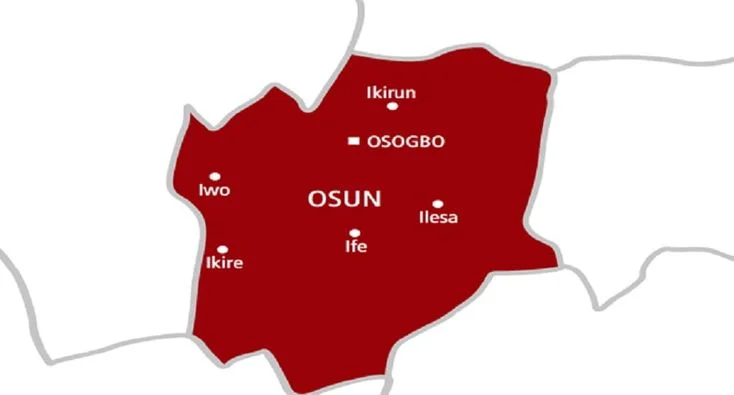
Opposition parties urge INEC to disregard caretaker committee, question legality of appointment as leadership crisis deepens ahead of future elections.
By Aderonke Unigbe
OSOGBO, Osun State — August 2, 2026
The leadership crisis rocking the Inter-Party Advisory Council (IPAC) in Osun State has escalated after 13 registered political parties rejected the appointment of a caretaker committee by the council’s national leadership, describing the action as unconstitutional, undemocratic and capable of undermining Nigeria’s multi-party democratic system.
The parties accused the national leadership of IPAC of acting without consultation, violating the council’s constitution and attempting to impose an illegal leadership structure on the state chapter.
The development introduces another layer of political uncertainty in Osun State as political parties begin positioning ahead of future electoral contests, while raising broader concerns over transparency, internal democracy and institutional credibility within one of Nigeria’s foremost inter-party platforms.
Growing Rift Over IPAC Leadership
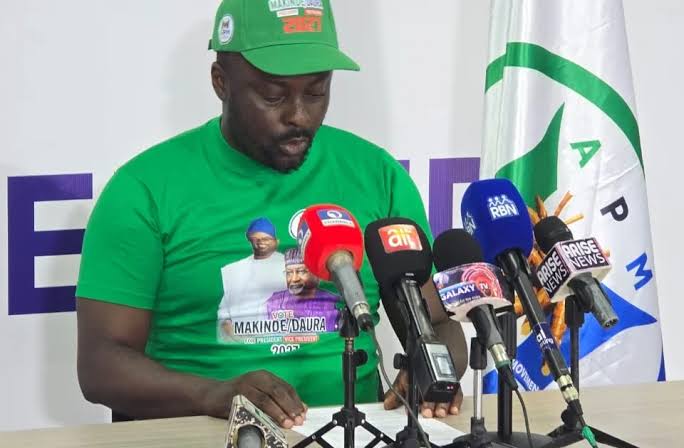
Speaking during a press briefing in Osogbo on Saturday, Chairman of the Democratic Leadership Alliance (DLA) in Osun State, Tosin Odeyemi, who addressed journalists on behalf of the aggrieved parties, dismissed the appointment of the caretaker committee as:
“A joke taken too far.”
According to him, the action taken by the national leadership lacked constitutional backing and ignored all stakeholders in the state chapter.
He insisted that IPAC, which was established to promote democratic values, peaceful political engagement and credible elections, should itself operate within democratic principles.
Instead, he alleged, the national body had chosen what he described as arbitrary decision-making capable of weakening confidence in the institution.
How The Crisis Began
The controversy dates back to March 14, 2026, when IPAC scheduled elections to fill vacant leadership positions in Osun State following the expiration of the tenure of the former chairman, Victor Akande, who also serves as the Osun State Chairman of the Accord Party.
According to Odeyemi, Akande sought another term despite concerns surrounding his continued leadership, while other party leaders, including himself—then serving as Osun Chairman of the New Nigeria Peoples Party (NNPP)—also declared interest in contesting the chairmanship.
However, the election failed to hold after members of the national election committee reportedly failed to appear.
The National Organising Secretary of IPAC, Chinyere O. Kalu, later informed stakeholders that the exercise had merely been postponed and that a fresh date would be announced.
The aggrieved parties argued that since then, no official communication had been received regarding the rescheduled election.
‘No Constitutional Basis For Caretaker Committee’
The parties maintained that rather than conduct the postponed election, the IPAC national leadership unexpectedly announced the appointment of a caretaker committee without consulting member political parties.
Odeyemi argued that the IPAC Constitution contains no provision empowering the national leadership to impose a caretaker committee on any state chapter.
According to him, the decision amounts to an abuse of process and violates the principles upon which IPAC was founded.
He further alleged that the national body had abandoned its responsibility of encouraging tolerance, inclusiveness and democratic participation among political parties.
13 Political Parties Unite Against Appointment
The political parties rejecting the caretaker committee include:
- Labour Party (LP)
- African Democratic Congress (ADC)
- Nigeria Democratic Congress (NDC)
- Zenith Labour Party (ZLP)
- Action Democratic Party (ADP)
- National Democratic Party (NDP)
- Social Democratic Party (SDP)
- All Progressives Congress (APC)
- Allied Peoples Movement (APM)
- Democratic Leadership Alliance (DLA)
- New Nigeria Peoples Party (NNPP)
- Action Alliance (AA)
- African Action Congress (AAC)
The parties collectively insisted that any leadership arrangement imposed outside democratic elections would not enjoy their recognition.
Call On INEC To Reject Caretaker Committee
The coalition called on the Independent National Electoral Commission (INEC) to disregard every action or communication originating from the caretaker committee.
According to them, only leaders produced through constitutionally recognised elections should be acknowledged by the electoral commission.
They argued that recognising what they consider an unconstitutional committee could undermine confidence in inter-party collaboration and electoral governance.
Background To The Failed Election
The controversy follows an earlier failed election exercise held at the Osun State office of INEC in Osogbo.
Although representatives of all registered political parties reportedly arrived at the venue and signed attendance registers, officials from the national election committee failed to appear.
The prolonged absence eventually forced the election to collapse without any explanation beyond assurances that another date would be announced.
Months later, rather than fixing another election, the national leadership announced the caretaker committee now being rejected.
Implications For Democracy
Political analysts believe the dispute highlights wider governance challenges affecting political institutions beyond Nigeria’s mainstream political parties.
Observers note that organisations established to strengthen democracy are themselves expected to demonstrate transparency, accountability and strict adherence to their own constitutions.
Should the dispute remain unresolved, it may weaken cooperation among political parties in Osun State and complicate preparations for future electoral engagements.
The disagreement could also trigger legal challenges if stakeholders seek judicial interpretation of the IPAC Constitution.
Awaiting IPAC National Response
As of the time of filing this report, the national leadership of the Inter-Party Advisory Council (IPAC) had not publicly responded to the allegations raised by the 13 political parties.
Similarly, the Independent National Electoral Commission (INEC) had yet to issue any official statement regarding the legality or recognition of the caretaker committee.
The rejection of the Osun IPAC caretaker committee by 13 registered political parties underscores growing concerns about governance, transparency and constitutional compliance within institutions established to safeguard Nigeria’s democratic process.
With accusations of unilateral decision-making, constitutional violations and exclusion of stakeholders now on record, attention is shifting to IPAC’s national leadership and INEC to clarify the legal basis of the caretaker arrangement.
The eventual resolution of the dispute may not only determine the future leadership of IPAC in Osun State but could also influence confidence in the mechanisms designed to foster inter-party cooperation and democratic accountability.




Leave a Reply