

Opinion Sparks Debate Over Insecurity, Governance, Poverty and the North’s Political Future
By A1NEWS International / June 17, 2026
ABUJA, Nigeria – A provocative and wide-ranging commentary by public affairs analyst Mohammed Bello Doka has ignited fresh debate over the future of Northern Nigeria, accusing the region’s political elite, middle class, academics, and cultural influencers of enabling a cycle of insecurity, poverty, and political manipulation ahead of the 2027 general elections.
In an emotionally charged essay titled “Arewa’s Clueless Political Elite, Docile Middle Class, and Complicit Scholars,” Doka argues that Northern Nigeria is facing an existential crisis fueled not only by armed violence and economic decline but also by what he describes as the collective failure of leadership and civic responsibility across multiple segments of society.
The article, which has generated widespread reactions across social and political circles, examines insecurity, governance failures, political endorsements, youth disengagement, and the growing contest for influence ahead of the next presidential election.
Growing Insecurity Remains Central Concern
At the heart of Doka’s argument is the worsening security situation across Northern Nigeria.
He points to years of banditry, terrorism, kidnapping, and communal violence that have devastated communities across the region.
According to the author, the human and economic costs of insecurity continue to rise despite repeated government assurances and increased security spending.
The commentary references reports by security monitoring organizations and international development agencies indicating that thousands of lives have been lost in attacks linked to insurgency, banditry, and violent criminal networks operating across parts of the North.
Doka argues that beyond the death toll, insecurity has disrupted agriculture, commerce, education, and healthcare, creating a cycle of poverty and displacement that threatens long-term regional stability.
Education and Economic Consequences
The article highlights the growing number of out-of-school children, declining agricultural productivity, and the financial burden imposed on families and businesses by recurring kidnappings and ransom demands.
According to the writer, the cumulative effect of these challenges has been the erosion of public confidence in governance and security institutions.
He contends that many communities now feel abandoned by political leaders who appear more focused on future electoral contests than on addressing immediate concerns affecting citizens.
Political Endorsements and the Road to 2027
A significant portion of the commentary focuses on statements made by prominent Northern political leaders regarding President Bola Ahmed Tinubu’s prospects for re-election in 2027.
Doka criticizes what he describes as a growing preoccupation among political office holders with electoral calculations despite ongoing security challenges.
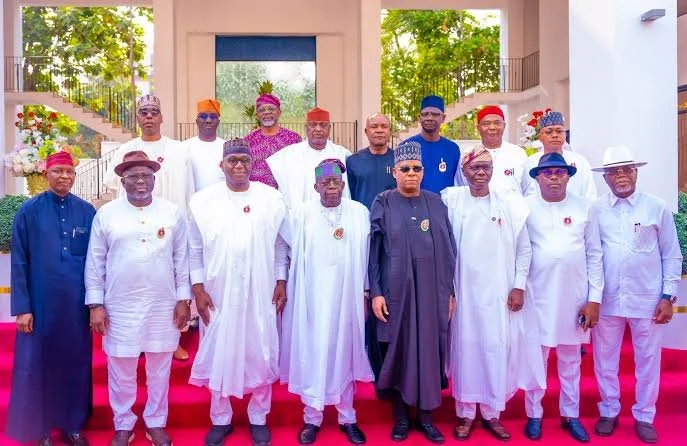
The article references public endorsements and expressions of support for Tinubu’s second-term ambition from several governors, ministers, legislators, political stakeholders, and traditional institutions across Northern Nigeria.
According to the writer, many of these endorsements emphasize infrastructure projects, political loyalty, and electoral strategy while failing to adequately address concerns about insecurity, poverty, unemployment, and social welfare.
Defence Minister’s Remarks Draw Attention
Particular attention is given to comments attributed to Minister of State for Defence Bello Matawalle regarding efforts to combat insecurity.
Doka argues that citizens expect stronger institutional responses to security threats and that reliance on prayers alone cannot substitute for effective security policies and operational action.
The writer contends that public frustration continues to grow in communities most affected by attacks, kidnappings, and displacement.
Middle Class Accused of Political Complicity
Beyond elected officials, the article also directs criticism toward Northern Nigeria’s middle class.
According to Doka, professionals, consultants, political aides, contractors, and civil servants have increasingly become dependent on political patronage networks, reducing their willingness to challenge government failures.
He argues that economic hardship and unemployment have created conditions where many educated citizens prioritize personal survival over civic activism and accountability.
The result, he claims, is a weakened civic culture in which public criticism of government policies becomes increasingly rare despite worsening living conditions.
Scholars and Intellectuals Under Scrutiny
The commentary reserves some of its strongest criticism for academics and policy experts.
Doka alleges that many scholars who possess the knowledge and research necessary to address security and governance challenges have become reluctant to speak openly due to political affiliations, government appointments, consultancy arrangements, and funding considerations.
He argues that the intellectual class has failed to provide independent leadership capable of influencing public policy and national discourse.
According to the author, the gap between academic research and practical governance continues to widen even as evidence-based solutions remain available.
Youth, Social Media and Political Mobilisation
The essay also examines the role of young people in contemporary Northern politics.
Doka argues that social media has increasingly become a tool for political influence and propaganda rather than civic engagement.
While acknowledging the economic realities facing many young Nigerians, he expresses concern that digital platforms are being used to amplify partisan narratives rather than mobilize meaningful action around education, employment, and security.
He contends that youth participation in governance debates must evolve beyond online advocacy and partisan campaigning.
Cultural Voices and the Loss of Protest Music
The article further laments what the author sees as the decline of protest culture among Northern musicians and entertainers.
According to Doka, artists who once played significant roles in social advocacy and political accountability have increasingly aligned themselves with political actors.
He suggests that economic pressures and limited opportunities have contributed to this shift, reducing the capacity of cultural figures to function as independent voices of public conscience.
A Warning Ahead of 2027
As political parties prepare for the 2027 elections, Doka frames the contest as more than a struggle for political power.
Instead, he describes it as a referendum on the future direction of Northern Nigeria.
He warns that continued neglect of insecurity, poverty, education, and governance challenges could deepen public dissatisfaction and further weaken public trust in democratic institutions.
The author calls for greater civic engagement, accountability, and public participation, urging citizens to demand measurable outcomes from political leaders rather than relying solely on campaign promises and political endorsements.
Mohammed Bello Doka’s commentary reflects growing anxieties within parts of Northern Nigeria regarding security, governance, and the region’s political future. While his views are strongly opinionated and likely to generate disagreement among political actors and stakeholders, they highlight questions that continue to dominate public discourse: whether political leadership is adequately addressing the North’s challenges and whether the region’s citizens are receiving the governance outcomes they expect.
As preparations for the 2027 elections intensify, debates surrounding insecurity, economic hardship, education, youth empowerment, and political accountability are expected to remain central to discussions across Northern Nigeria and the country at large.


Leave a Reply