
First Lady Urges Trust-Building and Voter Engagement Ahead of Future Elections; Critics Ask Why She Has Not Publicly Addressed the Plight of Kidnapped Pupils and Teachers
By Amanda Balogun / June 2, 2026
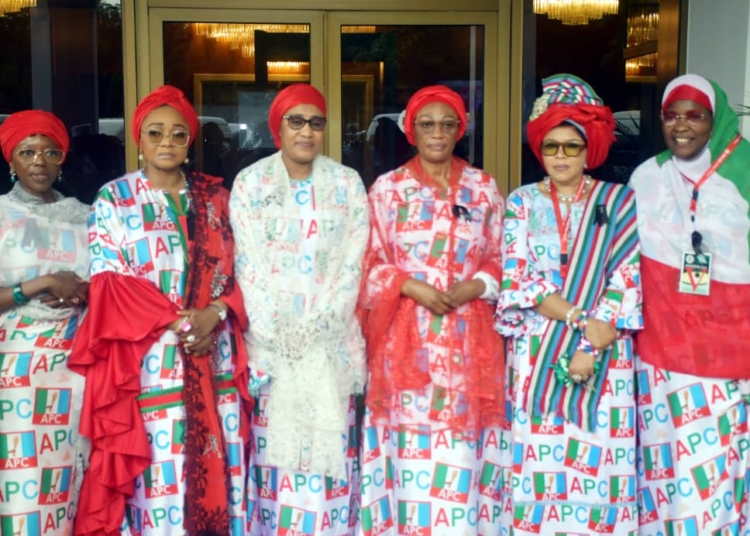
ABUJA, Nigeria — As political activities ahead of the 2027 general elections gradually gather momentum, First Lady Senator Oluremi Tinubu has called on women leaders of the All Progressives Congress (APC) to intensify grassroots mobilisation, strengthen voter engagement, and build lasting trust among party supporters across the country.
However, the political mobilisation campaign has also triggered public debate, with some Nigerians questioning the timing of the initiative amid growing concerns over insecurity, particularly the reported abduction of schoolchildren and teachers in parts of the country.
The First Lady made the call during a strategic meeting with APC women leaders drawn from the 36 states and the Federal Capital Territory, where she emphasized that electoral success is determined by grassroots support rather than gender considerations.
Her remarks come at a period when political parties are beginning to reposition for the next electoral cycle despite mounting economic and security concerns confronting many Nigerians.
“Politics Is About Numbers, Not Gender”
Addressing party women leaders, Senator Tinubu stressed that political victories are rooted in effective grassroots engagement and sustained relationships with voters.
According to her, politicians who fail to maintain contact with their constituents often lose relevance and public confidence.
“Politics is not about gender; it is about number. If you don’t connect with the grassroots, you can’t win their trust,” she stated.
Drawing from her experience as a former senator, the First Lady said she prioritised direct engagement with citizens throughout her tenure in the National Assembly.
She revealed that she held quarterly town hall meetings during her eight years in the Senate, a strategy she credited with helping her remain connected to the people she represented.
“I connect with the grassroots. I am still the only woman on record who has ever done town hall meetings every quarter. I did that consecutively for eight years,” she said.
APC Women Positioned as Key Electoral Mobilisers
Political analysts view the First Lady’s engagement with APC women leaders as part of broader efforts by the ruling party to consolidate its grassroots structures ahead of future political contests.
During the meeting, Senator Tinubu urged women leaders to deepen voter education, community outreach, and grassroots sensitisation efforts.
She described political mobilisation as a deliberate process that requires continuous interaction with communities rather than periodic engagement during election seasons.
“You have to build trust and connection. Once it’s not there, you can’t win,” she told the gathering.
Observers note that women remain one of the most influential voting blocs in Nigeria and often serve as critical mobilisers at ward and community levels.
The Importance of Accessibility in Public Office
The First Lady also challenged elected officials to remain accessible to their constituents after assuming office.
According to her, many politicians make the mistake of distancing themselves from the people who contributed to their electoral success.
“You have to connect with them. If I find it difficult to reach out to you as an office holder, how do you want your constituents to reach out to you?” she asked.
The comments appear aimed at encouraging a more people-centred approach to governance and political representation.
Family Values and Leadership
Beyond politics, Senator Tinubu urged women to maintain a balance between public service and family responsibilities.
She argued that strong family structures remain essential for national development and social stability.
“You can do both. I’ve played politics for 12 good years and I still have a husband. Take care of your children, train them well,” she advised.
She further linked many societal challenges to weakening family values.
“All this restlessness we are seeing around stems from the home. We have to make sure that our home is solid,” she added.
APC Women Leaders Praise Renewed Hope Initiative
Earlier, APC National Women Leader Mary Alile Idele commended the First Lady’s Renewed Hope Initiative, describing it as a platform that has expanded opportunities for women and vulnerable groups across the country.
Idele noted that APC women leaders across states, local government areas, and wards continue to play a central role in the party’s electoral successes.
She said the emergence of new state and zonal women leaders demonstrates increasing confidence in female leadership within the party.
According to her, the APC women’s wing remains one of the strongest grassroots mobilisation structures in Nigeria’s political landscape.
Eight Buses Donated to Women Leaders
As part of efforts to strengthen the operational capacity of party women leaders, Senator Tinubu presented eight buses to representatives from various geopolitical zones.
Party officials described the gesture as support for grassroots mobilisation and community engagement activities.
The donation was welcomed by participants who said transportation remains a critical tool for political outreach across diverse communities.
Public Concerns Over Oyo Schoolchildren Abduction
While the First Lady’s remarks focused on political organisation and grassroots engagement, conversations surrounding insecurity have continued to dominate public discourse.
Some citizens have expressed concern over the reported abduction of schoolchildren and teachers in Oyo State and have called for stronger public advocacy from national leaders and stakeholders.
In interviews conducted by A1NEWS International, several residents voiced concerns about the continued plight of abducted victims and the need for sustained national attention on issues affecting children’s safety.
One market woman , Monica Ewule who spoke to A1NEWS International questioned whether more public engagement and advocacy could help amplify calls for the safe return of abducted pupils and teachers.
Security analysts note that public expectations often extend beyond formal governmental responsibilities, particularly for national figures perceived as advocates for women, children, and vulnerable groups.
However, there is currently no official indication that the First Lady has ignored or abandoned efforts related to child welfare or security concerns. Any assessment of her position would require reference to her publicly stated actions, interventions, or official communications.
Politics and Governance: Balancing Electoral Preparation with National Challenges
The debate highlights a broader national conversation about the balance between political preparation and addressing immediate governance challenges.
While political parties are naturally expected to organise and prepare for future elections, many Nigerians continue to demand greater attention to pressing issues such as insecurity, economic hardship, education, and social welfare.
Analysts argue that public trust in political institutions may increasingly depend on how leaders demonstrate responsiveness to these concerns while pursuing political objectives.
Senator Oluremi Tinubu’s call for intensified grassroots mobilisation underscores the APC’s early efforts to strengthen its political machinery ahead of the 2027 elections. Her emphasis on trust-building, voter engagement, and accessibility reflects principles that have long been associated with successful political organisation.
However, the discussion generated by her remarks also reveals the broader concerns occupying the minds of many Nigerians, particularly issues of security and child safety. As political activities accelerate nationwide, public expectations are likely to remain focused not only on electoral strategies but also on the capacity of leaders and institutions to respond effectively to the challenges facing ordinary citizens.












Leave a Reply