
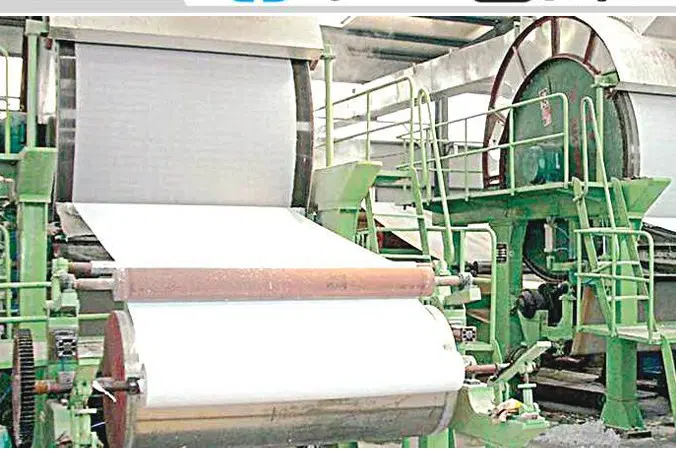
Domestic production dwindles as foreign dependence deepens amid policy and investment gaps
By Latifa Andrew | Abuja, Nigeria
Nigeria is losing an estimated ₦674 billion annually to foreign paper producers following the collapse of its domestic paper industry. New data indicates a widening gap between demand and local production capacity, forcing heavy reliance on imports.
The development highlights structural weaknesses in the manufacturing sector and growing pressure on foreign exchange.
Data from the National Bureau of Statistics shows that Nigeria’s paper import bill has risen sharply from ₦328.9 billion in 2021 to ₦1.11 trillion in 2025. Over a five-year period, total imports exceeded ₦3.37 trillion.
In contrast, exports remain marginal, increasing from ₦2.17 billion in 2021 to ₦19.6 billion in 2025—far below import volumes.
Industry analysts estimate that local manufacturers currently meet less than 10 per cent of national demand, which is put at over three million metric tonnes annually. This imbalance has positioned Nigeria as one of Africa’s largest consumers of paper but one of its weakest producers.
From Industrial Capacity to Systemic Decline
Nigeria once operated three major paper mills: the Nigerian Paper Mill, the Iwopin Pulp and Paper Company, and the Nigeria Newsprint Manufacturing Company.
At their peak in the 1980s, these facilities produced significant volumes of paper, reducing import dependence and supporting exports. However, by the early 2000s, all three had shut down due to mismanagement, obsolete equipment, inadequate investment, and inconsistent government policies.
Post-privatisation efforts failed to revive the plants, with industry sources alleging asset stripping by investors rather than reinvestment.
Import Dependence and Economic Pressure
Nigeria now imports over 90 per cent of its paper needs from countries including China, India, Indonesia, and the United States.
Printing and writing paper—critical for education and publishing—is almost entirely imported. Local production is largely limited to recycled packaging materials, constrained by high energy costs, poor infrastructure, and reliance on imported inputs.
The collapse of the sector has had wide economic implications. Experts estimate that over 300,000 potential jobs across the value chain have been lost. Additionally, the surge in imports is placing sustained pressure on foreign exchange reserves.
The Newspaper Proprietors’ Association of Nigeria has warned that the cost of imported newsprint has made newspaper production increasingly unsustainable, with prices rising from about ₦600,000 to over ₦2 million per tonne.
Revival Prospects Amid Structural Challenges
Stakeholders argue that Nigeria still possesses significant raw materials for pulp production, including bamboo, kenaf, rice straw, and sugarcane bagasse.
The Manufacturers Association of Nigeria noted that the sector now contributes less than 0.2 per cent to GDP, reflecting its marginal status.
Experts from the Lagos Chamber of Commerce and Industry and the Centre for the Promotion of Private Enterprise identified key constraints, including forex shortages, high energy costs, policy inconsistency, and technological gaps.
While recycling initiatives are growing, analysts maintain that large-scale investment in virgin pulp production is required to close the supply gap.
The collapse of Nigeria’s paper industry underscores broader structural weaknesses in manufacturing, with significant implications for jobs, inflation, and foreign exchange stability. Reviving the sector could reduce import dependence and stimulate industrial growth.














Leave a Reply