
Cultural identity, political alignment, and historical memory collide as supporters of Anioma State accuse opponents of “de-Igbonisation” amid renewed agitation led by Senator Ned Nwoko.
By Baron Eloagu / May 25, 2026
ABUJA, NIGERIA —The renewed agitation for the creation of Anioma State and its proposed alignment with Nigeria’s South-East geopolitical zone has once again ignited fierce debates over identity, ancestry, and political belonging among Delta North communities.
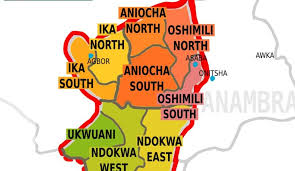
Anioma State is a proposed state in Nigeria championed by advocates in the Delta North Senatorial District to be carved out of the present-day Delta State. The demand, rooted in a decades-old agitation, seeks to give the Igbo-speaking population of Delta North greater administrative representation and equity.
Key Details & Demographics
- Location & Capital: The proposed state comprises nine local government areas: Aniocha North, Aniocha South, Ika North-East, Ika South, Ndokwa East, Ndokwa West, Oshimili North, Oshimili South, and Ukwuani. Advocates propose Asaba as its capital.
- People & Languages: The name “Anioma” is an acronym for the four main dialect groups: Aniocha, Ndokwa, Ika, and Oshimili. The people share deep ancestral, cultural, and linguistic ties to the Igbo nation.
- Geography & Economy: Spanning over 6,300 square kilometers, the region is well-endowed with arable land, agricultural output, and natural gas resources.
The Push for Statehood
- Legislative Progress: The push to create Anioma State has advanced significantly in the National Assembly, successfully passing the first and second readings in the Senate. A third reading, concurrence from the House of Representatives, and a national referendum are required to finalize its creation.
- Geopolitical Balance: Proponents argue that Anioma State will bring much-needed equity to the Southeast geopolitical zone, making it the sixth state in the region to match the number of states found in other geopolitical zones.
- Differing Perspectives: While the creation enjoys widespread grassroots and royal support, it has sparked debate. Some leaders and groups prefer for Anioma to remain firmly culturally and administratively aligned with the South-South region rather than migrating to the Southeast.
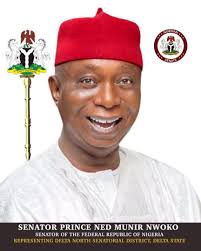
At the centre of the controversy is Ned Nwoko, whose sustained push for Anioma State has drawn both passionate support and stiff resistance from sections of the Anioma people who reject being politically or culturally classified as Igbo.
The debate, which has increasingly played out across social media, political forums, and community gatherings, reflects deeper tensions surrounding ethnicity, historical memory, regional marginalisation, and the future political structure of Nigeria.
Identity Crisis or Political Reawakening?
Supporters of Anioma State argue that many communities in Delta North — including Ika, Ndokwa, Aniocha, and Oshimili areas — share undeniable linguistic and ancestral ties with the broader Igbo ethnic nationality despite decades of political separation from the South-East.
In a strongly worded intervention circulating online, proponents of the movement described what they called an “identity crisis” among some Anioma indigenes who allegedly deny their Igbo roots while identifying with Benin, Igala, or other neighbouring ethnic groups.
According to the argument, names, language patterns, cultural practices, and ancestral histories across many Anioma communities remain fundamentally Igbo in origin despite political affiliations with Delta State and the South-South region.
The commentary accused some residents of engaging in what was termed “self-denudation” and “de-Igbonisation,” insisting that denial of ancestry cannot erase historical and genealogical realities.
Resistance Rooted in Security and Political Concerns
Opponents of inclusion in the South-East geopolitical zone, however, have consistently cited insecurity, separatist tensions, economic uncertainty, and the controversial sit-at-home protests in parts of the South-East as reasons for their reluctance.
Critics fear that aligning Anioma politically with the South-East could expose the region to heightened instability and affect economic activities already challenged by Nigeria’s fragile security environment.
But supporters of the proposal dismiss such concerns as exaggerated and politically motivated.
They argue that insecurity remains a nationwide problem affecting virtually all geopolitical zones, including the North-West, North-Central, and parts of the South-South.
Advocates further contend that the sit-at-home phenomenon itself emerged from longstanding grievances over perceived political marginalisation of the South-East since the Nigerian Civil War.
Historical Wounds Resurface
The Anioma debate has also reopened painful memories tied to the Nigerian Civil War and the 1967 Asaba Massacre, during which thousands of civilians were reportedly killed.
Proponents of South-East integration argue that Anioma communities suffered deeply during the conflict due to their perceived ethnic and cultural association with the Igbo people.
They maintain that historical events, including wartime atrocities and post-war political arrangements, contributed to what they describe as the geopolitical isolation of Anioma communities from their ethnic kin.
Some supporters of Senator Nwoko’s campaign insist that the creation of Anioma State would serve as a corrective measure to what they regard as an “accident of history.”
Senator Ned Nwoko’s Campaign Gains Visibility
In recent months, Ned Nwoko has intensified advocacy for the creation of Anioma State, positioning the proposal as a constitutional and developmental issue rather than an ethnic confrontation.
Backers of the senator argue that the agitation is aimed at improving representation, resource allocation, and administrative efficiency for Delta North communities.
However, critics within the region accuse proponents of attempting to force a singular ethnic narrative on a culturally diverse population with multiple historical influences.
Political analysts say the controversy highlights the continuing complexity of identity politics in Nigeria, where ethnicity, geography, and political interests often intersect.
Experts Warn Against Ethnic Polarisation
Observers caution that inflammatory rhetoric surrounding ancestry and ethnic authenticity could deepen divisions within Delta North and across the South-East/South-South corridor.
Analysts note that while cultural heritage remains important, political integration and state creation debates should be approached through constitutional dialogue, inclusive consultation, and developmental considerations rather than emotional identity contests.
Some scholars also warn that rigid ethnic classifications fail to capture the fluid historical interactions among communities in present-day Delta State, where migration, trade, intermarriage, and colonial boundary arrangements shaped modern identities.
As agitation for Anioma State gathers momentum, the debate has evolved beyond administrative restructuring into a broader contest over identity, history, and belonging.
For supporters, the movement represents a long-overdue recognition of cultural ancestry and political rights. For opponents, it raises fears about regional instability and the erosion of distinct local identities.
What remains clear is that the controversy surrounding Anioma’s future geopolitical alignment is unlikely to fade soon, particularly as constitutional conversations ahead of future political reforms continue to gain national attention.






Leave a Reply