
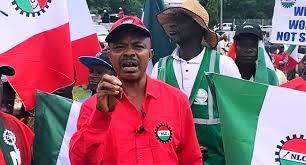
Labour union accuses political leaders of deepening poverty through neoliberal policies as hardship, inflation, and insecurity fuel growing public anger ahead of 2027 elections.
By Umar Baba / May 28, 2026
ABUJA, NIGERIA — The Nigeria Labour Congress has launched a blistering attack on Nigeria’s worsening economic and security conditions, declaring that workers and the poor majority are “bleeding” under the weight of government policies and deepening hardship across the country.
In a strongly worded Eid-el-Kabir message signed by Joe Ajaero, the labour union accused political leaders of pursuing economic reforms that favour profits over citizens’ welfare while insecurity, inflation, and unemployment continue to devastate ordinary Nigerians.
The statement signals mounting tensions between organised labour and the Federal Government as economic pressures intensify nationwide.
NLC Condemns Economic Hardship
According to the Nigeria Labour Congress, millions of Nigerians are facing unprecedented economic difficulties linked to ongoing reforms, including fuel subsidy removal and foreign exchange liberalisation introduced by the administration of Bola Ahmed Tinubu.
The union argued that the reforms have triggered soaring inflation, rising transportation costs, escalating food prices, and a severe decline in household purchasing power.
Describing the current situation as unsustainable, the labour body said the working class and vulnerable citizens were paying the price for policies that continue to widen inequality.
“As we mark Eid-el-Kabir, a festival of sacrifice and obedience, the working class and the poor majority are bleeding under the weight of neoliberal policies,” the statement declared.
The remarks come amid growing nationwide frustration over the cost-of-living crisis affecting millions of households.
Security Crisis ‘An Indictment of Governance’
Beyond economic concerns, the labour union also raised alarm over worsening insecurity across Nigeria.
The NLC cited persistent kidnappings, bandit attacks, communal violence, armed herdsmen clashes, and urban criminality as evidence of governance failures and weakening state capacity.
According to the union, insecurity has compounded the suffering of citizens already struggling with economic hardship.
“The worsening insecurity that now threatens the existence of our nation is a direct indictment of our governance model,” the statement said.
Security analysts say insecurity in rural communities continues to disrupt farming activities, worsen food shortages, increase displacement, and further inflate commodity prices nationwide.
Labour Rejects ‘Profits Over People’ Governance
The labour movement accused political leaders of demanding sacrifices from ordinary Nigerians while allegedly failing to demonstrate fiscal discipline and restraint in governance.
Joe Ajaero argued that governance should prioritise citizens’ welfare through investments in healthcare, education, jobs, food security, and social protection rather than policies perceived as favouring elite interests.
The union stressed that leadership must become more people-oriented if the country hopes to avoid deeper social and political instability.
Observers note that the statement reflects growing ideological opposition from organised labour against market-driven economic reforms currently being implemented by the government.
Tinubu’s Economic Reforms Under Pressure
The criticism from the Nigeria Labour Congress adds to increasing pressure facing the administration of Bola Ahmed Tinubu over the social consequences of its economic policies.
Since assuming office, the administration has defended subsidy removal and exchange rate reforms as necessary measures to stabilise Nigeria’s economy, reduce fiscal leakages, and attract foreign investment.
International financial institutions, including the IMF and World Bank, have largely supported the reforms, arguing they are critical for long-term economic sustainability.
However, critics insist that the reforms were implemented without adequate social safety measures to cushion vulnerable populations.
Inflation, particularly food inflation, remains one of the most pressing concerns facing Nigerian households.
NLC Signals Political Mobilisation Ahead of 2027
In what analysts view as an early political signal ahead of the 2027 general elections, the labour union indicated that workers and ordinary citizens may increasingly organise politically against policies perceived as anti-people.
The NLC warned that Nigerian workers would not forget broken promises, alleged suppression of peaceful protests, and worsening economic conditions.
“We are entering a phase where every vote must be a weapon against hunger, insecurity, and exploitation,” the union declared.
Political observers believe organised labour may attempt to play a more influential role in coalition-building and voter mobilisation as the next election cycle approaches.
Eid Message Becomes Platform for Resistance
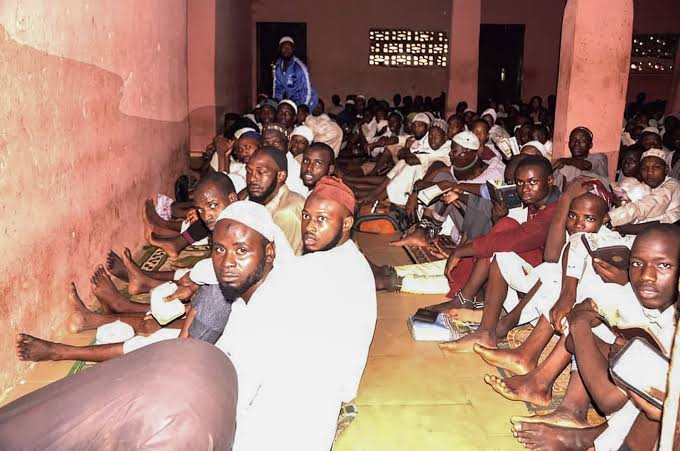
Traditionally, Eid-el-Kabir messages focus on themes of sacrifice, unity, compassion, and spirituality.
However, the NLC used the occasion not only for religious reflection but also as a platform for political and economic resistance.
The union urged Nigerians to combine prayers with grassroots organising, civic engagement, and collective action aimed at defending democratic accountability and economic justice.
The tone of the message underscores the increasingly confrontational posture of organised labour amid worsening socio-economic pressures.
The Eid-el-Kabir statement issued by the Nigeria Labour Congress highlights deepening anxiety over Nigeria’s economic direction, rising insecurity, and growing public hardship.
As inflation surges and insecurity persists, the widening gap between government economic objectives and the realities faced by ordinary Nigerians is becoming increasingly politically sensitive.
With organised labour now openly framing the crisis as both economic and political, the coming months may witness intensified pressure on authorities from workers, civil society groups, and vulnerable communities demanding urgent relief and structural reforms.










Leave a Reply