
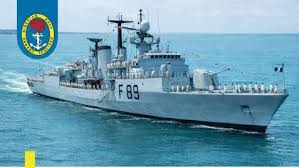
President Commissions New Warships, Declares Navy Africa’s Most Formidable Maritime Force Amid Push for Blue Economy Growth
By Anita Babalola / June 2, 2026
LAGOS, Nigeria — President Bola Ahmed Tinubu has praised the Nigerian Navy for what he described as its remarkable success in eliminating piracy within Nigeria’s territorial waters and significantly reducing crude oil theft, declaring that the maritime force has become a critical pillar of national security and economic stability.
The President made the remarks on Monday during the opening ceremony of the Nigerian Navy International Fleet Review (IFR) held at the Eko Atlantic Waterfront in Victoria Island, Lagos, a landmark event organized to commemorate the Navy’s 70th anniversary.
The celebration brought together military chiefs, foreign naval delegations, diplomatic representatives, maritime stakeholders, government officials, and senior security personnel to reflect on seven decades of naval operations and Nigeria’s growing influence in maritime security across Africa.
Tinubu’s commendation comes at a time when the Federal Government is intensifying efforts to secure critical national assets, protect offshore oil infrastructure, and position the maritime sector as a major driver of economic growth under the country’s emerging blue economy strategy.
Tinubu Credits Navy for Maritime Security Breakthroughs
Addressing officers and men of the Nigerian Navy, the President highlighted the force’s achievements in combating piracy, illegal bunkering, crude oil theft, and other transnational maritime crimes that have historically threatened Nigeria’s economy and international reputation.
For years, the Gulf of Guinea was considered one of the world’s most dangerous maritime zones due to recurring pirate attacks, kidnappings, and attacks on commercial vessels.
However, Tinubu said the Nigerian Navy’s enhanced operational capacity, technological investments, intelligence gathering, and coordinated maritime surveillance have transformed the security landscape.
“Through effective integration of surveillance, rapid response mechanisms, and operations, you have successfully eradicated piracy in our waters and significantly curtailed crude oil theft and associated maritime crime,” the President stated.
According to him, these achievements have not only strengthened maritime security but also improved the safety of coastal communities while supporting economic activities linked to Nigeria’s maritime and energy sectors.
Crude Oil Theft Remains a National Security Concern
The President’s remarks come against the backdrop of longstanding concerns over crude oil theft, a challenge that has cost Nigeria billions of dollars in lost revenue over the years.
Security experts have consistently identified oil theft syndicates, illegal refining operations, and pipeline vandalism as major threats to national economic development.
Industry analysts note that recent improvements in crude oil production figures have been partly attributed to enhanced security measures implemented by the Nigerian Navy and other security agencies.
Tinubu maintained that reducing maritime crimes remains essential to achieving sustainable economic growth and unlocking the full potential of Nigeria’s maritime resources.
“I am confident that the Nigerian Navy will continue to secure the maritime environment as a thriving engine of our blue economy,” he said.
New Warships Commissioned to Boost Naval Capacity
One of the highlights of the anniversary celebration was the commissioning of three new naval vessels aimed at strengthening the Navy’s operational reach and response capabilities.
The newly commissioned ships include:
- NNS Mambila
- NNS Gurara
- NNS Oloibiri
The vessels are expected to support surveillance operations, anti-piracy patrols, maritime interdiction missions, and protection of critical offshore infrastructure.
Military analysts view the acquisition of additional platforms as part of broader efforts to modernize Nigeria’s naval architecture and enhance maritime domain awareness.
The event also featured a ceremonial trooping of colours and the presentation of new naval colours symbolizing the service’s enduring traditions and operational excellence.
Navy’s Expanding Role Beyond the Sea
While acknowledging the Navy’s maritime achievements, President Tinubu also commended its increasing involvement in internal security operations.
The President specifically praised the Nigerian Navy’s Special Boat Service (SBS), an elite maritime special operations unit known for conducting high-risk missions against criminal and insurgent networks.
“Beyond the maritime domain, I also commend the Nigerian Navy for its contribution to counter-terrorism and insurgency,” Tinubu said.
“The courage and professionalism demonstrated by the Special Boat Services in executing complex missions are truly commendable.”
Security observers note that the Navy has increasingly participated in joint military operations across various regions of the country, supporting efforts to combat terrorism, insurgency, kidnapping, and organized criminal activities.
70 Years of Growth and Transformation
Founded on June 1, 1956, the Nigerian Navy has undergone significant transformation from a modest coastal force into one of Africa’s leading maritime security institutions.
Over the decades, the service has expanded its fleet, developed specialized warfare capabilities, strengthened regional cooperation, and enhanced maritime law enforcement operations.
According to defence analysts, Nigeria’s strategic position along the Gulf of Guinea has made naval modernization a critical component of national security planning.
Tinubu said the Navy’s evolution mirrors Nigeria’s own development as a sovereign nation.
“The Nigerian Navy has evolved in tandem with our nation’s sovereignty, growing from a fledgling service into a modern, sophisticated naval power and an anchor of stability for Nigeria’s economic prosperity,” he stated.
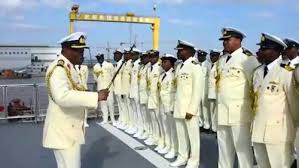
“Africa’s Most Formidable Naval Force”
In one of the strongest endorsements of the military institution in recent years, President Tinubu described the Nigerian Navy as the continent’s most formidable maritime force.
The declaration reflects growing recognition of the Navy’s role in regional maritime security initiatives and multinational efforts to combat piracy in the Gulf of Guinea.
“The Nigerian Navy has reached a pinnacle of continental leadership,” the President said.
“Congratulations to the Nigerian Navy for emerging as the most formidable naval force in Africa.”
The statement is likely to reinforce Nigeria’s aspirations for greater leadership within Africa’s maritime security architecture and international naval partnerships.
Call for Sustained Professionalism
Despite celebrating the Navy’s accomplishments, Tinubu urged naval officers and commanders not to become complacent.
He challenged the leadership of the force to continue improving operational effectiveness, professionalism, and technological readiness to address emerging security threats.
“I charge the officers of the Nigerian Navy to sustain this high standard of professionalism and continually deepen your operational capability and effectiveness to safeguard our waters,” he said.
Security experts have warned that evolving threats such as cyber-enabled maritime crime, illegal fishing, trafficking networks, and sophisticated oil theft operations require continuous innovation and capacity building.
As the Nigerian Navy marks its 70th anniversary, President Bola Tinubu’s commendation highlights the strategic importance of maritime security in Nigeria’s economic and national security agenda. With piracy reportedly brought under control, crude oil theft significantly reduced, and new warships commissioned to strengthen operational capacity, the Navy is increasingly being positioned as a cornerstone of Nigeria’s quest for economic prosperity and regional security leadership.
However, experts caution that sustaining these gains will require continued investment, technological modernization, intelligence-driven operations, and stronger inter-agency collaboration. As Nigeria seeks to unlock the vast opportunities within its blue economy, the effectiveness of the Nigerian Navy will remain central to safeguarding national interests both at sea and beyond.










Leave a Reply