
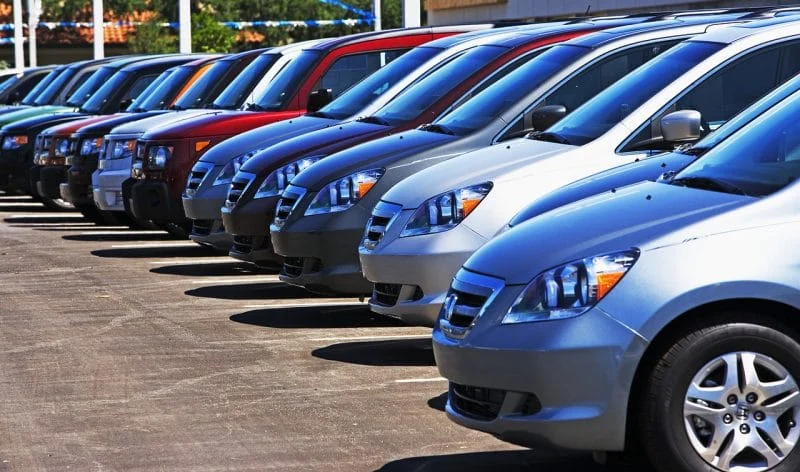
US Dominates ‘Tokunbo’ Market as Vehicle Imports Surge 92% Amid New Federal Crackdown on Substandard Cars
By Adaku Nnabike
ABUJA, Nigeria — June 14, 2026
Nigeria’s appetite for imported used vehicles, popularly known as “Tokunbo” cars, showed no signs of slowing in the first quarter of 2026 as import volumes surged dramatically despite the Federal Government’s introduction of stricter vehicle certification and compliance requirements.
Latest foreign trade data released by the National Bureau of Statistics (NBS) reveal that Nigeria imported used vehicles worth N249.84 billion between January and March 2026, representing a staggering 91.92 per cent increase compared to the N113.36 billion recorded during the same period in 2025.
The sharp increase comes at a time when federal authorities are intensifying efforts to curb the influx of substandard, accident-damaged and condemned vehicles through a newly introduced mandatory vehicle conformity assessment programme.
The figures highlight a growing paradox in Nigeria’s automotive market: while regulators are tightening import controls, consumer demand for imported vehicles continues to rise amid economic pressures and limited local automobile production.
United States Retains Dominance in Nigeria’s Used Vehicle Market
Analysis of the NBS trade data indicates that the United States remains the undisputed leader in Nigeria’s used vehicle supply chain.
Imports from the United States accounted for N217.56 billion, representing approximately 87.1 per cent of the total value of used vehicle imports recorded during the first quarter of 2026.
The figure underscores the continued preference among Nigerian buyers for American-used vehicles, which are often considered more affordable and readily available than new automobiles.
Other major exporting countries included:
- United Arab Emirates — N10.32 billion
- Canada — N8.72 billion
- Italy — N6.64 billion
- China — N6.60 billion
The dominance of the United States became even more pronounced when compared with previous-year figures.
In the first quarter of 2025, imports from the US stood at N93.51 billion, meaning imports from the country increased by 132.67 per cent within one year.
By comparison, imports from the United Arab Emirates rose more modestly by 21.65 per cent, from N8.48 billion to N10.32 billion.
Rising Demand Defies Economic Headwinds
The latest figures suggest that despite inflationary pressures, exchange rate volatility and increasing vehicle acquisition costs, Nigerians continue to rely heavily on imported vehicles.
Industry experts attribute the trend to several factors, including:
Limited Local Manufacturing Capacity
Nigeria’s domestic automotive industry continues to struggle with production constraints, high operating costs and limited consumer purchasing power.
As a result, imported used vehicles remain the most accessible option for millions of middle-income and low-income consumers seeking personal transportation.
Growing Transportation Needs
Rapid urbanisation and inadequate public transportation infrastructure have increased demand for private vehicles across major cities and commercial centres.
Many Nigerians view vehicle ownership not only as a convenience but also as an economic necessity.
Price Advantage of Used Vehicles
The widening gap between the prices of new vehicles and used imports has further strengthened the attractiveness of the Tokunbo market.
For many consumers, imported used vehicles offer a more affordable alternative to brand-new automobiles.
Passenger Vehicle Imports Exceed N552 Billion
Beyond used vehicles, broader import statistics reveal an even larger surge in Nigeria’s automobile market.
The NBS reported that passenger motor car imports under the Broad Economic Categories classification rose to N552.34 billion in Q1 2026.
This represents a remarkable 145.94 per cent increase compared to the N224.58 billion recorded during the corresponding period of 2025.
Although the classification includes both new and used passenger vehicles, analysts say the data reflects the growing scale of Nigeria’s dependence on imported automobiles.
Government Launches New Certification Regime
The surge in imports comes only months after the Federal Government unveiled one of the most comprehensive regulatory frameworks aimed at improving vehicle safety standards in Nigeria.
In March 2026, authorities introduced the Standard Organisation of Nigeria (SON) – National Automotive Design and Development Council (NADDC) Vehicle Conformity Assessment Programme (VehCAP).
The programme makes certification compulsory for all imported vehicles entering Nigeria.
Under the policy, both new and used vehicles must obtain pre-shipment certification before being approved for importation.
How the New VehCAP System Works
Speaking during a stakeholders’ sensitisation workshop in Abuja, Minister of State for Industry, Trade and Investment, Senator John Enoh, described VehCAP as a critical component of Nigeria’s broader economic and safety reform agenda.
According to the minister, imported vehicles must now satisfy multiple compliance requirements before receiving approval for entry into Nigeria.
The process includes:
- VehCAP certification before shipment
- Form M approval
- Customs valuation
- Pre-Arrival Assessment Report (PAAR) processing
- Import clearance
- Market entry authorisation
Government officials say the system is designed to prevent unsafe and environmentally harmful vehicles from entering the Nigerian market.
Crackdown on Substandard and Accident-Damaged Vehicles
The Federal Government has repeatedly expressed concerns about the influx of accident-damaged, rebuilt and condemned vehicles into Nigeria.
Authorities argue that many imported vehicles pose significant safety risks and contribute to road traffic accidents.
Earlier this year, Director-General of the National Automotive Design and Development Council (NADDC), Joseph Osanipin, disclosed plans to strengthen regulations governing automobile dealers and vehicle importers nationwide.
According to Osanipin, stricter enforcement is necessary to protect consumers and improve standards within the automotive sector.
Under the new policy framework, vehicles that fail inspection and certification requirements may be denied entry into Nigeria altogether.
Industry Faces New Compliance Challenges
While government officials insist the reforms are necessary, stakeholders within the automobile industry have raised concerns about possible implications.
Importers fear that additional certification requirements could increase transaction costs and lengthen import timelines.
Some industry players also warn that stricter compliance measures may ultimately lead to higher vehicle prices for consumers already struggling with economic hardship.
However, regulators maintain that the long-term benefits—including improved safety, consumer protection and higher quality standards—outweigh potential short-term challenges.
Balancing Safety and Market Demand
The sharp rise in vehicle imports presents policymakers with a complex challenge.
On one hand, authorities are under pressure to improve road safety and eliminate substandard vehicle imports. On the other hand, strong consumer demand and limited local production continue to drive reliance on imported automobiles.
The success of the VehCAP initiative may ultimately depend on the government’s ability to strike a balance between regulatory enforcement, affordability and the development of a sustainable domestic automotive industry.
With used vehicle imports approaching N250 billion in just three months and passenger vehicle imports exceeding N552 billion, Nigeria’s dependence on imported automobiles remains firmly entrenched. As the Federal Government rolls out stricter certification requirements under the VehCAP framework, the coming months will test whether tighter regulation can improve safety standards without disrupting a market that millions of Nigerians rely on for mobility and economic activity.
For now, the figures suggest that demand for imported vehicles remains resilient, even as regulators tighten the gates.













Leave a Reply