
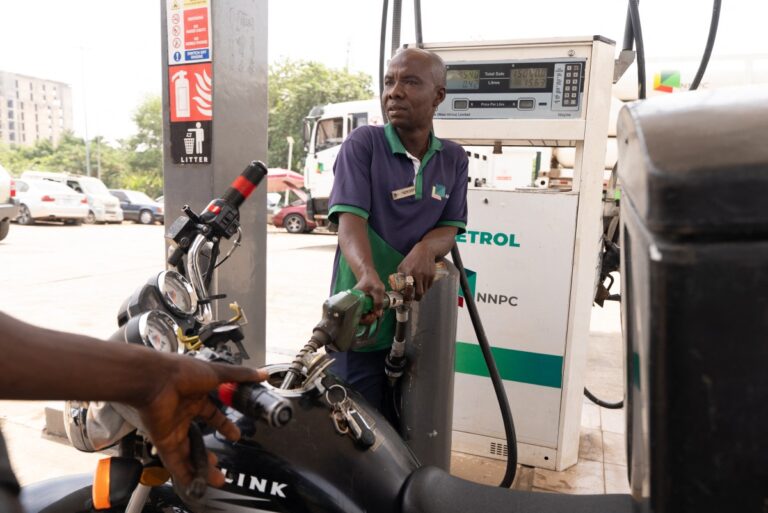
Uncertainty over fuel costs fuels public anxiety
By A1 News International
Abuja, Nigeria — March 25, 2026
Concerns over possible fuel price adjustments have resurfaced, raising anxiety among Nigerians already grappling with rising living costs. Signals from the downstream petroleum sector, combined with global crude market volatility and lingering domestic supply challenges, have renewed fears that petrol prices could climb again—threatening to push up transportation costs, consumer prices and household budgets across the country.
Analysts say a mix of domestic and international factors is contributing to the current uncertainty. International crude oil prices have shown intermittent volatility over recent months, driven by shifting demand forecasts and geopolitical developments. At home, supply chain frictions, pipeline vandalism in some regions, and delays in product distribution have tightened local availability at times, creating short-lived price spikes at retail pumps.
Additionally, industry watchers point to the complex interaction between subsidy policy debates, foreign-exchange constraints affecting import financing, and the pricing formula used by petroleum marketers. If refiners and importers face higher landed costs—either from exchange-rate depreciation or increased freight and insurance rates—these costs often translate into upward pressure on retail prices. The timing and pace of any adjustments will depend on government policy decisions, regulator guidance, and the pass-through behavior of marketers.
Across urban and rural communities, Nigerians have voiced concern about the prospect of higher fuel costs. Commuters said they fear immediate increases in transport fares, while small-business owners and market traders warned that higher logistics costs would be passed on to consumers. Social-media conversations and interviews with residents in Abuja, Lagos and Kano reflect a mix of resignation and worry: some citizens are already cutting discretionary spending, while others are exploring informal carpooling and shifting to cheaper transport modes where possible.
Transport unions and operators have in some instances signaled they could review fares should pump prices move upwards, a step that would compound pressure on low-income households. Civil society groups have called on authorities to communicate clearly on potential changes and to consider mitigations for vulnerable populations.
Fuel price movements have outsized effects on Nigeria’s economy because of the product’s central role in transportation, goods distribution and power generation. An increase in pump prices typically raises the cost of moving food and manufactured goods, which can feed into higher retail prices and accelerate inflation. For households, especially those near or below the poverty line, higher fuel bills reduce real incomes and squeeze spending on essentials such as healthcare, education and nutrition.
At the macro level, fuel pricing dynamics can influence monetary policy outcomes: persistent inflationary pressures may constrain the Central Bank of Nigeria’s ability to cut interest rates or could prompt tighter policy to anchor prices, with implications for credit costs and economic growth.
WHAT TO WATCH
- Government statements: Any announcement by the presidency, the Ministry of Petroleum Resources or the Federal Competition and Consumer Protection Commission may clarify policy direction or signal interventions.
- Petroleum Product Marketers Association (PPMA) and Nigerian Midstream and Downstream Petroleum Regulatory Authority (NMDPRA) updates: These bodies’ guidance on pricing, supply allocations or distribution could reshape market expectations.
- Exchange rate movements: A weaker naira increases import costs for refined products and could prompt price upward pressure.
- Global crude trends: Sustained increases in Brent crude would raise import bills for refined products that Nigeria does not produce domestically.
- Social response: Transport unions, market associations and civil society reactions could influence the speed and scope of any pass-through to consumers.
BACKGROUND
Nigeria has for years navigated a delicate balance between fuel subsidy considerations, attempts to reform the downstream sector and the practical imperative of ensuring steady supply. While upstream crude production and revenues affect the country’s foreign-exchange position, the downstream market’s capacity—including refining output and import logistics—determines availability and pump prices. Past adjustments have triggered public protests and policy reversals; that history informs both public apprehension and governmental caution.
POTENTIAL MITIGATIONS
Policymakers and stakeholders could consider several measures to blunt the impact of price adjustments on the most vulnerable:
- Targeted cash transfers or temporary social safety nets for low-income households.
- Staggered or phased price changes to allow businesses and consumers time to adapt.
- Subsidized transport schemes for essential workers or students during transitional periods.
- Strengthening local refining capacity and supply-chain security to reduce import dependence over the medium term.
- Clear, timely public communication to manage expectations and avoid panic buying.
“We are watching the supply chain closely,” said a market analyst in Lagos, “and any shock to the naira or a spike in freight costs will make it harder for marketers to hold prices. The government’s next moves will be critical.”
A commuter in Abuja added: “Every time the fuel price goes up, everything else follows. We are already cutting back—this would be another blow.”
As Nigerians await clearer signals from policymakers and market players, the possibility of fuel price adjustments remains a key risk to household finances and the broader economy. Transparent communication, measured policy responses and targeted support for vulnerable groups will be essential to contain the economic and social fallout if pump prices rise.











Leave a Reply