
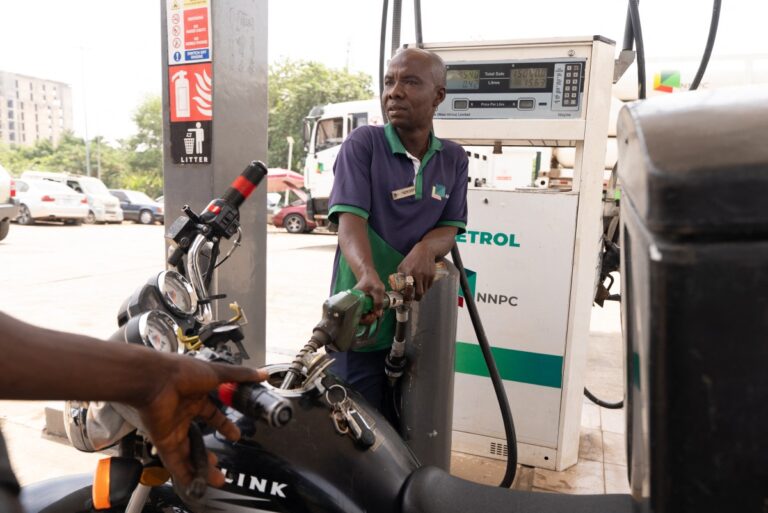
As Brent crude retreats after easing Middle East tensions, Nigerians are questioning why pump prices remain above ₦1,200 per litre despite refinery price cuts and lower import costs, while industry stakeholders cite deregulation, exchange rates and logistics as key pricing factors.
By A1NEWS International – June 27, 2026
ABUJA, Nigeria – As global crude oil prices continue to decline following the easing of geopolitical tensions in the Middle East, motorists, transport operators and consumers across Nigeria are demanding an immediate reduction in the pump price of Premium Motor Spirit (PMS), popularly known as petrol.
Across several states, Nigerians say the persistent high cost of petrol has continued to strain household incomes, increase transportation fares and inflate the cost of goods and services, despite favourable developments in the international oil market.
While petroleum marketers and industry experts acknowledge that crude prices have fallen, they argue that several economic and market factors—including foreign exchange fluctuations, existing inventories, logistics costs and deregulation—prevent immediate reductions at filling stations.
Crude Oil Prices Retreat as Middle East Tensions Ease
Global oil prices have moderated significantly after fears of prolonged disruption to crude supplies through the Strait of Hormuz subsided following reduced military tensions involving Iran, Israel and the United States.
Brent crude, the international benchmark, fell from its conflict-driven highs to approximately $73.14 per barrel, while the United States benchmark, West Texas Intermediate (WTI), declined to about $69.85 per barrel before recording modest fluctuations around $72–$74 per barrel.
The decline has fueled expectations among Nigerians that domestic fuel prices should also fall.
Consumers Question Slow Response at Filling Stations
Before the recent geopolitical crisis, petrol sold between ₦770 and ₦800 per litre in many parts of Nigeria.
However, prices surged to between ₦1,200 and ₦1,300 per litre during the period of heightened international uncertainty.
Although Dangote Refinery announced a ₦50 reduction in its gantry price, bringing it down to ₦1,125 per litre, many retail outlets continue selling significantly above that level.
Imported PMS landing costs have also reportedly declined, yet retail prices remain largely unchanged.
This disparity has sparked growing frustration among motorists who argue that fuel prices rise almost immediately whenever crude prices increase but rarely fall at the same pace when international prices decline.
Nationwide Frustration Mounts
An A1NEWS International review of reactions from several states indicates widespread dissatisfaction with current petrol prices.
Kano
Commercial drivers said rising fuel costs continue to reduce profit margins while forcing transport operators to increase fares that many passengers can no longer afford.
Private motorists also disclosed that they have significantly reduced the use of personal vehicles due to high operating costs.
Although petrol prices reportedly declined marginally from ₦1,370 to ₦1,330 per litre, many residents described the reduction as insignificant.
Rivers State
Motorists and commuters expressed disappointment that petrol still sells between ₦1,200 and ₦1,300 per litre despite falling international crude prices.
Commercial drivers stated that they would readily reduce transport fares if filling station prices decline.
Borno State
In Maiduguri, petrol continues to retail between ₦1,300 and ₦1,400 per litre, while diesel sells for about ₦2,200 per litre.
Motorists questioned why independent marketers have not reflected improved global market conditions in local prices.
Tricycle operators also reported declining patronage as passengers increasingly avoid non-essential trips due to rising transportation costs.
Taraba and Kwara States
Residents in Taraba accused marketers of failing to pass on the benefits of lower crude prices to consumers, with petrol still selling for about ₦1,390 per litre in many communities.
In Kwara State, consumers called for greater transparency in fuel pricing and urged the Federal Government to explain why pump prices remain elevated despite easing international oil prices.
Marketers Explain Why Prices Have Not Fallen Sharply
The Executive Secretary of the Major Energies Marketers Association of Nigeria (MEMAN), Clement Isong, explained that movements in crude oil prices do not immediately translate into lower retail petrol prices.
According to him, refined petroleum products are purchased based on earlier crude prices, creating a time lag before consumers experience any significant reductions.
He expressed optimism that if crude prices remain stable at lower levels, Nigerians may eventually benefit from reduced pump prices.
Experts: Petrol Pricing Depends on More Than Crude Oil
Energy economists say the relationship between crude oil prices and petrol pump prices is more complex than many consumers assume.
Professor Emeritus of Petroleum Economics and Senior Fellow of the United States Association for Energy Economics, Prof. Wumi Iledare, explained that although crude prices are gradually returning to normal market fundamentals following reduced geopolitical risks, retail fuel prices depend on several additional variables.
Among these are:
- Foreign exchange rates.
- Refining costs.
- Transportation and distribution expenses.
- Taxes and levies.
- Existing inventories purchased at higher prices.
- Domestic petroleum market policies.
According to him, while sustained reductions in crude oil prices could eventually lower pump prices, a return to pre-conflict pricing cannot be guaranteed.
Similarly, University of Lagos energy law expert Prof. Dayo Ayoade noted that global oil prices remain highly sensitive to geopolitical developments, supply disruptions and market demand.
He observed that although geopolitical tensions have eased, the Middle East remains strategically important to global energy markets, meaning price volatility could continue.
NNPC: Deregulation Determines Pump Prices
The Nigerian National Petroleum Company Limited (NNPC Ltd.) said consumers should not expect retail prices to immediately mirror international crude oil movements.
Chief Corporate Communications Officer Andy Odey explained that retail fuel prices are influenced by multiple operational costs beyond crude prices, including product acquisition costs, transportation, distribution expenses, foreign exchange rates and existing stock purchased at previous prices.
He added that under Nigeria’s deregulated downstream petroleum sector, individual marketers determine retail prices based on their respective cost structures.
According to him, NNPC continues reviewing its prices in response to prevailing market realities while ensuring adequate fuel supply nationwide.
Regulator Reaffirms Market-Driven Pricing
The Nigerian Midstream and Downstream Petroleum Regulatory Authority (NMDPRA) reiterated that petrol pricing is now determined by market forces.
The Authority’s Director of Public Affairs, George Ene-Ita, explained that following deregulation, government no longer fixes petrol prices, allowing competition among marketers to determine pump prices.
Industry analysts say increased competition from domestic refiners and importers could eventually exert downward pressure on retail prices if favourable international conditions persist.
The debate over petrol pricing highlights the broader challenges facing Nigeria’s deregulated petroleum sector.
While falling crude oil prices have raised public expectations for immediate relief at filling stations, industry stakeholders insist that exchange rates, logistics costs, inventories and other operational expenses continue to influence pump prices.
For millions of Nigerians grappling with rising living costs, the coming weeks will be closely watched to determine whether sustained declines in global crude prices will ultimately translate into meaningful reductions at the pump—or whether the benefits of cheaper oil will remain delayed by market realities.













Leave a Reply