
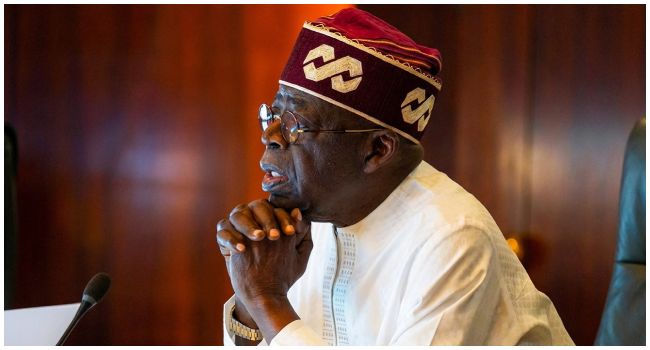
Arrest of Prince Adeniyi Adeyemi’s father sparks legal outrage as senior lawyers question police action while fresh revelations deepen scrutiny over the controversial Presidential Foreign Intervention Promotion Council.
By A1NEWS International
Abuja, Nigeria | Tuesday, July 7, 2026
The controversy surrounding the alleged N1.3 billion Presidential Foreign Intervention Promotion Council (PFIPC) scandal has taken another dramatic turn following the reported arrest of the father of the council’s embattled promoter, Prince Adeniyi Adeyemi, by operatives of the Nigeria Police Force.
The latest development has intensified public attention on a case that has already drawn national interest because of allegations involving an alleged “ghost agency,” forgery, impersonation, and claims linking senior officials within the Presidency.
The arrest has also ignited fresh constitutional and human rights concerns after prominent legal practitioners questioned whether law enforcement authorities possess the legal authority to arrest relatives of criminal suspects merely because of family ties.
As investigations continue, the unfolding events are increasing pressure on the Presidency to provide greater transparency regarding the controversial council whose appearance in the 2026 Appropriation Act has raised questions about government oversight and institutional accountability.
A Scandal That Refuses to Fade
The alleged scandal centres on the Presidential Foreign Intervention Promotion Council, an organisation that reportedly presented itself as a government-backed body despite later being disowned by the Federal Government.
At the centre of the controversy is Prince Adeniyi Adeyemi, who describes himself as the Director-General of the council.
Adeyemi is currently standing trial before the Federal High Court in Abuja on charges bordering on conspiracy, forgery and impersonation.
The Federal Government has assembled a list of prosecution witnesses that includes the President’s Chief of Staff, Femi Gbajabiamila, alongside ten other witnesses expected to testify during the trial.
The criminal proceedings have attracted widespread attention because prosecutors allege that official government documents and signatures may have been fraudulently deployed to give legitimacy to the council.
The controversy deepened further after reports indicated that the council was reflected in Nigeria’s 2026 national budget, despite earlier official denials regarding its legal status.
For many observers, the contradiction has fuelled broader questions about internal administrative controls within government institutions and whether gaps in public sector oversight may have been exploited.
Police Arrest Sparks Fresh Controversy
The investigation assumed another dimension on Monday when police officers reportedly arrested Adeyemi’s father at the family’s residence in Ogbomoso, Oyo State.
According to eyewitness accounts, the operation occurred at the family’s residence located at Plot 3, Adeniyi Dynasty, behind Technical College, Road Safety Area.
Residents claimed several police vehicles arrived at the premises before officers allegedly took Adeyemi’s father into custody.
A family acquaintance who reportedly visited the residence during the operation was also said to have been arrested.
The incident reportedly left Adeyemi’s elderly mother traumatised, with neighbours assisting her after the police departed.
Although the Nigeria Police Force had not officially disclosed the legal basis for the arrests as of press time, the operation immediately generated widespread debate among lawyers and civil rights advocates.
The principal issue dominating public discourse is whether the arrest was based on independent criminal suspicion or whether it amounted to what legal practitioners commonly describe as “arrest in lieu”—the practice of arresting relatives to compel a suspect’s cooperation.
Falana Questions Legality of Police Action
Human rights lawyer Femi Falana was among the first prominent legal figures to publicly challenge the reported police action.
Speaking after learning of the arrest, Falana questioned the legal justification for detaining the suspect’s father.
According to the senior advocate, Nigerian law does not recognise substituted arrests.
He argued that where a suspect has undertaken to appear before the court and is already participating in ongoing judicial proceedings, arresting a family member raises serious constitutional concerns.
Falana maintained that criminal responsibility remains personal under Nigerian law and should not extend to family members unless there is independent evidence connecting them to an alleged offence.
His remarks immediately amplified calls for the Nigeria Police Force to explain the legal basis for the operation.
Eyewitnesses Describe Early Morning Operation
Residents living near the Adeyemi family residence described what they characterised as a coordinated police operation.
One resident claimed officers arrived in multiple vehicles before entering the compound.
According to eyewitness accounts, neighbours attempted to understand the purpose of the visit but were allegedly prevented from intervening before Adeyemi’s father was taken away.
Another witness said a visitor present at the residence was equally detained during the operation.
Residents also reported seeing security personnel maintaining surveillance around the property after the arrests had taken place.
While these accounts remain subject to independent verification, they have contributed to growing public interest in the case.
Pressure Mounts on the Presidency
Although the Presidency has not publicly commented on the latest arrests, the incident has intensified scrutiny of the wider controversy surrounding the alleged Presidential Foreign Intervention Promotion Council.
Political observers note that what initially appeared to be an isolated criminal prosecution has evolved into a broader national conversation involving questions about government accountability, document authenticity, institutional oversight and the relationship between executive agencies and unofficial entities claiming government recognition.
The inclusion of senior Presidency officials among prosecution witnesses has further heightened political sensitivity surrounding the case.
Analysts believe the outcome of both the criminal proceedings and the ongoing police investigation may influence public confidence in institutional safeguards designed to protect government processes from manipulation.
Legal Questions Begin to Dominate Public Debate
Beyond the criminal allegations, attention is increasingly shifting toward the constitutional implications of the reported arrest.
Legal practitioners argue that the case now raises two distinct issues.
The first concerns the criminal allegations against Adeyemi himself, which remain before the Federal High Court.
The second concerns whether investigators complied with constitutional safeguards governing arrest and detention.
These issues are expected to become central as Nigeria’s legal community examines whether law enforcement agencies acted within the powers granted under the Constitution, the Administration of Criminal Justice Act (ACJA), and the Nigeria Police Act.
Investigation Enters Critical Phase
As the criminal proceedings continue in Abuja, investigators are expected to intensify efforts to determine the origin, legal status and operational activities of the controversial council.
Equally important will be establishing whether public funds were improperly accessed, whether official government identities were fraudulently utilised and whether additional individuals may have participated in any alleged wrongdoing.
The answers to these questions could determine whether the case remains a straightforward criminal prosecution or develops into one of Nigeria’s most significant governance and institutional integrity investigations in recent years.
Senior Lawyers Fault Police Action, Cite Constitution, ACJA and Police Act
The reported arrest of the father of Prince Adeniyi Adeyemi has triggered widespread condemnation within Nigeria’s legal community, with the Nigerian Bar Association (NBA) and several Senior Advocates of Nigeria (SANs) warning that law enforcement agencies cannot lawfully arrest relatives merely to compel a suspect to surrender or cooperate with investigations.
While acknowledging that the police retain broad investigative powers, the senior lawyers unanimously maintained that those powers are circumscribed by the 1999 Constitution (as amended), the Administration of Criminal Justice Act (ACJA), 2015, and the Nigeria Police Act, 2020, all of which prohibit what is commonly described as “substitutional arrest” or “arrest in lieu.”
However, they stressed that the legal position would be entirely different if investigators possess independent evidence linking Adeyemi’s father to the alleged offences.
NBA President Urges Caution, Seeks Police Explanation
President of the Nigerian Bar Association, Mazi Afam Osigwe, cautioned against reaching premature conclusions before the Nigeria Police Force explains the circumstances surrounding the arrest.
Speaking during a telephone interview, Osigwe noted that the legality of the police action depends entirely on the basis upon which the father was taken into custody.
According to him, Nigerian law clearly prohibits arresting an individual merely because another person is under criminal investigation.
“If a person is arrested solely to compel a suspect to surrender or to place pressure on someone under investigation, such an arrest would clearly violate Nigerian law,” he explained.
Nevertheless, the NBA President emphasized that where investigators reasonably suspect an individual’s personal involvement in a criminal offence, that person may lawfully be arrested irrespective of family relationships.
“The issue therefore is not whether he is the suspect’s father,” Osigwe explained.
“The real legal question is whether investigators possess sufficient evidence making him a suspect or person of interest in the investigation.”
He urged the public to await an official explanation from the Nigeria Police Force rather than relying solely on public speculation.
Senior Advocates Insist Criminal Liability Is Personal
Several Senior Advocates of Nigeria echoed similar constitutional arguments.
Senior Advocate Sam Erugo described any arrest based solely on family relationship as unlawful.
According to him, Nigerian criminal jurisprudence recognises only individual criminal responsibility.
He pointed to Section 7 of the Administration of Criminal Justice Act (ACJA), 2015, which expressly prohibits arresting one individual in place of another.
Erugo nevertheless urged the police to provide a comprehensive explanation to Nigerians regarding the legal basis for the operation.
“The public deserves transparency,” he noted.
“If there are independent allegations against the father, the police should clearly state them.”
‘Family Relationship Is Not Criminal Evidence’
Another Senior Advocate, Isiaka Olagunju, reinforced the long-established legal principle that criminal responsibility cannot be inherited or transferred through family ties.
He observed that neither the Constitution nor criminal statutes permit investigators to presume guilt based on blood relationships.
According to Olagunju, parents, spouses and relatives enjoy the same constitutional protections as every Nigerian citizen.
However, he clarified that these protections do not shield anyone independently implicated in criminal activity.
“If evidence establishes the father’s participation in the alleged offences, investigators may lawfully arrest him,” he explained.
“But without such evidence, relationship alone cannot justify arrest.”
Esan: ‘Arrest in Lieu’ Has No Place Under Nigerian Law
Senior Advocate Wolemi Esan described substitutional arrests as one of the practices the Administration of Criminal Justice Act sought to eliminate.
According to him, both statutory law and judicial decisions have consistently rejected the practice.
Esan specifically referred to:
- Section 7 of the Administration of Criminal Justice Act, 2015, which prohibits arresting anyone in place of another person;
- Section 20 of the Nigeria Police Act, 2020, which similarly forbids substitute arrests;
- Section 35 of the Constitution, guaranteeing every citizen’s right to personal liberty.
He argued that these provisions collectively establish that every arrest must be based upon reasonable suspicion directed at the individual being arrested—not upon family association.
Esan further noted that Section 35(6) of the Constitution provides remedies for unlawful arrest, including compensation and public apology where fundamental rights have been violated.
Wahab Shittu Provides Detailed Constitutional Analysis
Perhaps the most comprehensive legal assessment came from Senior Advocate Wahab Shittu, who described the reported arrest as raising fundamental constitutional questions.
According to Shittu, police powers of arrest are neither absolute nor unlimited.
Rather, they are carefully regulated by constitutional safeguards intended to prevent abuse of state authority.
He pointed to Section 35(1) of the Constitution, which guarantees every citizen the right to personal liberty except under circumstances expressly authorised by law.
He also referenced Section 36(8), which establishes that criminal liability is strictly personal.
“No individual,” he argued, “can become criminally liable merely because of family relationship.”
ACJA Intended to End Substitute Arrests
Shittu observed that Section 7 of the Administration of Criminal Justice Act was specifically enacted to abolish the long-standing practice whereby law enforcement agencies arrested relatives in order to compel wanted persons to surrender.
According to him, the provision leaves little room for ambiguity.
Police officers may only arrest persons whom they reasonably suspect of personally committing a criminal offence.
He further referred to Sections 6 and 8 of the ACJA, which require law enforcement officers to:
- Clearly inform suspects of the reasons for arrest;
- Treat arrested persons humanely;
- Exercise arrest powers only upon reasonable suspicion founded on evidence.
These statutory safeguards, he argued, were introduced to align criminal investigations with constitutional principles protecting human dignity and due process.
Judicial Precedents Reinforce Constitutional Protection
Shittu further strengthened his legal opinion by citing several appellate court decisions.
Among the authorities referenced were:
- ACB Ltd v. Okonkwo
- Akpan v. State
- Ahamba v. State
According to him, Nigerian appellate courts have consistently held that criminal responsibility cannot be transferred from one individual to another.
The courts have repeatedly condemned substitutional arrests as inconsistent with constitutional guarantees of personal liberty and fair hearing.
He argued that even allegations involving billions of naira in public funds do not permit investigators to disregard constitutional limitations.
“The seriousness of an allegation,” he maintained, “cannot expand police powers beyond what Nigerian law authorises.”
Does Adeyemi’s Ongoing Trial Change the Legal Position?
Shittu observed another significant factor.
Prince Adeyemi is already standing trial before the Federal High Court and is reportedly enjoying bail granted by the court.
From a legal standpoint, this suggests he is already within the judicial process rather than evading prosecution.
Consequently, Shittu questioned whether any legitimate legal basis exists for allegedly arresting his father merely to influence ongoing proceedings.
“If the objective was to pressure the defendant in his pending criminal case,” he argued, “such action would constitute the very substitutional arrest prohibited under Nigerian law.”
Police Must Demonstrate Independent Evidence
Despite the widespread criticism, none of the senior lawyers suggested that relatives enjoy immunity from criminal investigation.
Instead, they consistently emphasised one principle.
If investigators possess independent evidence establishing that Adeyemi’s father participated in forgery, conspiracy, impersonation or any related offence, then his arrest would simply constitute the lawful arrest of another suspect.
Under such circumstances, the legality of the arrest would depend entirely upon the available evidence—not upon family relationship.
However, absent such evidence, the burden rests squarely on the Nigeria Police Force to demonstrate that the arrest complied with constitutional requirements.
Fundamental Rights Remedies Available
Legal experts further noted that where a court determines an arrest to be unlawful, Nigerian law provides several remedies.
These include proceedings under the Fundamental Rights (Enforcement Procedure) Rules, 2009, through which an affected person may seek:
- A declaration that constitutional rights were violated;
- Immediate release where detention continues;
- Monetary compensation;
- Public apology by the responsible authority.
Section 35(6) of the Constitution specifically guarantees compensation for persons unlawfully arrested or detained.
For constitutional lawyers following the case, these remedies may become relevant should the courts ultimately conclude that the reported arrest amounted to an unlawful exercise of police powers.
Growing Constitutional Debate
As investigations into the alleged N1.3 billion Presidential Foreign Intervention Promotion Council continue, the legal controversy surrounding the arrest has evolved beyond the criminal allegations themselves.
It now raises broader constitutional questions concerning the limits of police authority, protection of civil liberties, adherence to due process and the rule of law.
The answers provided by investigators in the coming days may not only influence the criminal proceedings against Prince Adeniyi Adeyemi but could also establish important precedents regarding police investigative powers in politically sensitive cases.
Police Headquarters Declines Immediate Comment
As public scrutiny intensified over the reported arrest of the father of Prince Adeniyi Adeyemi, the Nigeria Police Force had, as of press time, not issued a comprehensive official explanation regarding the circumstances surrounding the operation.
Force Headquarters spokesperson, Anietie Iniedu, said he had not been briefed on the alleged arrest when contacted by journalists.
He requested details of the specific unit within the Force Criminal Investigation Department (FCID) that carried out the operation before providing an official response.
According to him, the Nigeria Police Force is a large organisation comprising several investigative departments, making it necessary to identify the exact unit responsible before commenting authoritatively.
Subsequent attempts by journalists to obtain clarification—including inquiries on whether forensic examinations had been conducted on the signature allegedly linked to the Presidency—were unsuccessful, as telephone calls and text messages reportedly went unanswered before publication.
The absence of an immediate official explanation has fuelled public speculation, with legal analysts urging investigators to clarify whether Adeyemi’s father was arrested as an independent suspect or merely because of his relationship with the defendant.
Oyo Police Distance Themselves From Investigation
Meanwhile, the Oyo State Police Command stated that the investigation falls outside its operational jurisdiction.
The state’s Police Public Relations Officer, Olayinka Ayanlade, explained that the matter is being handled directly by the Force Criminal Investigation Department in Abuja because of its national significance.
He advised members of the public and journalists seeking official updates to direct their inquiries to Force Headquarters or the FCID liaison office.
His response effectively confirmed that the investigation remains under the direct supervision of federal investigators.
Accountant-General Rejects Claims of Public Fund Disbursement
In another significant development, the Office of the Accountant-General of the Federation moved to distance itself from the controversy by denying that any public funds were released to the controversial Presidential Foreign Intervention Promotion Council.
According to officials familiar with the matter, although the council reportedly initiated steps toward opening a government account, the process was never completed.
Consequently, government records allegedly indicate that the council never operated a functional Treasury-backed account through which federal allocations or statutory payments could have been processed.
This clarification introduces another important dimension to the investigation.
While the criminal allegations before the court concern conspiracy, forgery and impersonation, the Accountant-General’s position appears aimed at reassuring Nigerians that no official financial transactions involving the Treasury were executed on behalf of the disputed council.
However, investigators are expected to continue examining whether any private transactions, representations or financial commitments may have occurred outside official government accounting systems.
Presidency Faces Renewed Questions
Although the Presidency has not formally commented on every aspect of the controversy, the unfolding investigation continues to generate difficult questions regarding internal administrative controls.
The case has become particularly sensitive because of allegations that the Presidential Foreign Intervention Promotion Council appeared in the 2026 Appropriation Act, despite previous assertions that the Federal Government neither established nor recognised the body.
That apparent contradiction has become one of the central issues attracting public attention.
Investigators are expected to determine:
- Whether the council possessed any lawful legal status within government;
- How references to the organisation allegedly appeared in official government documentation;
- Whether official documents or signatures were fraudulently created, altered or misused;
- Whether public officials knowingly or unknowingly facilitated the activities under investigation.
The Federal Government’s decision to list senior officials—including Femi Gbajabiamila—among prosecution witnesses indicates the seriousness with which prosecutors appear to be approaching the matter.
Legal analysts note that being named as a prosecution witness does not imply criminal liability but may simply reflect the prosecution’s intention to establish factual circumstances surrounding disputed documents or official communications.
Institutional Integrity Under National Spotlight
Beyond the courtroom, the controversy has evolved into a broader examination of governance and institutional safeguards within Nigeria’s public administration.
Public administration experts argue that the case raises several important policy questions:
Document Authentication
How effectively are official presidential communications verified before being relied upon by government institutions?
Inter-Agency Coordination
Could stronger communication among ministries, departments and agencies have prevented confusion regarding the council’s legal status?
Digital Verification
Should Nigeria accelerate the adoption of secure electronic verification systems capable of reducing opportunities for document forgery or impersonation?
Public Accountability
What mechanisms exist to promptly detect and correct administrative irregularities before they evolve into major criminal investigations?
These questions extend well beyond the criminal proceedings and touch directly on public confidence in government institutions.
Legal Proceedings Continue
While public debate continues, the criminal case against Prince Adeniyi Adeyemi remains before the Federal High Court in Abuja.
As with every criminal prosecution under Nigerian law, the defendant is presumed innocent until proven guilty by a competent court.
Similarly, the legality of the reported arrest of his father may ultimately depend upon evidence that investigators present regarding the basis for the operation.
If authorities establish independent reasonable suspicion against him, the arrest may withstand judicial scrutiny.
Conversely, if a court determines that the arrest was undertaken merely because of family relationship, constitutional remedies—including compensation under Section 35(6) of the Constitution—could become available.
The burden now rests on investigators to clarify the legal and factual foundation of their actions.
Investigative Outlook
Several important issues remain unresolved:
- What evidence supports the allegation that official presidential documents were forged?
- Was the Presidential Foreign Intervention Promotion Council ever legally established?
- How did references to the council reportedly appear within official government processes?
- Will forensic examination conclusively determine the authenticity of disputed documents and signatures?
- Were any public officials deceived, or did administrative failures contribute to the controversy?
- On what legal basis was Adeyemi’s father reportedly arrested?
Answers to these questions are expected to shape both the criminal trial and any subsequent administrative or policy reforms.
The alleged N1.3 billion Presidential Foreign Intervention Promotion Council controversy has developed into one of Nigeria’s most closely watched governance and criminal investigations.
What began as allegations of forgery and impersonation has expanded into a wider debate concerning constitutional rights, police investigative powers, administrative accountability and institutional integrity.
The reported arrest of Prince Adeniyi Adeyemi’s father has introduced a significant human rights dimension, prompting leading legal practitioners to remind law enforcement agencies that constitutional safeguards remain applicable regardless of the seriousness of criminal allegations.
At the same time, the Office of the Accountant-General’s insistence that no public funds were released to the disputed council narrows one aspect of the controversy while leaving several other investigative questions unanswered.
With criminal proceedings ongoing and multiple institutions under public scrutiny, the eventual outcome is likely to influence future discussions on police procedure, government accountability, document authentication and public sector governance in Nigeria.
Until the courts deliver their verdicts and investigators conclude their inquiries, many of the central allegations remain matters to be determined through due legal process.










Leave a Reply