
Rights Commission warns of worsening violations, persistent insecurity, child sexual abuse and displacement as it unveils June 2026 Human Rights Situation Dashboard.
By A1NEWS International
Abuja, Nigeria — July 9, 2026
Nigeria’s human rights landscape remains under severe strain, with the National Human Rights Commission (NHRC) revealing that it received 326,113 complaints of alleged human rights violations across the country in June 2026 alone.
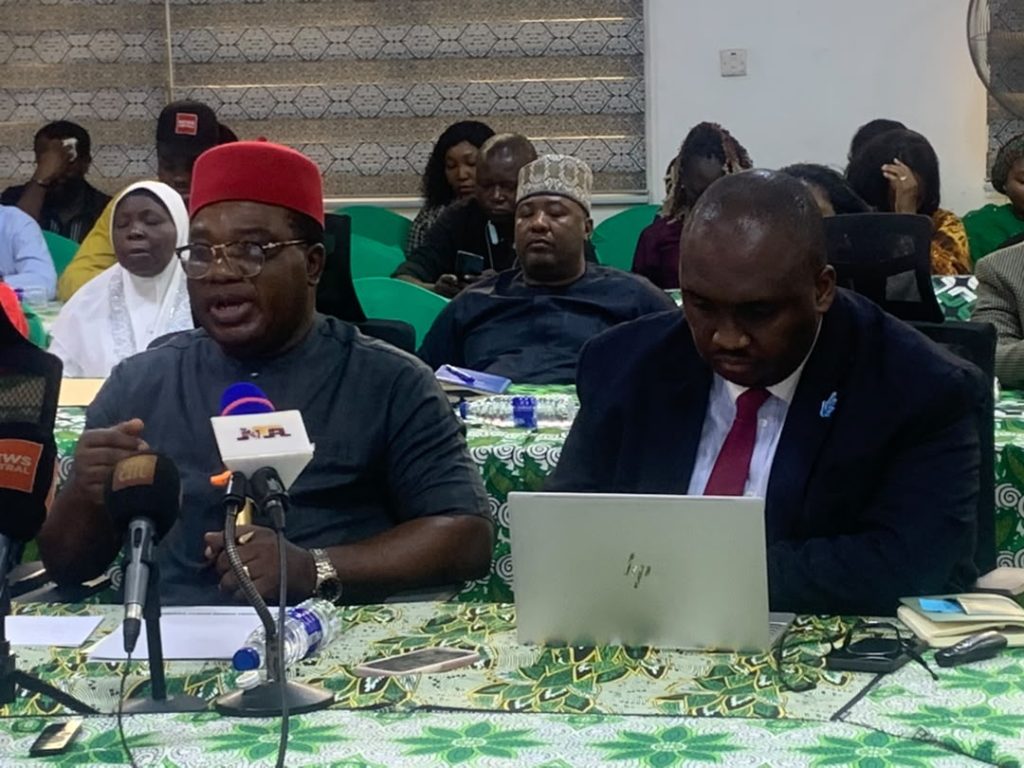
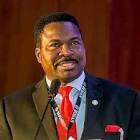
The alarming figure was disclosed by the Executive Secretary and Chief Executive Officer of the NHRC, Dr. Tony Ojukwu, OFR, SAN, FICMC, during the presentation of the Commission’s June 2026 Human Rights Situation Dashboard in Abuja on Thursday.
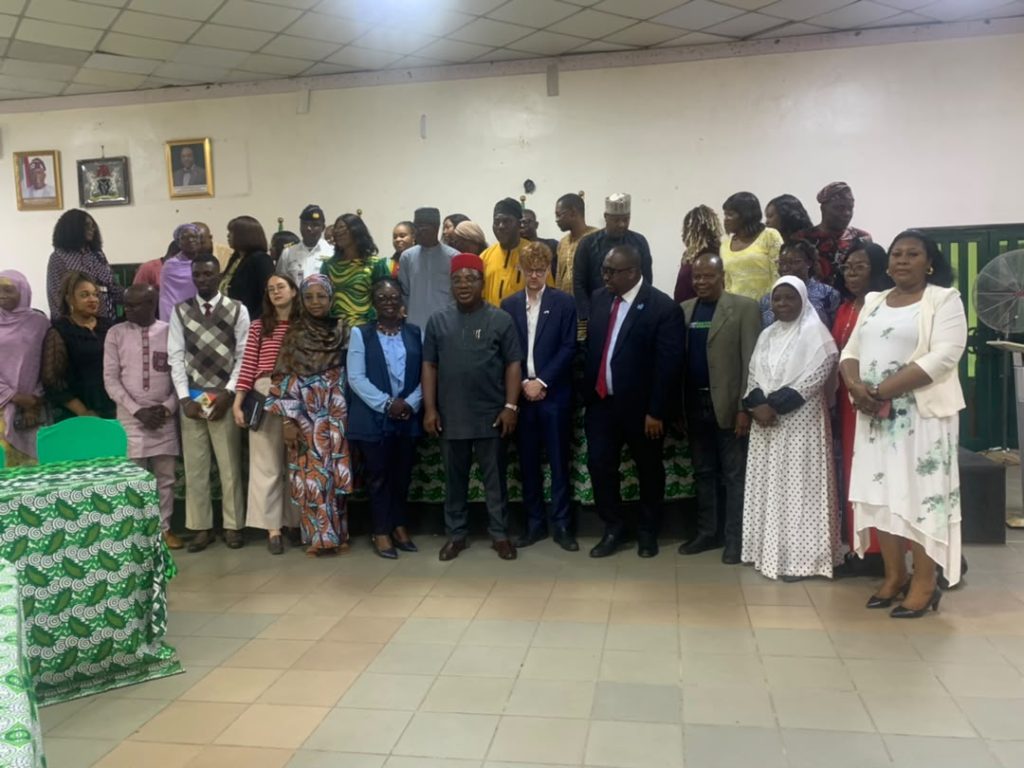
Addressing members of the diplomatic corps, development partners, civil society organisations, the media and other stakeholders, Ojukwu described the statistics as a stark reminder that Nigeria continues to face significant challenges in protecting the fundamental rights and freedoms of its citizens.
“The Dashboard remains a vital accountability tool for identifying trends, emerging risks and areas requiring urgent intervention,” he said.
Over 326,000 Complaints Signal Deepening Human Rights Crisis
According to the Commission, its headquarters in Abuja and offices across the 36 states and the Federal Capital Territory collected and analysed complaints submitted by citizens throughout June.
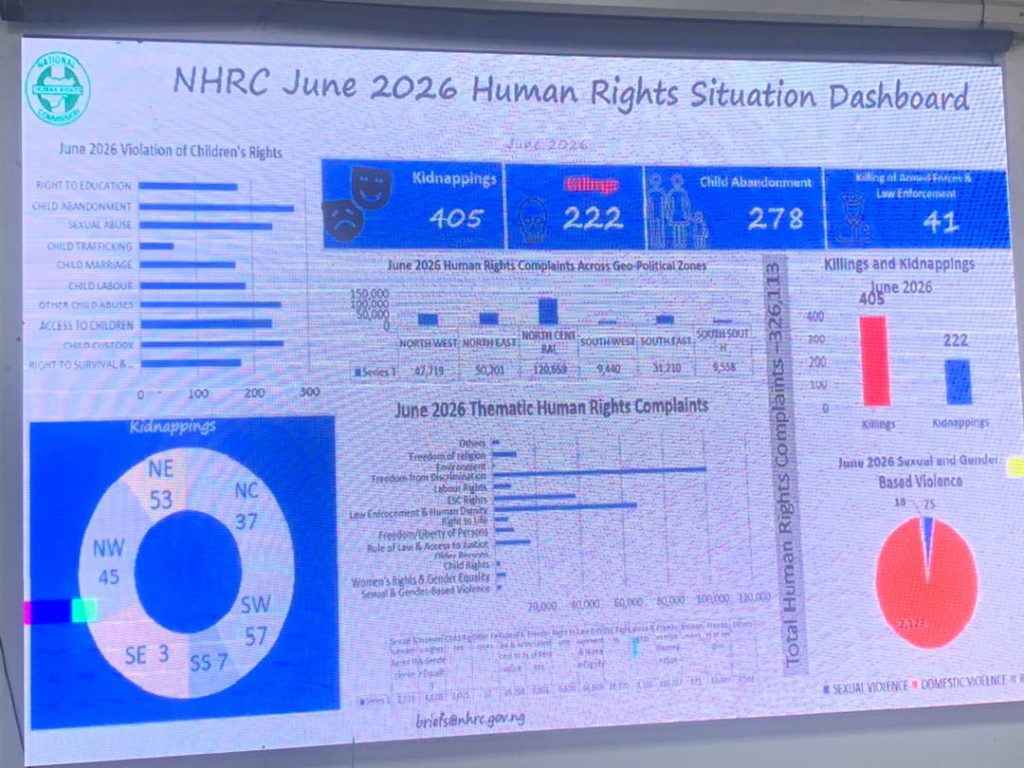
The reported 326,113 complaints represent one of the most significant monthly records compiled by the Commission, reflecting widespread concerns over insecurity, abuse of rights and access to justice.
Beyond complaints received directly from citizens, the NHRC’s Human Rights Observatory also documented numerous incidents of rights violations through nationwide monitoring and independent incident tracking.
Right to Life Emerges as Most Violated Right
The Commission disclosed that the right to life remained the most frequently violated constitutional right during the month under review.
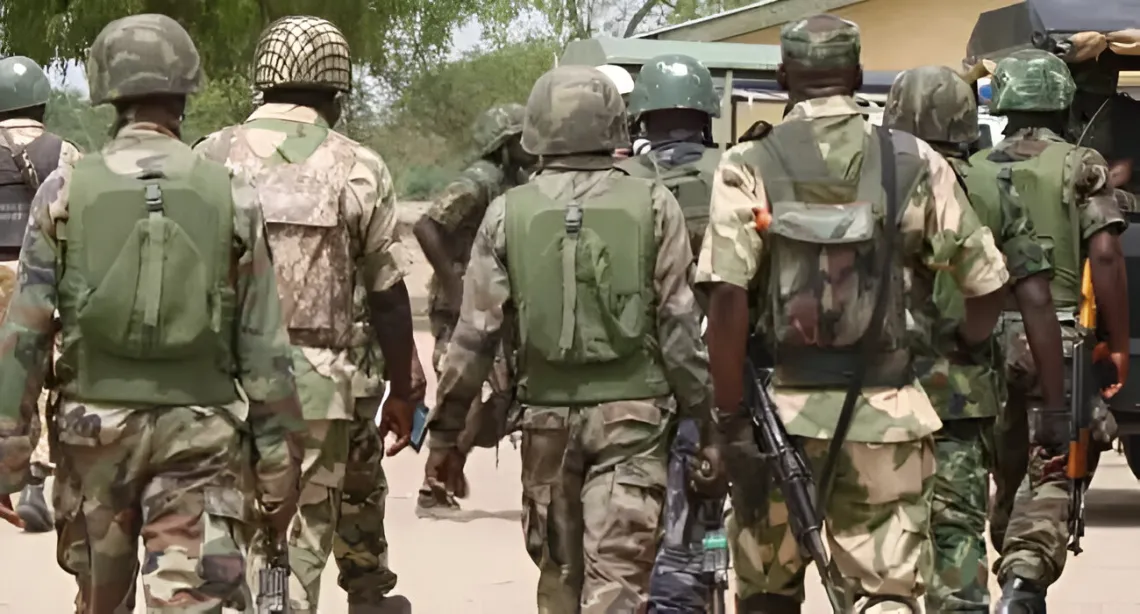
According to the Dashboard, armed violence continued to dominate the pattern of violations recorded across several parts of the country, reinforcing growing concerns over persistent insecurity despite ongoing security operations.
The Commission warned that continued attacks on communities, violent conflicts and insecurity are placing increasing pressure on vulnerable populations while undermining public confidence in the state’s ability to protect lives and property.
Sexual Violence Against Children Raises Fresh Concern
One of the most disturbing findings contained in the June Dashboard relates to the growing incidence of sexual violence against children.
The Human Rights Observatory documented several reported cases involving minors during the reporting period, prompting the Commission to call for stronger child protection measures and enhanced safeguarding mechanisms.
Ojukwu said the recurring attacks against children demand immediate and coordinated responses from governments, law enforcement agencies, schools, parents and community leaders.
He stressed that protecting children from abuse must remain a national priority.
UN Special Rapporteur Highlights Nigeria’s Security Challenges
The NHRC also reflected on the official visit of the United Nations Special Rapporteur on Freedom of Religion or Belief, Professor Nazila Ghanea, who conducted a 12-day assessment mission to Nigeria between June 8 and June 19, 2026.
During the visit, Professor Ghanea toured Abuja, Plateau State and Kano State, meeting government officials, victims, religious leaders and civil society organisations.
According to Ojukwu, the UN expert observed that persistent violence, kidnappings, attacks on communities and mass displacement continue to erode fundamental freedoms while aggravating religious tensions across Nigeria.
The NHRC hosted the presentation of the Rapporteur’s preliminary findings and reaffirmed its commitment to continued engagement with United Nations human rights mechanisms.
Her final report is expected to be presented before the United Nations Human Rights Council in March 2027.
State Police Amendment Welcomed with Caution
The Commission also commented on the recent constitutional amendment aimed at decentralising Nigeria’s policing system through the establishment of state police.
While welcoming the development as a potential mechanism for improving citizens’ security and protecting the rights to life and safety, the NHRC cautioned that decentralisation must be accompanied by adequate safeguards.
Ojukwu warned that without proper human rights training, professional oversight and institutional accountability, state policing structures could themselves become sources of rights violations.
The Commission pledged to support both federal and state governments through human rights education, monitoring, reporting and accountability initiatives.
One Year After Yelewata Massacre, Survivors Still Await Justice
The Dashboard presentation also marked the first anniversary of the Yelewata massacre in Benue State, where more than 100 people were reportedly killed in a single night.
According to the Commission, many survivors remain displaced one year later, living in overcrowded conditions with inadequate food supplies, limited access to clean water and insufficient healthcare.
The NHRC renewed its call for justice for victims of the massacre and urged authorities to ensure accountability while strengthening humanitarian assistance for affected communities.
Commission Calls for Stronger Government Response
Against the backdrop of increasing violations, the Commission urged federal and state authorities to move beyond documentation by implementing practical measures capable of protecting vulnerable citizens.
Specifically, the NHRC called for:
- Stronger civilian protection strategies by security agencies.
- Prompt investigation and prosecution of perpetrators of human rights violations.
- Greater investment in child protection and school safety programmes.
- Expanded psychosocial support services for victims and survivors.
- Improved humanitarian assistance for internally displaced persons.
The Commission also acknowledged the contributions of civil society organisations, humanitarian agencies, development partners and journalists in documenting abuses and promoting accountability across the country.
Why the Dashboard Matters
Analysts say the NHRC’s monthly Human Rights Situation Dashboard has evolved into one of Nigeria’s most comprehensive public accountability instruments for monitoring trends in rights violations.
The data not only provides policymakers with evidence for decision-making but also serves as an early warning mechanism for emerging humanitarian and security crises.
Human rights advocates believe the effectiveness of the Dashboard will ultimately depend on whether government institutions translate its findings into measurable reforms, stronger law enforcement accountability and improved protection for vulnerable communities.
As Nigeria continues to grapple with insecurity, displacement, child abuse and other human rights challenges, the National Human Rights Commission has renewed its call for coordinated national action. While the June 2026 Dashboard paints a troubling picture of widespread violations, it also underscores the urgent need for stronger institutions, effective accountability mechanisms and sustained collaboration among government, civil society and international partners to safeguard the dignity and rights of every Nigerian.



Leave a Reply